3 x 1: the talented Richard Linklater [ENG|ESP]


The Before trilogy is one of my favorites, and its first installment, Before Sunrise, is one of the films I've watched the most times in my life. I return to it whenever I want to watch something romantic or reflect on youth, life, death, fate, and love. For that reason alone, Richard Linklater's name was special to me. I've wanted to see Boyhood of his other works for years, and I haven't gotten around to it yet, but in the last few weeks, I watched his three most recent films, and the quality and variety of these stories have made me admire him even more.
La Trilogía Before es una de mis favoritas y su primera entrega, Before Sunrise, es una de las películas que más veces he visto en mi vida. Vuelvo a ella cuando quiero ver algo romántico o reflexionar sobre la juventud, la vida, la muerte, el azar y el amor. Sólo por esa razón, el nombre de Richard Linklater era especial para mí. De sus otros trabajos hace años que quiero ver Boyhood y hasta la fecha no lo he hecho, pero en las últimas semanas vi los tres últimos largometrajes de este director y la calidad y variedad de estas historias ha hecho que lo admire aún más.
The Hit Man (2023)

You probably remember this one. It's an independent film that was available on Netflix a couple of years ago, starring Glen Powell and Adria Arjona. It tells the story of Gary Johnson (Powell), a man who, partly by chance and partly by fate, begins working with the police to set traps for people who want to hire hitmen and contract killers. In other words, Gary is the decoy, the fake provider of this service, the solicitation of which is considered a crime in the United States. To convince his potential clients—who are all fake—Gary poses as a real assassin, adapting his personality and appearance, as if it were a theatrical exercise, to each of his clients, managing to deceive them into confessing. And then, love. Gary is contacted by a woman who wants to get rid of her abusive husband. The woman's name is Madison (Arjona), and unlike Gary's other clients, she doesn't come across as cold or vengeful, but rather frightened. Unwittingly, Gary falls in love with her and breaks one of the most important rules of his profession, offering her the chance to start a new life... but he can't forget her, and sooner rather than later, he finds himself trapped by the desire to see her again. From there, a series of events unfold that will increasingly conspire to bind their destinies and subject them to harsh trials. Hit Man is a romantic comedy with a touch of action that, to my surprise, is based on real events (except for one of the major plot twists), and I'm surprised to find it in Linklater's filmography because I wouldn't associate him with this type of story.


Esta seguro la recuerdan. Se trata de una película independiente que estuvo disponible en Netflix hace un par de años y que está protagonizada por Glen Powell y Adria Arjona. En ella se cuenta la historia de Gary Johnson (Powell), un hombre que en parte por casualidad y en parte por destino comienza a trabajar con la policía para tender emboscadas a personas que desean contratar sicarios y asesinos a sueldo. Es decir, Gary es el señuelo, el falso proveedor de ese servicio cuya solicitud es considerada un crimen en los Estados Unidos. Para lograr convencer a sus potenciales clientes - falsos - Gary se hace pasar por un verdadero asesino y adaptando su personalidad y su apariencia, como si se tratara de un ejercicio teatral, a cada uno de sus clientes, logra engañarlos hasta hacerlos confesar. Y entonces, el amor. Gary es contactado por una mujer que desea eliminar a su marido abusador. La chica se llama Madison (Arjona) y no se muestra fría o vengativa como el resto de los clientes de Gary, sino asustada. Sin pretenderlo, Gary se enamora de ella y rompe una de las reglas más valiosas de su trabajo, ofreciéndole la oportunidad de que comience una nueva vida... pero no la olvida y más temprano que tarde se ve atrapado en el deseo de volver a verla. A partir de allí se desatan una serie de acontecimientos que irán cercando el destino de ambos y los someterán a duras pruebas. Hit Man es una comedia romántica con un toque de acción que, para mi sorpresa, está basada en hechos reales (excepto uno de los giros más importantes de la trama) y que me sorprende encontrar en la filmografía de Linklater porque no lo asociaría a este tipo de historias.

The two leads do a good job and show great chemistry, plus they're both very attractive, which makes the film entertaining. No, it's not a brilliant story, and the film, while well-made, isn't Linklater's best work, but it might be a good entry point to his filmography for those less familiar with his style.
La pareja protagonista lo hace bien y muestran buena química, además de ser ambos muy atractivos, lo que hace que la cinta sea entretenida. No, no es una historia brillante y la cinta, aunque bien hecha, no es de lo más destacado de Linklater, pero tal vez sea la puerta de entrada a su filmografía para personas menos acostumbradas a su estilo.
Blue Moon (2025)

To say Richard Linklater is to say Ethan Hawke. This duo has worked together so many times that it's like talking about Lennon and McCartney, with all due respect, of course. And this time, Hawke's performance as the legendary Lorenz Hart has earned him an Oscar nomination that I wasn't expecting. Without meaning to diminish his performance, because he's one of my favorite actors, I don't know if he should be among the top five of the year, but I feel the same way about Michael B. Jordan, so this year's criteria may have changed a bit. Anyway, in Blue Moon, we follow the story of a single night in Hartz's life, as, amidst drinks, a resurgent alcoholism, and his crumbling self-esteem, he sits at a bar conversing with various characters, such as the writer E.B. White, his former creative partner Richard Rodgers (the talented Andrew Scott), and the young and beautiful Elizabeth Weiland (Margaret Qualley). With its lengthy dialogue sequences, reminiscent of many of Linklater's films, and numerous extended monologues from Hawke, as in the Before trilogy, Blue Moon feels a bit more like what I'd seen from the director before, especially since the impossibility of love is also at its core. A hunter and admirer of beauty wherever he can find it, Hartz is just as prone to falling in love with a painting, a flower, a sunset, or, as in the case of Miss Weiland, a woman who doesn't reciprocate his feelings. She admires him, is grateful to him, respects him, and believes him to be a genius, but she doesn't love him. If this doesn't devastate Hartz, it's because he knows it—he always has—and his self-awareness and self-esteem have already prepared him for yet another romantic failure. Hartz's adoring relationship with Elizabeth is one of the clearest and saddest portrayals I've seen on screen of what it means to be friend-zoned.
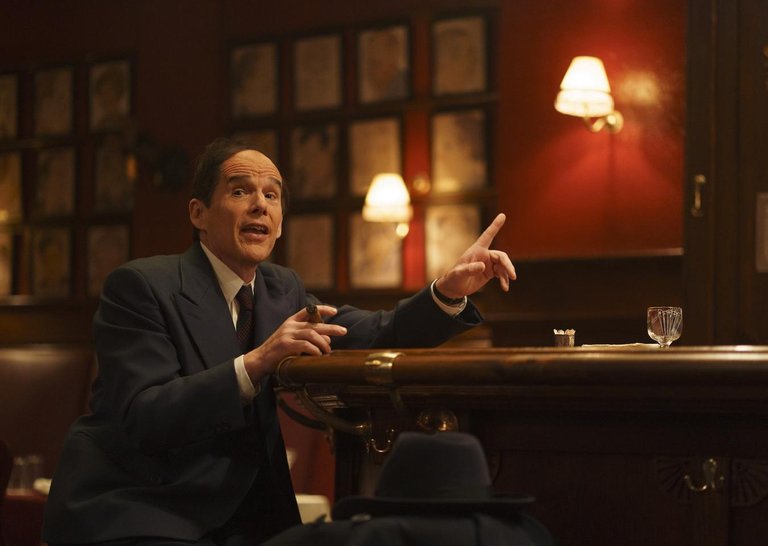
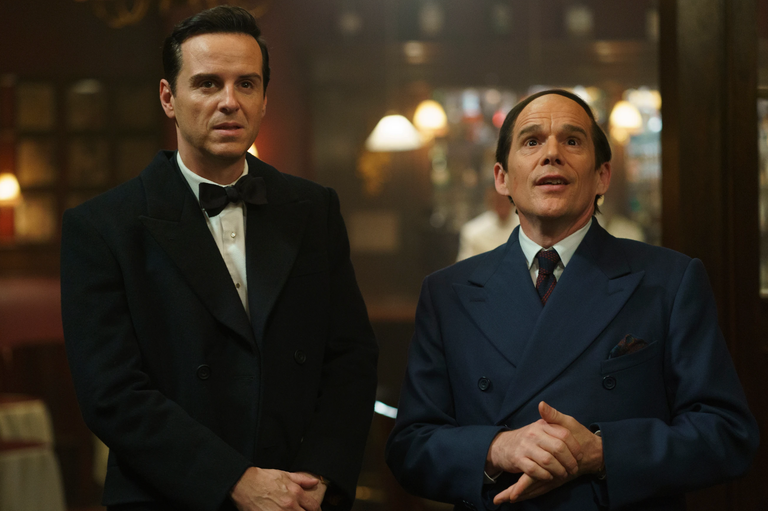

Decir Richard Linklater es decir Ethan Hawke. Esta dupla ha trabajado junta tantas veces que ya es como hablar de Lennon y McCartney, salvando las diferencias del caso, por supuesto. Y esta vez, la actuación de Hawke interpretando al legendario Lorenz Hart le ha valido una nominación al Oscar que yo no esperaba. Sin ánimos de menospreciar su actuación, porque es uno de mis actores favoritos, no sé si debería estar entre las cinco mejores del año, pero pienso lo mismo de Michael B Jordan, así que los criterios de esta año quizás hayan cambiado un poco. En fin, en Blue Moon seguimos la historia de una sola noche en la vida de Hartz, que entre copas de licor, un alcoholismo que renace y su deteriorada autoestima, se sienta en una barra a conversar con diferentes personajes, como el escritor E.B. White, su antiguo compañero creativo Richard Rodgers (el talentoso Andrew Scott) y la joven y hermosa Elizabeth Weiland (Margaret Qualley). Con secuencias de diálogos muy largas como las de muchas de las películas de Linklater y muchos monólogos extensos de Hawke, como en los de la trilogía Before, Blue Moon se parece un poco más a lo que había visto del director, sobre todo porque en el centro también está la imposibilidad el amor. Cazador y admirador de la belleza allí donde pueda encontrarla, Hartz es tan propenso a enamorarse de un cuadro, una flor, un atardecer o, como en el caso de Miss Weiland, de una mujer que no le corresponde. Lo admira, le está agradecida, lo respeta y cree que es un genio, pero no lo ama y si eso no destroza a Hartz es porque él lo sabe - siempre lo ha sabido - y la consciencia de sí mismo y su autoestima ya lo han preparado para un nuevo fracaso amoroso. La relación de adoración de Hartz hacia Elizabeth es una de las más claras y tristes representaciones que he visto en pantalla de lo que significa ser enviado a la friendzone.
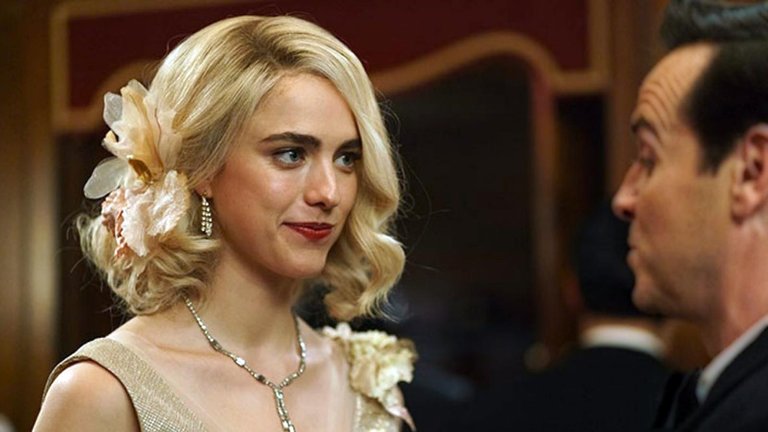
Blue Moon takes place almost entirely in a single setting - the club - and as expected, it has a very good soundtrack, as well as stimulating conversations on the most diverse topics and, although it is based on real characters and historical moments, it is a story freely written by Robert Kaplow who has also achieved his Oscar nomination in the category of Best Original Screenplay, where it faces, among others, my favorite for the category, Sentimental Value, written by Joachim Trier and Eskil Vogt.
Blue Moon transcurre casi en su totalidad en un único decorado - el club - y como era de esperarse, tiene un muy buen soundtrack, además de conversaciones estimulantes sobre los temas más diversos y, aunque se basa en personajes reales y en momentos históricos, se trata de una historia libremente escrita por Robert Kaplow quien también ha conseguido su nominación al Oscar en la categoría de Mejor Guion Original, en donde se enfrenta, entre otros, a mi favorita para la categoría, Sentimental Value, escrita por Joachim Trier y Eskil Vogt.
Nouvelle Vague (2025)

And if I was surprised that Hit Man was a Linklater film, what can I say about Nouvelle Vague? I don't say this because Richard isn't capable of making films like this, but because in it he broke with everything I had previously considered his signature style. As everyone knows, this film tells the story behind the creation of the French film movement known as the Nouvelle Vague, starting with the conception and filming process of Jean-Luc Godard's Breathless. The creative decision was: since we're going to make a film about French cinema of the 1960s, let's make it look like it's from that era. And they succeeded. The film, directed by Linklater, and starring Guillaume Marbeck and Zoey Deutch, is a tribute to an era, a movement, and a host of characters, including François Truffaut, Agnes Varda, Claude Chabrol, Jean Cocteau, Jean-Paul Belmondo, Roberto Rossellini, Éric Rohmer, and of course Jean Seberg, the star of Godard's iconic first film. I really liked that the film began with an anxious and self-critical Godard. His peers had already made films, Truffaut had just released The 400 Blows, and Godard didn't even have a budget. What he did have was a purpose and a vision that, although chaotic to some, was clear. Watching films freed Godard from the terror of writing, which is why he didn't have a script. His process was more like that of a painter who can work all day and then abandon the brush for two weeks. Scattered, to some. Free, to him. Each of the 19 days of filming, the crew and actors arrived on set without knowing what they were going to film, and often without knowing if they would even film it. There were criticisms, there were doubts, there were fears, because Godard's creative process was nothing like what others were used to, but after the final cut, the result proved Godard right: he had made a masterpiece.


Y si me sorprendió que Hit Man fuese una película dirigida por Linklater, ¿qué decir de Nouvelle Vague? Y no digo esto porque Richard no sea capaz de hacer películas de este tipo, sino porque en ella rompió con todo lo que hasta entones yo había considerado su estilo característico. Como todos saben, esta cinta cuenta la historia detrás de la creación del movimiento cinematográfico francés conocido como Nouvelle Vague, a partir de lo que fue la concepción y el proceso de filmación de À bout de souffle de Jean-Luc Godard y la decisión creativa fue: ya que vamos a rodar una película sobre el cine francés de los años '60, hagámosla parecer de esa época. Y lo consiguieron. La cinta, dirigida por Linklater, y protagonizada por Guillaume Marbeck y Zoey Deutch es un tributo a una época, un movimiento y un montón de personajes entre quienes destacan François Truffaut, Agnes Varda, Claude Chabrol, Jean Cocteau, Jean-Paul Belmondo, Roberto Rossellini, Éric Rohmer y por supuesto Jean Seberg, protagonista de la icónica primera película de Godard. Me gustó mucho que la cinta comenzara con un Godard ansioso y auto crítico. Sus semejantes ya habían hecho películas, Truffaut recién había estrenado Les Quatre Cents Coups, y Godard ni siquiera tenía presupuesto. Lo que sí tenía era un propósito y una visión que, aunque caótica para algunos, estaba clara. A Godard ver películas lo libraba del terror de escribir, por eso no tenía un guion. Su proceso se asemejaba más al del pintor que puede trabajar todo un día y luego abandonar el pincel por dos semanas. Disperso, para algunos. Libre, para él. Cada uno de los 19 días de rodaje, el equipo y los actores se presentaban en el set sin saber qué iban a rodar y muchas veces sin saber si tan siquiera lo harían. Hubo críticas, hubo dudas, hubo temores, porque el proceso creativo de Godard no se parecía en nada a lo que los demás estaban acostumbrados, pero tras el montaje final el resultado le dio la razón a Godard: había hecho una obra maestra.

Nouvelle Vague is not just a story about film within a film or an evocation of black and white cinema. It is, at once, a review of one of the most important episodes in the artistic history of humanity and a reflection on creative freedom, self-awareness, art itself, creative processes, competition, and every artist's journey toward discovering their own voice and style.
Nouvelle Vague no es sólo una historia de cine dentro de cine o una evocación de cine en blanco y negro. Es, a la vez, el repaso de uno de los episodios más importantes de la historia artística de la humanidad y una reflexión sobre la libertad creativa, la auto consciencia, el arte en sí mismo, los procesos creativos, la competencia y el viaje de todo artista hacia el descubrimiento de su propia voz y estilo.
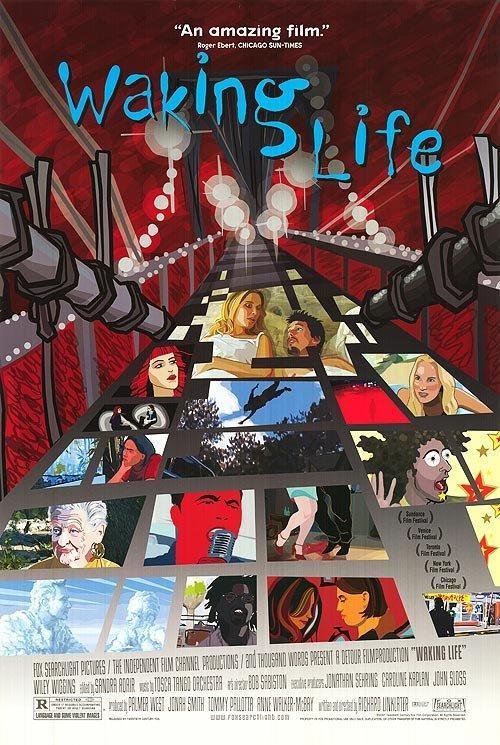
These three Richard Linklater films share the common thread of being based on real-life events, but beyond that and the director's name, they are very different in their own right. I think that if this fact weren't mentioned and these films were shown to an audience unaware of the connection, they wouldn't be able to guess. In fact, it's quite possible that someone might watch Nouvelle Vague and think that it was actually made in the 1960s. Not only for that reason, but for many more, it was my favorite of the three. The performances, the cinematography, seeing the story behind such an iconic film, the final song, the parade of names and characters—it's quite an experience, really. There are many other things I haven't seen from Richard Linklater's filmography, with Boyhood being my oldest unfinished project and Waking Life being the one that piques my curiosity the most. And if you think you don't know this director and have never seen anything by him, let me tell you that you're probably wrong. While not everyone may have seen Dazed and Confused, how many of you have at least once seen the memorable School of Rock with Jack Black? Well, that film was directed by none other than Richard Linklater. And if you haven't yet seen the Before trilogy, do yourself a favor and give it a try. How many of you were familiar with these three films from today's post? Which one was your favorite? Let me know in the comments.

Estas tres películas de Richard Linklater tienen en común el hecho de haberse basado en hechos de la vida real, pero más allá de eso y del nombre del director, son muy diferentes en sí mismas. Creo que si no se mencionara ese hecho y se mostrasen estas películas a un público ignorante de la conexión, no podrían adivinarlo. Es más, es muy posible que alguien vea Nouvelle Vague y piense que, auténticamente, esa película fue hecha en los años sesenta. No sólo por esa razón, sino por muchas más, esa fue mi favorita de las tres. Las actuaciones, la fotografía, el ver la historia detrás de una película tan icónica, la canción del final, el desfile de los nombres y personajes. Es toda una experiencia la verdad. Hay muchas otras cosas que me falta ver de la filmografía de Richard Linklater, siendo Boyhood mi deuda más antigua y Waking Life la que más me despierta curiosidad. Y si creen que no conocen a este director y que nunca han visto nada de él, les cuento que probablemente estén en un error porque quizás no todos hayan visto Dazed and Confused, pero ¿cuánto de ustedes han visto al menos una vez la recordad School of Rock con Jack Black? Bueno, esa película la dirigió el mismísimo Richard Linklater. Y si aún no han visto la trilogía Before, háganse un favor y denle una oportunidad, ¿cuántos de ustedes conocían estas tres películas del post de hoy? ¿cuál fue su favorita? Los leo en los comentarios.
Reviewed by | Reseñado por @cristiancaicedo
Other posts that may interest you | Otros posts que pueden interesarte:
  |
|---|