Late Shift (2025): Nurses Are Heroes [ENG|ESP]


Protagonizada por Leonie Benesch de "The Teacher's Lounge"
I've always said that one of my favorite award categories is Best International Feature Film, or its equivalent, because it showcases stories and perspectives from different corners of the world, and in my opinion, that enriches the Western and very Americanized view of cinema in this part of the world. There, amidst the big Hollywood productions, we see modest films from Asia, Latin America, and small European countries, which, in my personal opinion, are almost always better than most of the films consumed in these parts.
Siempre he mencionado que una de mis categorías favoritas en las entregas de premios es la de Mejor Película Internacional, o su equivalente, porque muestra historias y visiones de distintos rincones del mundo y, en mi opinión, eso enriquece la mirada occidental y muy americanizada del cine en este lado del mundo. Allí, en medio de las grandes producciones de Hollywood vemos entonces modestas cintas asiáticas, latinas, de pequeños países europeos, que, a gusto personal, casi siempre son mejores que la mayoría del cine que se consume en estas latitudes.
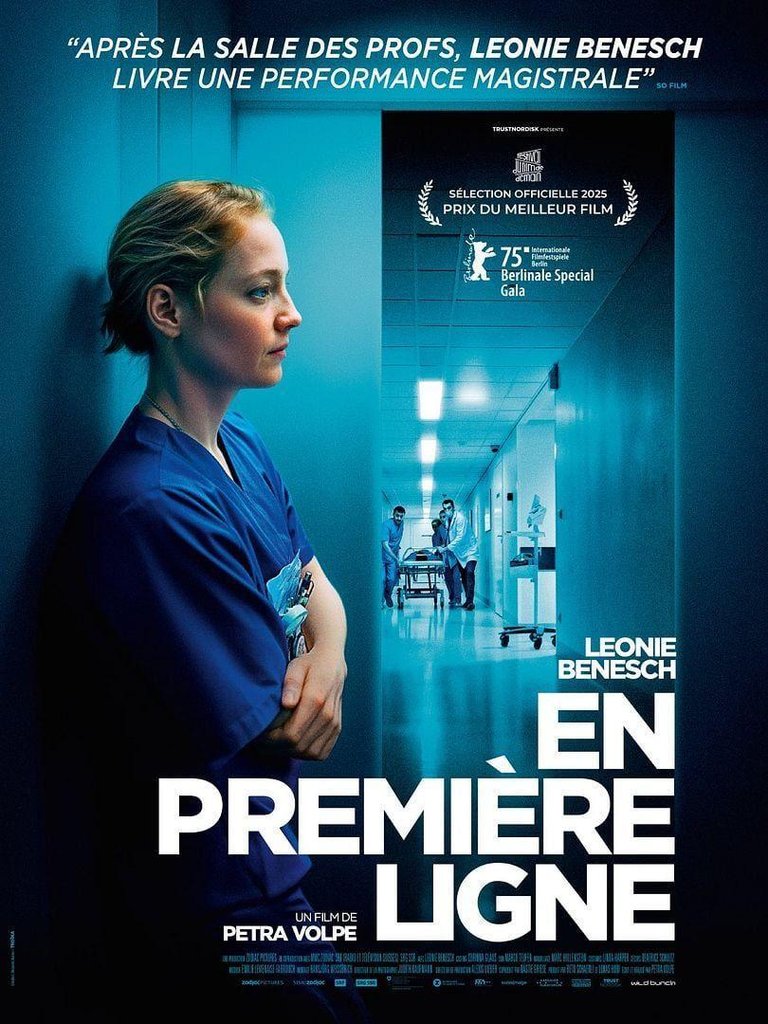
A few days ago, the Academy released its shortlist of fifteen films nominated in this category. Only five will make it to the ceremony, but I wanted to review—as I have done before—as many of these fifteen nominees as possible because even if my favorites don't make it into those five, I know I'll gain the experience of having seen great stories. So far, I've already seen four: the French film It Was Just an Accident, the Korean film No Other Choice, the Argentinian film Belén, and this film representing Switzerland, which is the one I'm bringing you today: Heldin (Late Shift). This is the story of Floria (Leonie Benesch), a nurse who works in the surgical ward of a Swiss hospital, and whom we accompany one afternoon during one of her shifts there. In a sense, the script has no plot. That is, there's no central conflict to be resolved or a specific situation that disrupts Floria's routine shift, such as an explosion, a pandemic, a kidnapping, or any of those situations that other films have already explored countless times. Instead, we follow Floria on a typical shift, on her rounds as she visits the patients in the ward, talks to them, checks their vital signs, administers their medications, and performs her job with dedication and professionalism. Now, when I say there's no plot, I don't mean there's no drama, because there is plenty of that. Upon arriving for her shift, Floria discovers that the ward is almost full, with twenty-five patients, and only one other nurse and a young nursing intern. It's clear that the staff is insufficient. An extra effort will have to be made.
Hace pocos días la Academia publicó su short list de las quince películas nominadas en esta categoría. A la gala solamente llegarán cinco, pero he querido revisar - como otras veces - la mayor cantidad de estas quince candidatas porque aunque mis favoritas no queden entre esas cinco, sé que ganaré la experiencia de haber visto grandes historias. Hasta ahora, ya he visto cuatro: la francesa It Was Just an Accident, la coreana No Other Choice, la argentina Belén y esta cinta que representa a Suiza y que es la que les traigo hoy: Heldin (Late Shift). Se trata de la historia de Floria (Leonie Benesch), una enfermera que trabaja en el ala de cirugía de un hospital suizo y a quien acompañaremos una tarde durante uno de sus turnos allí. En cierto sentido, el guion no tiene trama. Es decir, no hay un conflicto central que deba resolverse o una situación específica que irrumpa en el turno rutinario de Flora como una explosión, una pandemia, un secuestro ni ninguna de esas situaciones que otras películas ya han planteado miles de veces. En cambio, lo que hacemos es seguir a Floria en un turno normal, en sus rondas mientras visita a los pacientes del ala, conversa con ellos, revisa sus signos vitales, les administra sus medicamentos y cumple con su trabajo con dedicación y profesionalismo. Ahora bien, cuando digo que no hay trama, no quiero decir que no hay drama, porque de eso sí hay. Y mucho. Al llegar al turno, Floria descubre que el ala está casi llena, hay veinticinco pacientes, y sólo hay otra enfermera y una joven pasante de enfermería. Es evidente que el personal es insuficiente. Habrá que hace un esfuerzo extra.

Floria must then take care of her patients, each with a different personality, a different illness or situation, receive the patients returning from the operating room, prepare those who are going to be admitted to be operated on, administer the treatments of each one, be attentive to any emergency, attend to the relatives of the patients, even those who are no longer admitted, fill out her report, give instructions to the intern, support the medical technicians, the surgeons... and she must do all this with the smile and kindness that characterize her.
Floria debe entonces cuidar a sus pacientes, cada uno de ellos con una personalidad diferente, una enfermedad o situación distinta, recibir a los pacientes que vuelven del quirófano, preparar a los que van a ingresar a ser operados, administrar los tratamientos de cada uno, estar atenta a cualquier emergencia, atender a los familiares de los pacientes, incluso de aquellos que ya no están ingresados, llenar su reporte, dar indicaciones a la pasante, apoyar a los técnicos médicos, a los cirujanos... y debe hacer eso con la sonrisa y la amabilidad que la caracterizan.

When I saw this film's name on the Oscar shortlist, I knew nothing about it, but as soon as I saw Leonie Benesch's face on screen, I knew I was about to see not only a great story but a tremendous performance. If I hadn't seen her in other films and someone told me that the woman on screen was actually a nurse hired for the movie, I would have believed it. She's that good. She not only executes every scene described in the script perfectly, but she does it with the naturalness of someone accustomed to taking blood samples, preparing medications, pushing gurneys, taking blood pressure, and sanitizing her hands every five seconds. I have no doubt that her credibility as a nurse is one of the main reasons this film made the Oscar shortlist. Will it be enough to get her to the ceremony? Perhaps, especially considering that a couple of years ago another film, the German Das Lehrerzimmer (The Teacher's Lounge), also starring Benesch, was nominated in the same category. Winner of two Lola Awards, Best Supporting Actress for her role in September 5 and Best Actress for the aforementioned The Teacher's Lounge, Leonie Benesch is one of the best actresses of her generation, and this new film confirms it.

Cuando vi el nombre de esta cinta en la short list de los Oscars no sabía nada de ella, pero en cuanto vi el rostro de Leonie Benesch en pantalla supe que vería no sólo una gran historia sino una tremenda actuación. Si no la hubiera visto antes en otros films y alguien me dijera que la mujer de la pantalla es en realidad una enfermera contratada para la película lo hubiera creído. Así de buena es. No es sólo que ejecuta todas las escenas descritas en el guion con perfección, sino que lo hace con la naturalidad de alguien acostumbrado a tomar muestras de sangre, preparar medicamentos, empujar camillas, tomar la presión arterial e higienizar sus manos cada cinco segundos. No tengo dudas de que su credibilidad como enfermera es uno de los motivos centrales por los cuales esta película ha llegado hasta la short list de los Oscars, ¿le alcanzará para estar en la gala? Tal vez, sobre todo teniendo en cuenta que hace un par de años otra cinta, la alemana Das Lehrerzimmer (The Teacher's Lounge), también con Benesch en primera línea, estuvo nominada en ese misma categoría. Ganadora de dos premios Lola, Mejor actriz secundaria por su papel en September 5 y Mejor actriz por la mencionada The Teacher's Lounge, Leonie Benesch es una de las mejores actrices de su generación y esta nueva película lo confirma.

Besides the superlative performance of its lead actress, Late Shift has the advantage of portraying a relatable and universal reality. Anyone who has been hospitalized or had a family member admitted has witnessed the chaos that staff shortages or overcrowded wards can create. And if Floria's shift is like this in a first-world hospital with all the necessary supplies and state-of-the-art equipment, one can only imagine how complicated it is here in the third world, where there's not only a lack of staff, but also basic necessities like alcohol or suture thread. Yes, we've all been there, and that's why we can empathize with Floria and recognize her as the hero that every nurse is.
Además de la actuación superlativa de su protagonista, Late Shift tiene a su favor el hecho de contar una realidad cercana y universal. Todos quienes hayamos estado ingresados en un hospital o hayamos tenido a un familiar internado, hemos visto lo caótico que puede resultar la falta de personal o la sobreocupación de una sala. Y si el turno de Floria, en un hospital de primer mundo en donde se cuenta con todos los insumos y equipos de avanzada tecnología, sólo puede imaginarse lo complicado que resulta eso acá, en el tercer mundo, en donde no sólo falta personal, sino también cosas tan básicas como el alcohol o el hilo de sutura. Sí, todos hemos pasado por eso y por eso podemos empatizar con Floria y reconocerla como la heroína que cada enfermera es.

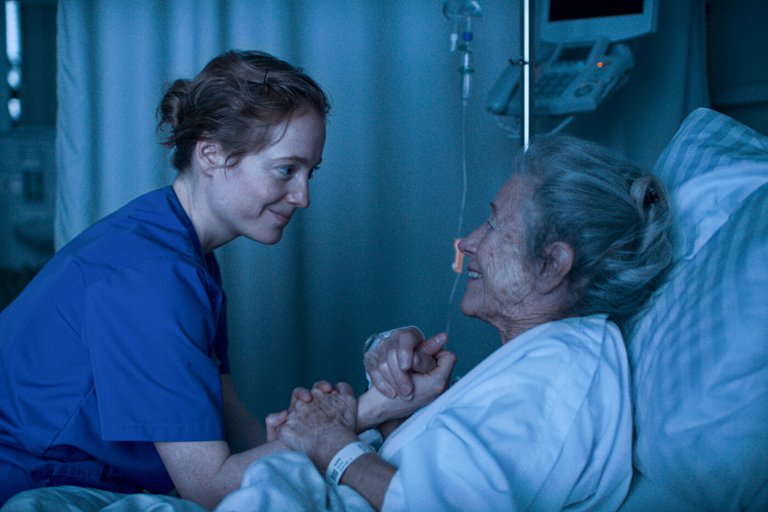

Hence the film's original title, Heldin, translates precisely as Heroine. Nurses are the first line of defense for the healthcare system, a bulwark against catastrophe, the cornerstone upon which other medical specialists rely. And although nurses are often considered to be of a lower status than doctors, perhaps because their careers are shorter, the truth is that daily reality compels them to be prepared and to grow in diverse areas, demanding much more from them than is generally acknowledged. Working under pressure, operating equipment, administering first aid, acting as counselors for their patients and families, suddenly facing stressful or life-threatening situations like death—all in a single shift. And after the physical and mental exhaustion that this generates, they go home to do it all again the next day. Day after day. For years. Nurses—good nurses—are indispensable heroes; hence the World Health Organization's concern about the global nursing shortage, which it considers a public health problem. According to figures revealed in the film, more than a third of nurses in Switzerland leave the profession after four years, and by 2030 the country will be short approximately 30,000 nurses. In Germany, the estimate is 260,000 by 2029. Besides paying tribute to frontline workers, Petra Biondina Volpe, in writing and directing this film, has highlighted the need to discuss this issue and anticipate what could be a global catastrophe. Has anyone seen this film? Let me know in the comments.

De allí que el título original de la cinta, Heldin, traduzca precisamente eso: Heroína. Las enfermeras son esa primera línea que sostiene el sistema de salud, un muro de contención ante la catástrofe, la piedra angular sobre la que se apoyan los demás especialistas médicos y aunque se considere que las enfermeras son de un nivel inferior que los médicos, tal vez porque su carrera es más corta, la verdad es que la realidad diaria las obliga a estar preparadas y a crecer en las áreas más diversas, exigiendo de ellas mucho más de lo que se reconoce. Trabajo bajo presión, manejo de equipos, aplicación de primeros auxilios, actuar de psicólogas con sus pacientes y familiares, verse enfrentadas repentinamente a situaciones estresantes o definitivas como la muerte, todo eso en un mismo turno. Y luego del agotamiento físico y mental que eso genera, vuelven a casa para volver a hacer lo mismo al día siguiente. Día tras día. Durante años. Las enfermeras - las buenas enfermeras - son heroínas indispensables; de allí la preocupación de la Organización Mundial de la Salud ante la carencia global de personal de enfermería, lo que considera un problema de salud pública. Según cifras reveladas en la cinta, más de un tercio del personal de enfermería en Suiza abandona su profesión después del cuarto año de ejercicio y para 2030 en el país faltarán unas 30.000 enfermeras. En Alemania la estimación asciende a 260.000 para 2029. Además de homenajear al personal de primera línea, al escribir y dirigir esta película, Petra Biondina Volpe ha manifestado la necesidad de conversar sobre este tema y anticiparnos a lo que puede ser una catástrofe mundial, ¿alguno ha visto esta película? Los leo en los comentarios.
Reviewed by | Reseñado por @cristiancaicedo
Other posts that may interest you | Otros posts que pueden interesarte:
 |
|---|
I've not watched both of the movie but here in Italy was sponsorized a lot and have so many good review, I really must watch both of them !!
se ve buena, gracias por la recomendación
looks good, thanks for the recommendation