Left-Handed Girl (2025): unfairly ignored by the Oscars [ENG|ESP]


Ganadora del Premio a Mejor Película en el Festival de Roma
Now that we know the nominees for the Oscar for Best International Feature Film, it feels even more important to talk about this film. Although it was among the fifteen shortlisted films, it was ultimately left out when the list was narrowed down, and I honestly don't understand why. Look, I know it's difficult to choose only five films from a pool of fifteen, and I also know that three of those films were destined for the final ceremony, which made filling the other two spots even harder. But I want to share all the merits this film has for deserving to be there.
Ahora que ya conocemos los nominados al Oscar a Mejor Película Internacional, se me hace todavía más necesario hablar de esta película, pues si bien llegó a estar entre las quince preseleccionadas, fue dejada atrás a la hora de reducir el listado y la verdad no entiendo por qué. A ver, sé que es difícil escoger solo cinco películas de entre un universo de quince y también sé que tres de esas películas estaban llamadas a llegar a la gala final, lo que hizo más difícil llenar los otros dos lugares, pero quiero compartirles todos los méritos de esta cinta para estar allí.

Directed by Shih-Ching Tsou and co-written by her and Sean Baker (director of Anora), Left-Handed Girl is set in Taiwan and tells the story of a single mother who returns to Taipei with her two daughters after several years living in the countryside, intending to open a food stall at a popular night market. One of the daughters is a teenager, nearing twenty, yearning for freedom, independence, and rebellion. Once a brilliant student, she never pursued university studies and is often both proud and ashamed of this fact. I-Ann, the older daughter, hides tenderness and regret beneath a facade of strength and confidence. Her mother, Shu-Fen, is more transparent in expressing her emotions, though she too harbors secrets. She is a single mother still haunted by the shadow of the girls' father and the way his decisions affected not only the family's past but also their present. Shu-Fen knows that she hasn't always made the best decisions, but she bears the pain of her family turning against her so harshly, even though she's such a hardworking, loving person who cares so much about her daughters' well-being.
Dirigida por Shih-Ching Tsou y co escrita por ella junto a Sean Baker (director de Anora), Left-Handed Girl se ambienta en Taiwán y cuenta la historia de una madre soltera que regresa a Taipei con sus dos hijas tras varios años viviendo en el campo, con la idea de abrir un puesto de venta de comida en un popular mercado nocturno. Una de las hijas es adolescente, cerca de los veinte años y tiene ansias de libertad, de independencia y rebeldía. Brillante estudiante en otros tiempos, no siguió estudios universitarios y muchas veces se muestra tan orgullosa como avergonzada de ese hecho. I-Ann, que así se llama la hija mayor, esconde ternura y arrepentimiento bajo una coraza de fuerza y seguridad. Su madre, Shu-Fen, es más transparente a la hora de reflejar sus emociones, aunque esconde algunos secretos también. Es una madre soltera que aun arrastra la sombra del padre de las niñas y la forma en que las decisiones de éste afectaron no sólo el pasado de la familia sino también el presente. Shu-Fen sabe que no siempre ha tomado las mejores decisiones pero lleva con dolor el hecho de que su familia se ensañe tanto en su contra siendo ella una persona tan trabajadora, amorosa y preocupada por el bienestar de sus hijas.

But the heart and soul of the film, the character who gives it its name, is the youngest daughter. I-Jing is five years old, and although she doesn't fully grasp the complexities of her situation—moving to another city, starting over, setting up a business—that doesn't mean she'll just sit idly by. I-Jing's innocence and kindness lead to some of the most tender and moving moments in the film's 108-minute runtime.
Pero el alma y el encanto de la cinta, el personaje que le da nombre, es la hija menor. I-Jing tiene cinco años y aunque no comprende del todo lo complejo de la situación que vive - mudarse a otra ciudad, volver a comenzar, montar un negocio - no quiere decir que se quede de brazos cruzados. La ingenuidad de I-Jing y su nobleza provocarán algunas de las situaciones más tiernas y emotivas de los 108 minutos de duración de la película.

In short, Left-Handed Girl is a story of struggle and adaptation in which each character, in their own way, grapples with a new environment that threatens to further fragment an already broken family. It's interesting how, despite Shu-Fen's youth, she and her daughters represent three different generations, three distinct perspectives on life and the challenges of starting over. The vibrant nighttime Taipei is the main setting for highlighting these differences. The mother works at the market, at her food stall, while the eldest daughter works elsewhere, drives her motorcycle, rolls the occasional cigarette, and has sex with her boyfriend; and in their absence, the younger daughter roams the market, discovering the world—not always understanding it—as a vast playground. Added to this are the girls' aunts and uncles, their grandmother who is involved in strange businesses that generate great profits, and the superstitious grandfather who reprimands I-Jing for writing and eating with her left hand, which is considered "the devil's hand," without being able to anticipate what that phrase will generate in the little girl and the way in which it will affect not only her destiny but that of her entire family.

En pocas palabras, Left-Handed Girl es una historia de lucha y adaptación en la que cada personaje, a su manera, lidia con un nuevo entorno que amenaza con fragmentar aun más a una familia ya rota. Es interesante cómo, a pesar de la juventud de Shu-Fen, ella con sus hijas representan tres generaciones diferentes, tres perspectivas distintas ante la vida y ante los desafíos que comprende volver a comenzar. La vibrante Taipei nocturna es el escenario principal para acentuar estas diferencias. La madre trabaja en el mercado, en su puesto de comida, mientras la hija mayor trabaja en otro lugar, conduce su motocicleta, enrola una que otro cigarrillo y mantiene relaciones sexuales con su novio; y ante la ausencia de ambas, la pequeña recorre el mercado descubriendo el mundo - no siempre comprendiéndolo - como un enorme patio de juegos. A ellas se suman las tías y tíos de las niñas, su abuela que está metida en negocios extraños que le generan gran rentabilidad y el supersticioso abuelo que reprende a I-Jing por escribir y comer con la mano izquierda, la que se considera "la mano del diablo", sin poder anticipar lo que esa frase generará en la pequeña y la manera en que afectará no solo su destino sino el de toda su familia.
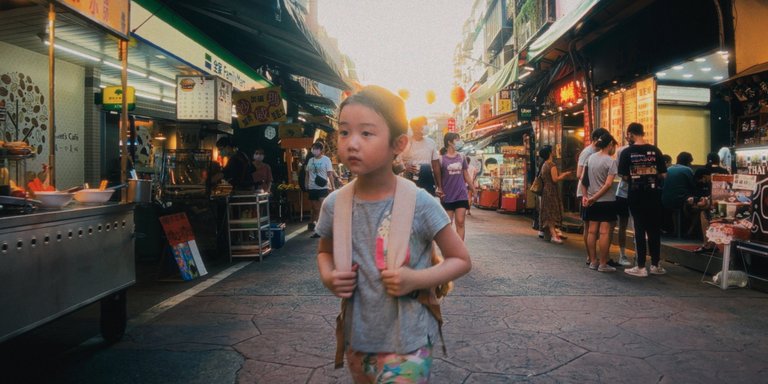
With a fine blend of drama, comedy, family history, survival, tenderness, and a handful of endearing female characters, Shih-Ching Tsou has crafted one of the most moving and thoughtful stories I've seen in recent years. Winner of the top prize at the Rome Film Festival, it owes its success to his vision, talent, and the efforts of a renowned cast: Janel Tsai, who plays Shu-Fen, is a Golden Bell Award winner; Ma Shih-Yuan, who won a Golden Horse Award for her role as I-Ann; and young Nina Ye, who plays I-Jing, who garnered several nominations and awards for her performance, most notably her award at the Asian World Film Festival and recognition from the Las Vegas Film Critics Society.
Con una buena mezcla de drama, comedia, historia familiar, supervivencia, ternura y un puñado de personajes femeninos entrañables, Shih-Ching Tsou ha logrado construir una de las historias más emotivas y reflexivas que he visto en los últimos años, ganadora del premio principal en el Festival de Roma, gracias a su visión, su talento y el esfuerzo de una reconocida terna actoral: Janel Tsai, quien interpreta a Shu-Fen es ganadora de un Golden Bell Award; Ma Shih-Yuan, quien ganó un Golden Horse Awards por su papel como I-Ann y la pequeña Nina Ye, I-Jing, que obtuvo varias nominaciones y galardones por su interpretación, siendo las más destacadas su premio en los Asian World Film Festival y el reconocimiento de Las Vegas Film Critics Society.


After watching Left-Handed Girl, some may be surprised that they hadn't previously encountered Shih-Ching Tsou's talent and that they saw Sean Baker's name in the film's credits, but the truth is that this team has worked together for quite some time. Tsou co-directed Baker's film Take Out and also produced other works by the director, such as Starlet, Tangerine, Red Rocket, and the memorable and also moving The Florida Project. They know each other quite well, and it shows in the screenplay, the direction, and the editing of the film, which was handled by Sean Baker. As I mentioned at the beginning of this post, it was to be expected that among the fifteen films shortlisted for the Best International Feature Film category at the Oscars, the Academy chose the inevitable O Agente Secreto, It Was Just an Accident and Sentimental Value, but among the two remaining spots they ignored films like Belén, Late Shift, Park Chan-wook's dark comedy No Other Choice or this beautiful Left-Handed Girl simply defies explanation. In my opinion, any of these four films deserved that nomination much more than Sirāt, which I plan to review soon so I can elaborate on my opinion. And you, have you seen all these films? Do you think any other films could have been nominated instead of the ones mentioned? Let me know in the comments.

Después de ver Left-Handed Girl a algunos les sorprenderá el hecho de no haber visto antes el talento de Shih-Ching Tsou y de haber visto el nombre de Sean Baker en los créditos de la cinta, pero la verdad es que este equipo ha trabajado junto desde hace bastante tiempo. Tsou fue co directora del film Take Out de Baker y además produjo otros de los trabajos del director como Starlet, Tangerine, Red Rocket y la recordada y también emotiva The Florida Project. Se conocen bastante bien y eso se nota, tanto en el guion como en la dirección y en el montaje de la cinta, a cargo de Sean Baker. Como dije al inicio de este post, era de esperarse que de entre las quince películas preseleccionadas para la categoría de Mejor Película Internacional en los Oscars, la Academia eligiera a las inevitables O Agente Secreto, It Was Just an Accident y Sentimental Value, pero que entre las dos plazas restantes hayan ignorado películas como Belén, Late Shift, la comedia negra de Park Chan-wook No Other Choice o esta bellísima Left-Handed Girl sencillamente no tiene explicación. En mi opinión, cualquiera de estas cuatro cintas merecía esa nominación mucho más que Sirāt, la cual pienso reseñar pronto para poder argumentar mi opinión. Y ustedes, ¿vieron todas estas películas? ¿les parece que hubieran podido nominar alguna otra película en lugar de las mencionadas? Los leo en los comentarios.
Reviewed by | Reseñado por @cristiancaicedo
Other posts that may interest you | Otros posts que pueden interesarte:
  |
|---|
Interesante reseña que realmente hace que a uno le provoque ver la película. Tengo acceso a Magictv y a Plutotv pero no s Netflix. Voy a buscar en aquellos a ver si la encuentro. Gracias por compartir. Éxito.
Yo creo que la vas a encontrar y que te va a gustar. Saludos y gracias por leerme!
Me gusta esa premisa de mostrar tres perspectivas distintas de una misma situación, cada una desde su "mundo" por así decirlo, me llamó mucho la atención la trama de esta película, luego de leer tu review. últimamente ya no valoro tanto los galardones que pretenden medir la calidad en el arte, en especial en los Oscars o los Grammys, así que que esté nominada o no no es relevante para mi, me importa más la opinión de la audiencia como tú.
Sí, comparto el sentimiento con respecto a esas instancias. Muchas gracias por considerar mi opinión, espero que puedas ver y disfrutar esta linda historia. Saludos y muchas gracias por leerme y comentar.
¡Felicitaciones!
1. Invierte en el PROYECTO ENTROPÍA y recibe ganancias semanalmente. Entra aquí para más información.
3. Suscríbete a nuestra COMUNIDAD, apoya al trail de @Entropia y así podrás ganar recompensas de curación de forma automática. Entra aquí para más información sobre nuestro trail.
4. Creación de cuentas nuevas de Hive aquí.
5. Visita nuestro canal de Youtube.
Atentamente
El equipo de curación del PROYECTO ENTROPÍA
Muchas gracias por la mención!
está interesante, gracias por recomendar
It's interesting, thanks for recommending