Sirāt (2025): is it really that good? [ENG|ESP]


Nominada a dos premios de la Academia
With its 11 Goya Award nominations, 2 Golden Globe nominations, and 2 Oscar nominations, Sirāt has made a strong impression this awards season. It won the Jury Prize at Cannes, was nominated for a César Award, and took home five statuettes at the European Film Awards, beating out other quite good films. Given all this, it was natural that there was a certain amount of hype in Latin America surrounding the film's release, and that I myself wanted to see it as soon as possible. But is this film really that good?
Con sus 11 nominaciones a los premios Goya, 2 a los Globos de Oro y 2 a los premios Oscar, Sirāt ha pisado fuerte en esta temporada de premios. Fue premiada con el Premio del Jurado en Cannes, nominada a los premios César y obtuvo cinco estatuillas en los Premios del Cine Europeo imponiéndose a otras cintas bastante buenas... debido a todo esto, era natural que existiera cierto hype en América Latina por el estreno de esta película y que yo mismo quisiera ir cuanto antes a verla, pero ¿es realmente tan buena esta cinta?

Directed by Óliver Laxe, with a screenplay by the director himself along with Santiago Fillol, Sirāt begins as a film and ends as... something else. The starting point is the search for a girl by her father and younger brother. Luis, the father, arrives with his son Bruno in the middle of the Moroccan desert where a rave is taking place, hoping to find his daughter Mar there because she often attends these electronic music parties until dawn. With the girl's photograph, Luis and Bruno, a couple who seem completely out of place in their surroundings, begin asking every raver they meet if anyone has seen or knows anything. They learn of another party taking place in a different part of the desert. Not knowing how to get there, Luis needs one of the ravers who will be there to point him in the right direction. But then, out of nowhere, the military authorities of the African country arrive in the desert and order them to break up the party and leave the country: World War III has begun. Lined up to leave the country, Luis faces the possibility of returning home without his daughter. Taking advantage of a moment of inattention from the soldiers, he decides to evade the authorities and venture deeper into the desert, following some ravers who have done the same, heading for the party where Mar might be.
Dirigida por Óliver Laxe, con guion del propio director junto a Santiago Fillol, Sirāt comienza como una película y termina como... como otra cosa. El punto de partida es la búsqueda de una chica por parte de su padre y su hermano menor. Luis, el padre, llega con su hijo Bruno al medio del desierto marroquí en donde se está llevando a cabo una rave en donde, presume, puede encontrar a su hija Mar porque ella suele ir a esas fiestas de música electrónica sin amanecer. Con la fotografía de la chica, Luis y Bruno, una pareja que desentona completamente con el entorno, comienzan a preguntar a todos los raveros que se van encontrando por si alguien ha visto o sabe algo y así se enteran de otra fiesta que se está celebrando en otra parte del desierto. Sin saber cómo llegar allí, Luis necesita que alguno de los reveros que vaya a ir le indique el camino, pero entonces, de la nada, las autoridades militares del país africano llegan al desierto y les piden desmantelar la fiesta y abandonar el país: ha empezado la tercera guerra mundial. Formados en línea para abandonar el país, Luis se enfrenta a la posibilidad de volver a casa sin su hija y en un descuido de los soldados, decide eludir a las autoridades e internarse en el desierto detrás de unos raveros que hicieron lo mismo con rumbo a l fiesta en la que tal vez se encuentre Mar.

Put that way, it sounds like a good movie idea. It has the elements of a thriller, a film about disappearances, which deepens the mystery (who is Mar really? what happened to her?), and it's also a road movie filmed in the desert with shots reminiscent of Mad Max and an electronic soundtrack that, for much of the film, helps the viewer become physically involved in the story and the desert. However, I couldn't connect with the story or the characters for very long.
Dicho así, parece una buena idea de película. Tiene el elemento de ser un thriller, una película sobre desapariciones, lo que profundiza el misterio (¿quién es realmente Mar? ¿qué fue de ella?) y también es una road movie rodada en el desierto con unas tomas que evocan los escenarios de Mad Max y con una banda sonora de ritmos electrónicos que en una gran parte de la película ayudan al espectador a involucrarse físicamente en la historia y en el desierto. Sin embargo, no logré conectar con la historia ni con los personajes por mucho tiempo.

Let's start with the positives. Sirāt is a fairly original story in some ways, with good production design and an interesting premise that grabs you in the first few minutes thanks to the exotic desert setting and the beats of a very well-chosen and mixed soundtrack. Especially during the first hour of the film, sitting in the theater watching it, you could almost feel swept up in the on-screen party thanks to the music. In my case, I tapped my feet to the bass line the whole time, and I think that's a good thing because it adds an extra dimension to a two-dimensional screen. Another thing I want to highlight is that, with the exception of Luis and Bruno, the film's protagonists aren't professional actors; they're real reveres, selected through casting at various parties of that kind, who even keep their real names on screen. This is certainly noticeable, but what's lost in acting quality is gained in authenticity. When these men and women dance in the desert, walk, or drive from one place to another, their clothing and their way of speaking make us feel like we're in the real world, not in a fictional one. Sirāt isn't the first, nor will it be the last, film to feature non-professional actors in the lead roles, but it's not a very common practice these days, and there's a certain courage there that must be acknowledged—a risky gamble that was celebrated at Cannes and other European film festivals.

Primero hablemos de lo positivo. Sirāt es una historia bastante original de algún modo, con un buen diseño de producción y una propuesta interesante que te atrapa en los primero minutos gracias a lo exótico del desierto y a los beats de una banda sonora muy bien elegida y mezclada. Especialmente durante la primera hora de película, estar en la sala de cine viendo la película, uno casi podía sentirse arrastrado a la fiesta de la pantalla gracias a las canciones. En mi caso, seguí el ritmo del bajo con mis pies en todo momento y eso creo que es positivo porque le da una dimensión extra a una pantalla bidimensional. Otra cosa que destaco es que, a excepción de Luis y Bruno, los protagonistas de la cinta no son actores profesionales, son reveros reales, seleccionados mediante un casting en distintas fiestas de ese estilo, que incluso mantienen sus verdaderos nombres en la pantalla. Esto por supuesto se percibe, pero lo que se pierde en calidad actoral se gana en autenticidad. Cuando estos hombres y mujeres bailan en el desierto, caminan o conducen de un lado a otro, sus trajes o su forma de hablar, sentimos que estamos en el mundo real y no en una ficción. Sirāt no es la primera ni será la última película que ocupe actores no profesionales en los papeles principales, pero no es una práctica muy común estos días y hay allí una valentía que hay que reconocer, una apuesta arriesgada que fue celebrada en Cannes y en otros festivales de cine europeo.

But, in my personal opinion—and that's all this is—the film suffers from an unforgivable flaw in any work of fiction: a broken promise. Sirāt begins as a thriller about a man searching for his daughter, but in the second half, that's forgotten, and the story transforms into something else entirely that also goes nowhere. Mind you, I'm not saying I was disappointed by the ending, but rather that when the film ended, I felt it wasn't an ending, or even a story, because the beginning sets something up, the development veers off course, and the ending—abrupt—doesn't pick up on anything promised at the start.
Pero, en mi opinión personal - y es todo lo que esto es - la cinta adolece de un error imperdonable en cualquier obra de ficción que es una promesa incumplida. Sirāt empieza como el thriller de un hombre que busca a su hija, pero en la segunda mitad de la película eso se olvida y la historia se transforma en otra cosa que tampoco llega a ninguna parte. Atención, no estoy diciendo que me haya decepcionado del final, sino que cuando la película se acabó, sentí que eso no era un final, ni siquiera una historia porque el inicio plantea algo, el desarrollo se desvía y el cierre - abrupto, por demás - no retoma nada de lo prometido en el inicio.

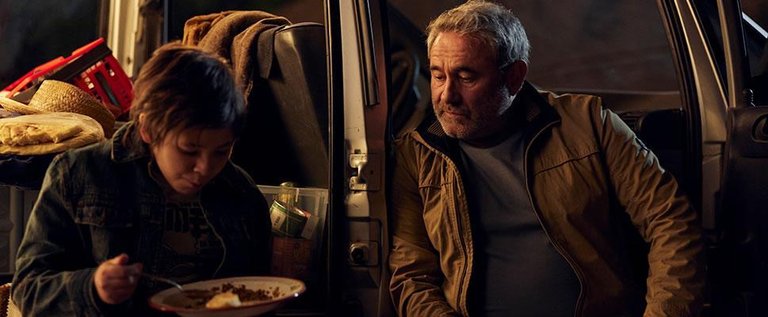

In the second half of the film, there are several scenes that are surprising and make you jump out of your seat, but a couple of seconds later you find yourself wondering, "Does this make sense in this movie?" The feeling is the same as in some horror films with scenes designed—forced, I'd say—to elicit a physical reaction, even if they don't make much sense within the script. I don't mean to say that films have to be predictable, but there are certain types of movies that, in presenting their initial arguments, make a promise they must fulfill. I think of that Chekhov quote, "If in the first act you have hung a gun on the wall, then in the next it must be fired." "Otherwise, don't put it there," and I think the biggest mistake in Sirāt is presenting a disappearance that is then literally and metaphorically lost from sight. Part of me suspects that the success of this film is due almost exclusively to its good sound and music—which, yes, it must be acknowledged, it has—and to the fact that the producers are the brothers Agustín and Pedro Almodóvar, because for me there is no other explanation for the fact that this film managed to get into the final Oscar ceremony over films like Belén, Late Shift or the tender Left-Handed Girl. It doesn't make sense to me, how many of you have seen this movie? Do you think it's one of the best movies of the year? I'll read your comments.

En esa segunda mitad de la cinta hay varias escenas que provocan sorpresa y te hacen saltar del asiento, pero un par de segundos después uno mismo se cuestiona "¿tiene sentido que ocurra esto en esta película?" La sensación es la misma que producen algunas cintas de terror con escenas diseñadas, forzadas diría yo, para generar una reacción física aunque luego no tengan mucho sentido dentro del guion. No quiero decir que las cintas tienen que ser predecibles, pero hay cierto tipo de películas que al presentar sus argumentos iniciales plantean una promesa que deben cumplir. Pienso en aquella frase de Chéjov, "Si en el primer acto has colgado una pistola en la pared, entonces en el siguiente debe ser disparada. Si no, no la pongas ahí" y creo que el mayor desacierto de Sirāt es plantear una desaparición que literal y metafóricamente luego se pierde de vista. Una parte de mí sospecha que el éxito de esta cinta se debe casi en exclusiva a su buen sonido y su música - que sí, hay que reconocerlo, la tiene - y al hecho de que los productores son los hermanos Agustín y Pedro Almodóvar, porque para mí no hay otra explicación para el hecho de que esta cinta haya conseguido meterse en la gala final de los Oscars por encima de cintas como Belén, Late Shift o la tierna Left-Handed Girl. No tiene sentido para mí, ¿cuántos de ustedes han visto esta película? ¿les parece una de las mejores películas del año? Los leo en los comentarios.
Reviewed by | Reseñado por @cristiancaicedo
Other posts that may interest you | Otros posts que pueden interesarte:
  |
|---|
No es la mejor del año sin duda; pero en efecto creo que precisamente eso que no termina de ser es lo que le permite no pasar desapercibida porque rompe esquemas y el cerebro se queda ¿?... Vi un chiste en el programa español La Revuelta en donde bromeaban sobre cómo ser intelectual sin leer, e hicieron una tabla de equivalencias; indicaban frases que eran igual a algo, y en el caso de esta película fue: ver Sirat es igual a ver Sirat pero si ver Sirat es igual a ver Sirat entonces Sirat te ve a ti ja, ja, ja
https://www.facebook.com/61563978460749/videos/-a-qu%C3%A9-equivale-leerse-los-subt%C3%ADtulos-de-los-diez-millones-de-reels-que-te-comes/1934416227434980/
Jajajaja no lo había visto. Gracias por el clip y por comentar. Saludos.
Congratulations @cristiancaicedo! You received a personal badge!
You can view your badges on your board and compare yourself to others in the Ranking
Check out our last posts: