Film Review: 9th Company (9 rota, 2005)

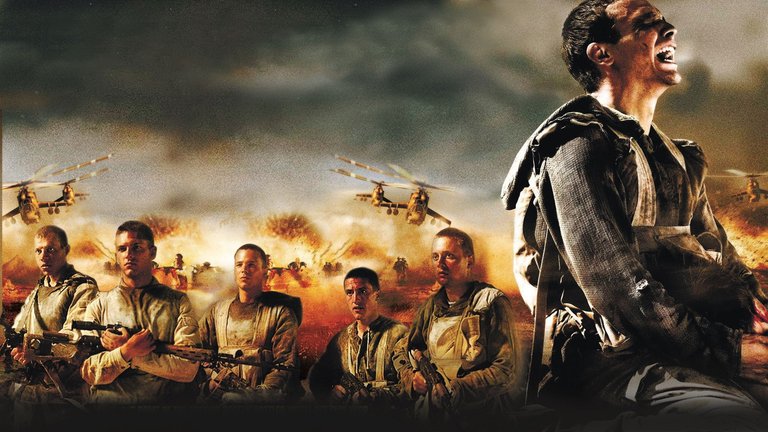
Afghanistan has, in contemporary popular perception, become synonymous with the “graveyard of empires.” This grim epithet stems from the failures of three successive global powers—the British Empire, the Soviet Union, and the United States—to establish lasting dominion over its rugged, fractious terrain. The Soviet Union’s bloody and debilitating intervention, widely cited as a catalyst for its ultimate collapse in the Cold War, provides the harrowing backdrop for Fyodor Bondarchuk’s 2005 war drama 9th Company. The film attempts to serve as Russia’s answer to the great Hollywood Vietnam epics, offering a visceral, anti-war narrative that simultaneously mourns the common soldier and condemns the political folly that sent him to his fate.
The plot follows a classic boot-camp-to-battlefield arc. In 1988, seven young men, including the central protagonist Oleg “Lyuty” Lyutyaev (Aleksey Smolyaninov), are conscripted in Krasnoyarsk. Their brutalisation begins in the Fergana Valley of Uzbekistan, under the merciless tutelage of Senior Warrant Officer Alexander Dygalo (Mikhail Porechenkov), a hardened Afghan veteran. This prolonged introductory act is crucial; by the time the recruits are deployed to the 9th Company of the 345th Airborne Regiment, the audience has witnessed their transformation from raw civilians into a band of brothers. Their arrival at Bagram airbase is met with immediate horror as a mujahideen rocket destroys a transport plane ferrying soldiers home—a potent symbol of the war’s cyclical, consuming nature. Thrust into Operation Magistral, a major offensive to secure mountain supply routes, the company endures a series of brutal, chaotic engagements. The narrative crescendos at the infamous Hill 3234, where a handful of paratroopers, having celebrated New Year’s Day 1989, are besieged by overwhelming mujahideen forces. In a spectacular, CGI-heavy climax, Soviet air power annihilates the attackers, leaving Lyuty as the sole survivor. The final, crushing irony is delivered soon after: he learns the Soviet withdrawal has been ordered, rendering the sacrifice of his entire company seemingly pointless.
9th Company marked the directorial debut of Fyodor Bondarchuk, an actor and son of the legendary Soviet filmmaker Sergei Bondarchuk. Interestingly, the project originated as a modern remake of his father’s celebrated debut, Fate of a Man, transposed to the Chechen Wars. However, the contemporary political sensitivity of that conflict prompted a pivot. Bondarchuk, hitherto known for music videos, instead embraced a script by Yuri Korotkov, inspired by real events from the Soviet-Afghan War. In doing so, he consciously framed the conflict as a Soviet mirror to America’s Vietnam, drawing direct inspiration from the aesthetic and moral grammar of films like Platoon, Full Metal Jacket, and Hamburger Hill. The film’s stance is unequivocally anti-war, viewing the invasion as a catastrophic geopolitical blunder, while striving to honour the individual courage, sacrifice, and shattered innocence of the conscripts caught in its gears.
Bondarchuk marshalled a budget unprecedented in Russian cinema for such a project, evident in the extensive location shooting across Siberia, Crimea, and Uzbekistan. The film is spectacle-driven, featuring relentless pyrotechnics, explosions, and a then-rare heavy reliance on CGI to amplify the scale of battle. The acting is generally strong, with Bondarchuk himself appearing in a supporting role as Ensign “Khokhol” and demonstrating a capable hand with his ethnically diverse cast. The characters—representing various Soviet republics—are sufficiently fleshed out during the extended training sequence to make the audience invested in their survival. However, Bondarchuk’s celebration of soldierly camaraderie occasionally veers into campy surrealism, most notably in a bizarre sequence where the recruits bond through the services of a local prostitute nicknamed “Snow White” (Irina Rakhmatova), a tonal misstep that undermines the prevailing grim realism.
The film was a colossal commercial success across Russia and the former Soviet sphere, sweeping national film awards and receiving public praise from President Vladimir Putin—an endorsement that inevitably coloured its reception. Yet, this popular and official acclaim was met with substantial criticism, particularly from veterans, including survivors of the actual 9th Company. Their complaints centred on glaring historical inaccuracies, seen as a betrayal of memory for the sake of cinematic spectacle. The film “spices up” the banal, exhausting reality of counter-insurgency warfare. The dramatic destruction of the An-12 transport plane at Bagram, a centrepiece of the film’s marketing and its most expensive shot, never occurred. The pivotal Battle for Hill 3234 actually took place in January 1988, a full year earlier than depicted, deliberately repositioned to create the film’s devastating final irony of a meaningless sacrifice following the withdrawal decision. Furthermore, contrary to the near-total annihilation shown, only a handful of the real 9th Company’s soldiers died in that engagement.
Perhaps the most telling, and arguably most powerful, distortion comes in an early scene. Before deployment, the soldiers are given a briefing on Afghan history and culture, culminating in the declarative statement: “Nobody has conquered Afghanistan. Nobody.” This line rings profoundly anachronistic; it is deeply unlikely that a Soviet political officer in 1988 would utter such a defeatist, historically fatalistic axiom. Its true audience is the cinema audience of 2005. Domestically, it reinforces the post-Soviet Russian consensus that the war was a tragic mistake. Internationally, and with greater prescience, it serves as a direct, almost prophetic jab at the United States, which was at that very moment mired in its own Afghan occupation. In 2005, much of the Western public, even critics of the Iraq War, still held a narrative of success—a belief that a liberal democratic superpower could succeed where a communist empire had failed. This fabricated line stands as a stark, cynical warning from the past. In light of the events that would unfold after 2021, with the precipitous Western withdrawal and the Taliban’s return, the line transcends its historical inaccuracy to become the film’s most chilling and enduring message.
9th Company is a film of compelling ambition and profound contradictions. It is a technically impressive, often gripping piece of popular cinema that successfully packaged the Soviet Afghan experience through a Hollywood lens for a new Russian generation. Its anti-war heart is in the right place, and its celebration of brotherhood resonates. Yet, its deliberate sacrifice of historical truth for emotional and political impact remains its most significant flaw. It ultimately says less about the war of 1979-1989 than about Russia’s need, in the post-Soviet 2000s, to process its own trauma and to assert a cynical, weary wisdom to a world still blithely repeating its mistakes. As such, it is less a definitive historical account than a fascinating cultural artifact—a well-crafted, explosive, and ultimately poignant piece of myth-making that aimed for the visceral power of Platoon but will be remembered, perhaps, more for its unintended prophetic warning.
RATING: 6/10 (++)
==
Blog in Croatian https://draxblog.com
Blog in English https://draxreview.wordpress.com/
InLeo blog https://inleo.io/@drax.leo
InLeo: https://inleo.io/signup?referral=drax.leo
Leodex: https://leodex.io/?ref=drax
Hiveonboard: https://hiveonboard.com?ref=drax
Rising Star game: https://www.risingstargame.com?referrer=drax
1Inch: https://1inch.exchange/#/r/0x83823d8CCB74F828148258BB4457642124b1328e
BTC donations: 1EWxiMiP6iiG9rger3NuUSd6HByaxQWafG
ETH donations: 0xB305F144323b99e6f8b1d66f5D7DE78B498C32A7
BCH donations: qpvxw0jax79lhmvlgcldkzpqanf03r9cjv8y6gtmk9
You should give some Spoilerts Alerts 🤣
!BBH