Film Review: Cellular (2004)

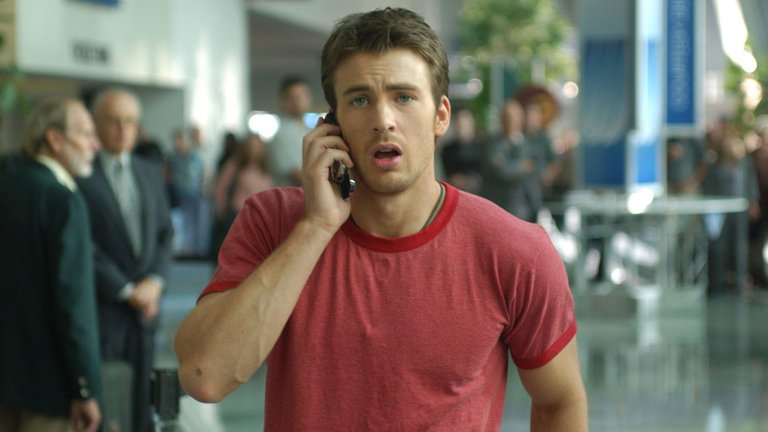
Mobile telephony is today seen as a quintessential part of modern life, so ubiquitous that many forget that only a generation ago, such technology was new and exotic enough that Hollywood considered it worthy of being the premise for a high concept thriller. This film, released in 2004, was named Cellular. It captured the zeitgeist of a society beginning to rely on the invisible networks of connectivity that define the twenty-first century, presenting a scenario where the device that binds humanity together becomes the only lifeline for survival. Looking back from 2026, the film serves as an interesting cultural artefact, a snapshot of a pre-smartphone era where the physical handset was a vulnerable object, easily lost, damaged, or seized by those with more sinister intent.
The narrative begins with a home invasion scenario that quickly escalates into a nightmare. The plot kicks off when a group of intruders arrives at the Los Angeles home of science teacher Jessica Martin (Kim Basinger). They murder the housekeeper and detain Jessica in the attic after smashing all the phone lines to cut her off from the outside world. The abductors’ next objective is Jessica’s young son, Ricky (Adam Taylor Gordon). They intend to take him to blackmail Jessica’s husband, Craig (Richard Burg)i. However, Jessica is not entirely powerless. Using her technical skills, she manages to rewire the phone to randomly call for help. The only person to answer is a young man named Ryan (Chris Evans). Ryan contacts the police, but the only officer dispatched to investigate is Sergeant Robert “Bob” Mooney (William H. Macy).
Mooney’s initial visit to the Martin residence reveals nothing suspicious, leaving the situation unresolved. Yet, when Ryan witnesses the young boy being abducted, he becomes determined to stop the perpetrators, even if he has to rely on himself. This sets up a frenetic race against time, during which Ryan faces numerous difficulties, including the lack of a phone charger to sustain his communication with Jessica. It soon becomes obvious that the reason for the abduction is a videotape in Craig’s possession, an incriminating recording of an event that would ruin many careers within the LAPD.
The film originated as a story by Larry Cohen, one of the more renowned genre cinema screenwriters of the last decades of the twentieth century. The premise bears a striking similarity to Cohen’s script for the 2002 thriller Phone Booth, a film often regarded as one of the more underappreciated productions of its time. Here, however, Cohen’s story served as the basis for a somewhat more generic Hitchcockian “ordinary man in extraordinary situation” scenario in which screenwriter Chris Morgan used it as a frame for a series of frenetic action and chase sequences. In these sequences, the protagonist fights both the villains and time itself, very much in the spirit of the 1994 classic Speed.
David R. Ellis, a former stuntman whose directorial oeuvre is best known for the semi-cult action film Snakes on a Plane, was the right man for this job. He handles the non-stop action well, maintaining a fast tempo and keeping the running time within a ninety-minute framework. This brevity does not allow the audience to dwell too much on the film’s lack of deeper substance or its one-note characters. Morgan’s script, by his own admission, added elements of physical comedy to tone down a story that could otherwise be quite dark and violent.
While the formula generally works, there are some ingredients that leave much to be desired. A significant portion of this lies in the casting. While Kim Basinger delivers solid work as the beleaguered mother, Jason Statham’s portrayal of the main villain, Ethan, feels one-note and ultimately forgettable despite his screen presence. Chris Evans, cast mainly for his looks, was good with what he was given, and this film certainly helped him land much better superhero roles in the future. Yet, Evans’ presence alone marked a departure from Cohen’s original idea, which posited the protagonist being much older and slightly more cynical. Instead, we were given another Hollywood fairytale taking place on the sunny streets of Los Angeles, with a grand finale on Santa Monica Pier where the protagonist saves the day and is reunited with his girlfriend, Chloe, played by Jessica Biel. Her role remains almost unnoticeable, a common occurrence for supporting roles in this type of blockbuster.
Cellular did not receive much enthusiasm from the critics, who often dismissed it as a derivative action flick. However, box office results were good and it justified its existence as an easily digestible piece of Hollywood cinema. Its simple premise proved popular in Asian cinema, resulting in at least three remakes. These include the 2007 Malayalam film Hello, the 2007 Bollywood film Speed, and the 2008 Hong Kong film Connected.
While it may not be a cinematic masterpiece, Cellular remains a competent, adrenaline-fuelled thriller that understood the value of urgency long before social media and instant messaging became the norm.
RATING: 6/10 (++)
==
Blog in Croatian https://draxblog.com
Blog in English https://draxreview.wordpress.com/
InLeo blog https://inleo.io/@drax.leo
InLeo: https://inleo.io/signup?referral=drax.leo
Leodex: https://leodex.io/?ref=drax
Hiveonboard: https://hiveonboard.com?ref=drax
Rising Star game: https://www.risingstargame.com?referrer=drax
1Inch: https://1inch.exchange/#/r/0x83823d8CCB74F828148258BB4457642124b1328e
BTC donations: 1EWxiMiP6iiG9rger3NuUSd6HByaxQWafG
ETH donations: 0xB305F144323b99e6f8b1d66f5D7DE78B498C32A7
BCH donations: qpvxw0jax79lhmvlgcldkzpqanf03r9cjv8y6gtmk9