Film Review: Foolish Wives (1922)

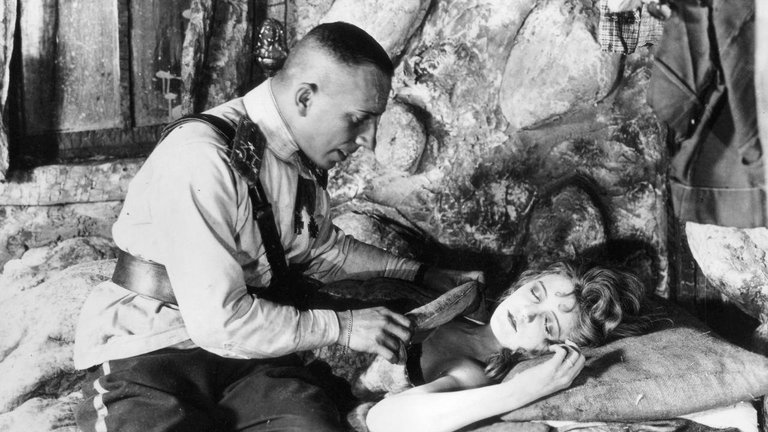
Of all the “larger-than-life” personalities to emerge from the silent era of Hollywood, few have earned that moniker so completely as the Austrian-born actor and director Erich von Stroheim. His ambition consistently appeared to outstrip both the financial capabilities and the comprehension of the 1920s studio system. Consequently, von Stroheim forged a dual reputation: that of a megalomaniac in his own time, and a misunderstood genius in later decades. He is often portrayed as the noble victim of talentless, petty studio executives, a narrative he himself perpetuated after his later, bitter side roles in classics like La Grande Illusion and Sunset Boulevard. Yet, the foundation of this myth of artistic martyrdom rests not solely on the infamous mutilation of his 1924 epic Greed, but on the earlier, and arguably more telling, production chaos of his 1922 film, Foolish Wives. This film stands as a monumental case study in directorial excess, a fascinating exercise in autobiographical performance, and, ultimately, a flawed masterpiece whose grandiosity often overwhelms its rather slender melodramatic core.
The film that cemented von Stroheim’s reputation as the great martyr of the Seventh Art is, of course, Greed, infamous for its butchered state at the hands of MGM’s Irving Thalberg. However, two years earlier, the same fate very nearly befell Foolish Wives, and the pattern of conflict was set. By 1921, von Stroheim had built his stardom on playing aristocratic, predatory military villains. His role in Foolish Wives represents a deliciously cynical variation on this type. The plot is set in Monte Carlo, the playground of Europe’s wealthy elite, shortly after the Armistice. Stroheim plays a man calling himself “Count Wladislaw Sergius Karamzin,” a captain in the 3rd Regiment of Hussars of the Imperial Russian Army. He resides in the luxurious “Villa Amorosa” with his two “cousins”—“Her Highness” Olga Petchnikoff (Maude George) and “Princess” Vera Petchnikoff (Mae Busch)—enjoying caviar for breakfast. Their position, however, is profoundly precarious. They are transparently fraudulent, living in desperate need of funds to maintain their façade. Stroheim’s Count complicates his own schemes by conducting a sordid affair with his maid, Maruschka (Dale Fuller), and harbouring lecherous designs on Marietta (Malvina Polo), the half-witted daughter of Cesare Ventucci (Cesare Gravina), a counterfeiter who supplies him with fake banknotes for his gambling parties.
A new opportunity for financial and carnal conquest arrives with American Special Envoy Andrew J. Hughes (Rudolph Christians) and his much younger, naïve wife, Helen (Miss DuPont). The Count sees in Helen the perfect mark, devising intricate schemes to both relieve her of her fortune and seduce her. He succeeds in the former but is foiled in the latter by a cascade of chaos precipitated by the scorned Maruschka, who sets fire to the Villa Amorosa before taking her own life. While the Count and Helen are rescued, the scandal unmasked the trio of frauds. The Count’s final, desperate attempt to assault Marietta leads to his being killed by her father, Ventucci, who disposes of the body in a sewer. Helen, chastened, is forgiven and returns to her husband. This morally tidy conclusion, however, feels almost jarringly incongruous with the film’s earlier, amoral cynicism.
Foolish Wives was only possible due to the commercial successes of Stroheim’s previous films, Blind Husbands and The Devil’s Pass Key. Universal Pictures, eager to retain its “hottest” director, indulged him with an unprecedented budget and creative freedom. The result was a textbook example of a runaway production, defined by Stroheim’s perfectionism, excessive costs, and a schedule that ballooned from the standard month to over a year. Carl Laemmle, head of Universal, reportedly realised with horror that the film remained unfinished despite having cost over one million dollars—an astronomical sum. Although Universal initially used the figures for publicity, they soon hired a young Irving Thalberg with the explicit mandate to rein Stroheim in and complete the picture, by force if necessary. The original material was, as was customary, mercilessly cut. Stroheim had envisioned a six-hour film to be shown in two parts; the premiere version was edited to three hours, later shortened to a mere 100 minutes for general release. While much of the footage is lost, restoration work has yielded a 2023 version of 147 minutes, which remains a fragment of the director’s original vision.
Taken purely as a narrative, Stroheim’s script is unremarkable. It functions as a semi-moralistic melodrama typical of its era, albeit with hints of quasi-satirical social commentary on the cultural clash between “naïve” Americans and “sophisticated,” decadent Europeans. Despite the protagonist’s lechery, the film contains little explicit eroticism, save for a notably voyeuristic scene where the Count observes Helen changing clothes after a storm.
Where the film truly captivates is not in its plot but in its execution and, most notably, in Stroheim’s own performance. The film stands largely on his shoulders. The role of the Count is arguably the most autobiographical of Stroheim’s career. Just as his fictional creation feigned aristocratic and military pedigree to infiltrate Monte Carlo’s elite, Stroheim himself had fabricated a similar background (the “von”) to advance in Hollywood. The Count’s parasitic mooching off wealthy dupes mirrors Stroheim’s own perceived exploitation of Universal’s finances. Stroheim even inserts a wry, meta-commentary: a book Helen reads is titled Foolish Wives and is authored by Erich von Stroheim—a moment of arrogant self-reflexivity that underscores the film’s nature as a personal project.
Another peculiarly compelling aspect is the brief subplot involving a US Marine officer (played by the silent-era actor Harrison Ford). He acts with bizarre rudeness towards Helen, refusing to help her pick up a dropped book. Only later is it revealed he has lost an arm in combat. Helen’s reaction—a deeply awkward, almost fetishistic fascination leading her to fondle the stump—is a moment of startling discomfort. This scene can be interpreted as both an indulgence in Stroheim’s noted fetishism for military detail and disability, and as a jarring, cynical commentary on the recent world carnage, where physical trauma becomes a source of social embarrassment and grotesque curiosity.
While many critics and scholars, armed with the romantic narrative of the martyred auteur, are prone to label Foolish Wives a masterpiece, the modern audience—even one accustomed to silent cinema—may find it wanting. The central melodrama is conventional, and Helen Hughes remains a thinly drawn victim rather than a compelling character. The film’s most significant flaw, however, lies in its jarringly confusing climax. The Count’s abrupt murder and disposal feel rushed and incoherent, a problem directly attributable to Thalberg’s drastic editing. This editorial violence undermines the narrative’s cohesion, leaving a sense of incompleteness that no amount of historical sympathy can fully erase.
In the end, Foolish Wives exists in a tense, fascinating space between triumph and folly. It turned a modest profit, but it ended Stroheim’s career at Universal, sending him to Goldwyn Pictures and the financial disaster of Greed. Its production became the stuff of Hollywood legend, even inspiring a 1994 episode of The Young Indiana Jones Chronicles.
The film is less a coherent story and more a vast, ornate monument to its creator’s ego and obsessions: the obsession with aristocratic detail (real or counterfeit), the obsession with military regalia, the obsession with exposing the moral rot beneath glittering surfaces, and, above all, the obsession with spending someone else’s money to realise a vision of unparalleled scale. To watch Foolish Wives today is to witness the precise moment when Erich von Stroheim’s directorial ambition swelled beyond the limits of commercial sense, forging his legend as both a genius and a cinematic Icarus. The film is magnificent, maddening, and profoundly self-indulgent—a fitting legacy for a man who played a count so convincingly that he almost convinced a studio to bankrupt itself for his art.
RATING: 6/10 (++)
Blog in Croatian https://draxblog.com
Blog in English https://draxreview.wordpress.com/
InLeo blog https://inleo.io/@drax.leo
InLeo: https://inleo.io/signup?referral=drax.leo
Leodex: https://leodex.io/?ref=drax
Hiveonboard: https://hiveonboard.com?ref=drax
Rising Star game: https://www.risingstargame.com?referrer=drax
1Inch: https://1inch.exchange/#/r/0x83823d8CCB74F828148258BB4457642124b1328e
BTC donations: 1EWxiMiP6iiG9rger3NuUSd6HByaxQWafG
ETH donations: 0xB305F144323b99e6f8b1d66f5D7DE78B498C32A7
BCH donations: qpvxw0jax79lhmvlgcldkzpqanf03r9cjv8y6gtmk9