Film Review: Sound of Freedom (2023)

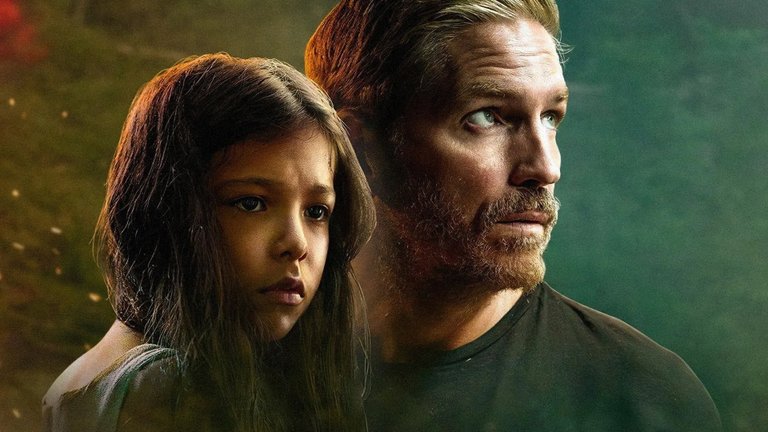
In the contemporary landscape of internet discourse, a peculiar inversion has taken hold. The same bien pensants who today confidently assert that various world leaders, media moguls, and financial titans are either in thrall to or enthusiastic customers of a vast global child sex trafficking network were, only a few years prior, instructed to regard the mere suggestion of such a network's existence as nothing more than a vile conspiracy theory peddled by their ideological opponents. This whiplash-inducing reversal, driven more by shifts in political expediency than by any genuine commitment to truth, provides essential context for understanding why mainstream Hollywood—an industry with its own considerable share of child abuse skeletons rattling in its closets—was so conspicuously reluctant to engage with the subject matter. It also explains why Sound of Freedom, an independently produced and distributed thriller that defied the Hollywood establishment, became far more than a mere film. It became a battleground in an increasingly bitter culture war, a flashpoint where aesthetic judgment was subordinated to tribal allegiance. Its surprising commercial success, achieved despite an avalanche of criticisms, controversies, and manufactured scandals, represented one of the more spectacular victories for American conservatives in a conflict where they seldom hold the upper hand.
The film purports to be based on real events involving Timothy "Tim" Ballard, a former Department of Homeland Security agent turned anti-sex trafficking activist. The narrative opens in 2013 in Tegucigalpa, Honduras, where Roberto Aguilar (José Zúñiga), a poor and desperate father played by, is seduced by the promises of Katy "Giselle" Juarez (Yessica Borroto), a former Colombian beauty queen. She offers his two young children—son Miguel (Lucás Ávila) and daughter Rocio (Cristal Aparicio)—the opportunity to attend a casting for a modelling career. It is, of course, a ruse. When Roberto arrives at the office, he discovers the horrifying truth: his children have been abducted and sold into the sex trafficking trade, disappearing into a dark underworld from which few return.
The narrative then shifts to Calexico, California, where Tim Ballard (Jim Caviezel), is working as a DHS agent. He arrests Ernst Oshinsky (Kris Avedisian) for possession of child pornography. But the victory feels hollow. Ballard's increasingly demoralised partner reminds him that they have failed to actually help the children depicted in those horrific images. This moment of moral reckoning propels Ballard toward a more proactive, and far more dangerous, approach. He deceives Oshinsky into believing he is himself a paedophile, setting up an elaborate sting operation targeting Earl Backman (Gary Basaraba), another predator who has brought the abducted Miguel with him. The operation succeeds; Miguel is reunited with his father. But Ballard cannot rest. He knows Rocio is still out there, and he resolves to travel to Colombia to dismantle the trafficking operation and liberate as many captured children as possible.
In his mission, Ballard is aided by a local Colombian police officer named Jorge (Javier Godino), and by a far more compelling figure: Vampiro (Bill Camp). Vampiro is a former accountant for the Cali Cartel who has turned his life around, now using his ill-gotten money and influence to purchase children from traffickers and set them free. Together, they devise an elaborate scheme: they will purchase an entire island and present it as a fake paedophile resort, a honey trap designed to ensnare the traffickers. Ballard's superiors in Washington refuse to authorise the operation. His response is to resign from the DHS and proceed alone, funded by a sympathetic businessman named Pablo Delgado, played by Eduardo Verástegui.
Like most Hollywood films that claim to be "based on a true story," Sound of Freedom takes a rather cavalier approach to historical authenticity. The already dramatic narrative is oversimplified for artistic purposes, and at times it is visibly "spiced up" to satisfy the demands of the thriller genre. This is most apparent near the end, when the film features an action-packed sequence involving left-wing guerrillas deep in the Colombian jungle—a set piece that feels more indebted to 1980s action classics than to any sober documentary about the horrors of trafficking.
Yet, in strictly technical terms, the film is a solid piece of work. Director and co-writer Alejandro Monteverde had, at least partially, deeply personal motivations for tackling this subject: his own father and brother were abducted and killed in his native Mexico in 2015. Monteverde, further motivated by Catholicism—a faith he shares with star Jim Caviezel and executive producer Mel Gibson—handles his relatively modest resources with competence and restraint. The film's most significant technical flaw is its excessive length, particularly in a prolonged third act that tests the audience's patience.
Caviezel, despite his charismatic presence and evident commitment to the role, does not leave a particularly deep impression. This is primarily because the character of Tim Ballard is, for the vast majority of the running time, too saintly and one-dimensional to be dramatically interesting. He is most effective in the early sequences, when he must feign being a perverted monster himself to ensnare the real villains. The formidable character actor Bill Camp is far more effective in the role of Vampiro, the former cartel operative who has turned his life around. His performance is particularly powerful in the scene where he explains the circumstances and motives of his transformation, bringing a depth and complexity that the film's protagonist never achieves.
That transformation was, unsurprisingly, religious in nature, and the film's explicit references to God and family are the reasons why many critics who like to think of themselves as cool, secular progressives went apoplectic upon its release, or dismissed it as crude propaganda. The pre-emptive negative reactions and obvious hostility of the cultural establishment—including Disney, the studio that had shelved the film since 2018 before it was repurchased by independent investors—paradoxically helped Sound of Freedom become a symbol of rejection and an act of resistance against everything the Biden administration and its policies represented. Endorsed by the likes of Donald Trump and Elon Musk, the film became a surprise hit of the summer of 2023, a box office phenomenon that the cultural gatekeepers could neither explain away nor contain.
Yet, if one can disregard the shifting political landscape and the tribal noise that surrounds it, Sound of Freedom, with all its imperfections, deals with a very serious and very relevant problem. It confronts a deeply disturbing and unpleasant subject that audiences should be reminded of, regardless of their ideological persuasion. The film attempts to compensate for that darkness by demonstrating that, at least in some individual cases, happy endings are possible. It is not a great film, but it is an important one—and in an era where the two categories have become almost entirely disconnected, that may be the most honest assessment one can offer.
RATING: 6/10 (++)
==
Blog in Croatian https://draxblog.com
Blog in English https://draxreview.wordpress.com/
InLeo blog https://inleo.io/@drax.leo
Substack https://draxster.substack.com/
InLeo: https://inleo.io/signup?referral=drax.leo
Leodex: https://leodex.io/?ref=drax
Hiveonboard: https://hiveonboard.com?ref=drax
Rising Star game: https://www.risingstargame.com?referrer=drax
1Inch: https://1inch.exchange/#/r/0x83823d8CCB74F828148258BB4457642124b1328e
BTC donations: 1EWxiMiP6iiG9rger3NuUSd6HByaxQWafG
ETH donations: 0xB305F144323b99e6f8b1d66f5D7DE78B498C32A7
BCH donations: qpvxw0jax79lhmvlgcldkzpqanf03r9cjv8y6gtmk9