Film Review: Sympathy for Lady Vengeance (2005)

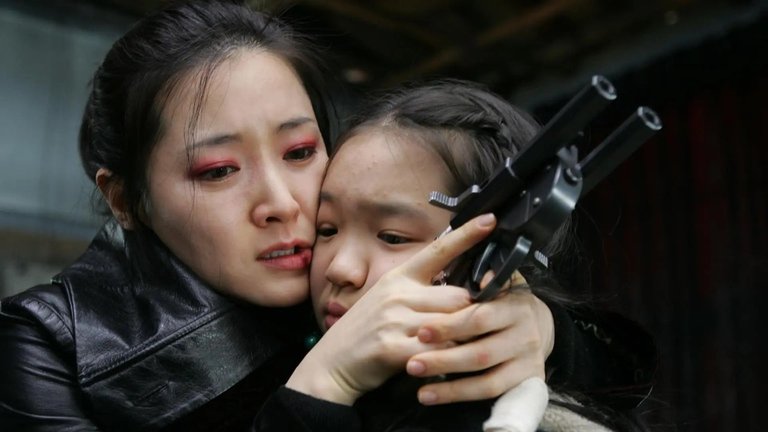
Park Chan-wook’s so-called Vengeance Trilogy is bound by a singular, brutal theme, yet its first two instalments, Sympathy for Mr. Vengeance and Oldboy, share a curious narrative hinge: women as catalysts. In the former, a brother’s desperate need to fund his sister’s surgery ignites a catastrophic chain of events; in the latter, the antagonist’s concealed incestuous love for his sister is the corrupted root of his revenge. The woman is the trigger, often passive or absent, her fate the engine for male rage. With Sympathy for Lady Vengeance (2005), Park decisively inverts this dynamic, placing a woman not as the spark but as the architect, the wielder, and the enduring conscience of vengeance itself. The result is a film of dazzling style, profound moral enquiry, and occasionally frustrating self-indulgence—a work that cemented Park’s auteur status while exposing the very limits of his baroque sensibilities.
The protagonist, Lee Geum-ja (Lee Young-ae), is introduced through a facade. Paroled after thirteen years, having performed a flawless pantomime of pious rehabilitation for her Christian sponsor (Kim Byeong-ok), she instantly sheds the act. Her performance was a tactical gambit, a means to an end. That end is revenge, meticulously plotted from behind bars against Mr. Baek (Choi Min-sik), the man truly responsible for the child murder for which she was convicted. The plot, from a synopsis, risks sounding luridly exploitative: a beautiful woman wrongly imprisoned befriends a gallery of hardened inmates by performing favours, including orchestrating the murder of a predatory cellmate, “The Witch” (Go Soo-hee). Upon release, this network of former prisoners provides her with resources to hunt Baek (Choi Sin-mik), a paedophilic serial killer who blackmailed a pregnant, teenage Geum-ja into confessing to his crime by threatening her newborn daughter. That daughter, Jenny (Kwon Yea-jung), adopted abroad, now returns to Korea as an adolescent, her presence complicating Geum-ja’s monomaniacal quest.
Screenwriter Yeon Seo-kyung’s complex narrative could easily collapse into a pulp mess of women-in-prison clichés and a demonic, omnipotent villain. Yet, Park masterfully employs achronological storytelling, using flashbacks and Geum-ja’s voiceover not merely to unravel the mystery—which is revealed relatively early—but to layer psychological depth. We see not just what she did to survive and conspire, but the corrosive cost on her soul. The film’s visual language is a stark departure from the grimy, green-tinged despair of Mr. Vengeance or the claustrophobic, muddy palette of Oldboy. Park, in a clear homage to Toshiya Fujita’s 1973 revenge classic Lady Snowblood, drenches the early scenes in brilliant whites and vivid, almost hyperreal reds—the colour of blood, lipstick, and the red bean paste pastries Geum-ja peddles. Snow falls with poetic frequency, a cleansing motif that grows increasingly ironic. This aesthetic daring, however, had the unfortunate side-effect of prompting lazy comparisons to Quentin Tarantino’s Kill Bill, another female-led revenge saga. While surface similarities exist, Park’s concerns are fundamentally different; his violence is less celebratory than sacramental, and his protagonist’s journey is towards a communal, morally fraught reckoning, not solitary triumph.
This culminates in the film’s extraordinary, extended climax. Geum-ja does not simply execute Baek. Instead, she kidnaps him, restrains him in a derelict schoolroom, and assembles the grieving families of his murdered children. She presents them with the evidence—snuff tapes he made—and offers a choice: call the police, or administer their own justice. What follows is less a bloodbath than a gruelling, procedural debate. For a significant stretch, the film transforms into a grim chamber piece akin to Twelve Angry Men, as the victims’ relatives argue the ethics and efficacy of revenge. Should they become monsters to destroy a monster? Is there catharsis in violence? This collective deliberation elevates the film from a personal vendetta to a profound societal and philosophical inquiry. The eventual, ritualistic killing of Baek is protracted and horrific, shot with a starkness that feels like an exorcism. It is communal vengeance, messy, agonising, and deeply unsatisfying, deliberately undercutting any potential for cathartic release.
The film is carried by phenomenal performances. Lee Young-ae, known for her angelic beauty, subverts her image completely. Her Geum-ja is a haunting study in duality: the face of a saint, the resolve of a general, and the hollowed-out eyes of a ghost. Her transformation from a naïve girl to a ruthless, yet deeply wounded, agent of retribution earned her South Korea’s top acting honour, the Blue Dragon Award. Choi Min-sik, the furious protagonist of Oldboy, here plays pure, banal evil. His Baek is not a charismatic fiend but a petty, cowardly, and utterly despicable figure, making his comeuppance feel necessary yet grimly sobering. The supporting ensemble, particularly the former inmates, adds texture and a perverse sense of solidarity.
For all its brilliance, Sympathy for Lady Vengeance is an imperfect masterpiece, its flaws stemming largely from Park’s tendency to privilege style over narrative discipline. His most controversial intervention—the gradual desaturation of colour as the film progresses, ending in monochrome—was a post-production digital addition. While thematically interesting (draining the world of colour as Geum-ja’s red-tinged mission reaches its bleak conclusion), it can feel like an unnecessary formal gimmick, a showy affectation that distracts more than it enhances. Some have argued, cynically, that it was a tactic to mollify censors by making the graphic final violence less visceral—a charge that, whether true or not, highlights the risk of stylistic overreach.
A more significant issue is pacing. The film’s deliberate, episodic structure sags in the middle, and the extended coda—featuring Geum-ja’s fraught reunion with Jenny and an oddly saccharine attempt at redemption involving a white tofu cake—feels tonally disjointed and adds unnecessary minutes to a film already rich with resolution. It is as if Park, having delivered one of the most morally complex climaxes in modern cinema, lost nerve and appended a conventional, melodramatic epilogue seeking emotional closure where none truly exists.
Nevertheless, Sympathy for Lady Vengeance stands as a formidable achievement. It successfully inverted the gender dynamics of its predecessors, delivered a revenge narrative that questioned the very morality of its genre, and showcased South Korean cinema’s audacious blend of high art and pulp violence on the global stage. Its indulgences are the flaws of a visionary, not a hack. The film solidified Park Chan-wook’s cult status and provided a potent, arthouse-inflected fuel for the subsequent “Hallyu” wave, proving that Korean storytelling could be as intellectually rigorous as it was emotionally and visually ravishing.
RATING: 7/10 (+++)
==
Blog in Croatian https://draxblog.com
Blog in English https://draxreview.wordpress.com/
InLeo blog https://inleo.io/@drax.leo
InLeo: https://inleo.io/signup?referral=drax.leo
Leodex: https://leodex.io/?ref=drax
Hiveonboard: https://hiveonboard.com?ref=drax
Rising Star game: https://www.risingstargame.com?referrer=drax
1Inch: https://1inch.exchange/#/r/0x83823d8CCB74F828148258BB4457642124b1328e
BTC donations: 1EWxiMiP6iiG9rger3NuUSd6HByaxQWafG
ETH donations: 0xB305F144323b99e6f8b1d66f5D7DE78B498C32A7
BCH donations: qpvxw0jax79lhmvlgcldkzpqanf03r9cjv8y6gtmk9