Film Review: The Great Hack (2019)

Just as Christians believe Jesus rose from the grave, so too does the vast majority of the media, cultural and intellectual elite in the Western world believe that Brexit and Donald Trump's victory in the 2016 US presidential election were the result of a conspiracy by dark demonic forces, rather than the freely expressed will of the voters. And just as no appeal to scientific facts, historical evidence or similar arguments will compel Christians to renounce their faith, so too will the world's leading journalists, television commentators, intellectuals, experts and "experts" never, at any cost, allow for the possibility that what happened in 2016 was perhaps, after all, the result of some timely unrecognised economic, political and cultural trends, instead of the subversive activity of Kremlin hackers and their domestic helpers.
Whether it is the still undigested shock after defeat in what had seemed a sure victory, wounded pride, a continued residence in elitist social media "bubbles" at the expense of living in the real world, or the belief that one should still push the same party line as before 2016, is perhaps not so important. The consequences are here, and they have, of course, begun to be reflected in the film industry, primarily in the field of Hollywood documentaries. A genre in which the worldview of salon liberals and leftists was pushed for much longer, more persistently and much more explicitly than is done today even in the most maximally "woke" feature films and TV series seems the ideal pulpit for the new secular religion.
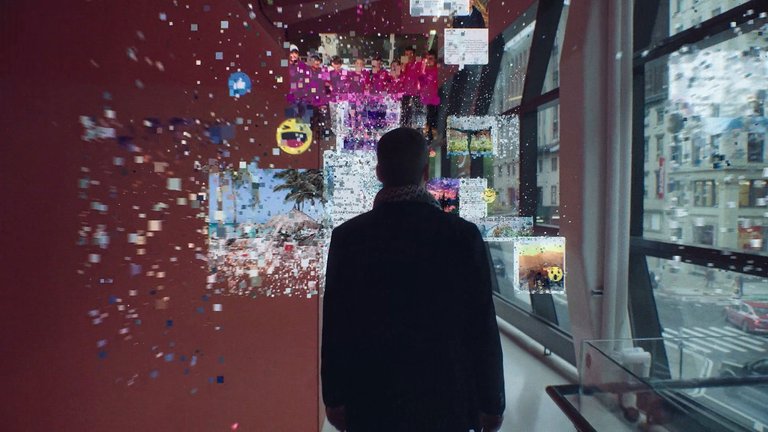
One of the projects attempting to exploit this is The Great Hack, a feature-length documentary directed by Karim Amer and Jehane Noujaim. The film's narrative is dedicated to the scandal that, for those who believe in the dark underbelly of Brexit and Trump, represents the crucial link between those two events; the first step towards finding irrefutable and undeniable proof so that after the conspiracy theory, it will no longer be a theory. It is about Cambridge Analytica, a British consulting firm that offered its clients, among other things, services for running electoral campaigns via social media ads, which were specifically calibrated for each individual user based on data collected from Facebook without their knowledge. The key thing in the whole story is that Cambridge Analytica had both the Brexit campaign and Trump's campaign as clients in 2016.
In the spring of 2018, the whole case exploded when British media caught the company's boss, Alexander Nix, on hidden camera boasting to potential clients that it was precisely their "shenanigans" that were responsible for Trump's victory. Nix ended up with several criminal investigations over it all and his company went into administration; because of it all, Mark Zuckerberg had to sweat, put on sackcloth and ashes, and penitently claim before cameras and congressional committees that Facebook would never again compromise the privacy of its users or allow Kremlin evildoers to undermine the foundations of Western democracy.
The film follows these events from the perspective of several individuals who were, each in their own way and to a greater or lesser extent, entangled in the unravelling of the scandal. The first is David Carroll, a New York professor who, like many intellectuals, was shocked by Trump's election, but then tried to explain it before cameras and his students precisely through the manipulation of ads; Carroll is convinced that Cambridge Analytica created his digital profile via Facebook and is trying to force them to disclose it through a lawsuit. Carole Cadwalladr is an investigative journalist for the pro-Remain British Guardian who has for years waged a crusade against the "Leaver" campaign, accusing them of financial malfeasance, psychological manipulation of potential voters via Cambridge Analytica, and, of course, links to the Russians.
The most interesting personality of all is Brittany Kaiser, a former director of the company who was an idealistic volunteer in Obama's campaign only to help Obama's antithesis replace him in the White House eight years later; after the scandal breaks, Kaiser is tormented by both a guilty conscience and an obvious fear that she might be hung out to dry, claiming that as a "whistleblower" and penitent witness she will expose all the dirty tricks of her former friend and mentor Nix.
The Great Hack is interesting for the first thirty-odd minutes, when, through the mouth of Carroll – probably the only interviewee attempting to view events from some kind of broader perspective – it tries to explain to the audience how being plugged into the internet and social networks, or the willingness to give almost complete insight into one's own life for the sake of comfortable online communication with total strangers, created the possibility for psychological manipulations of a scale hitherto indescribable. And while a thesis about Cambridge Analytica's role in Trump's revolution based on such observations might still hold water, it doesn't seem good enough to the film's authors for a feature-length film.
Because of this, the cameras follow Carroll as he comes to Britain to pursue justice in court, while Cadwalladr simultaneously triumphantly tracks how Nix and his empire collapse after a parliamentary committee investigation. And, in fact, nothing happens, and even the "sensational" revelations promised by Kaiser turn out to be nothing that wasn't already known. That, of course, doesn't stop Kaiser from expressing fear that for having brought Trump to the White House, she will remain the most hated person in the world. In reality, however, she comes across as a rather confused and inconsistent young woman who considers herself a victim even though she can afford the most luxurious hotel rooms, holidays in Thailand and partying at the coolest festivals, duly recorded by the filmmakers.
Perhaps Carroll and Kaiser could provide good material for two separate films, but the authors never manage to combine their stories into any coherent whole. In practice, most scenes boil down to the two protagonists riding in Ubers and commenting on events they've been following, using the same phrases, from the back of an Uber. Partly responsible for this is the striving to give the whole story what should be, for the targeted anti-Trump audience, a happy ending, or at least a triumphant confirmation through preaching, akin to Cadwalladr's TED talk speech which concludes the film.
The happy ending in this case was supposed to be delivered by Robert Mueller, the former FBI director charged with investigating irregularities in Trump's campaign and Russian election interference, whose report was supposed to provide Congress with the material to launch the impeachment of the current occupant of the White House. Mueller, like the theses about Kremlin actions to undermine democracy, is mentioned intensively in the closing scenes, filmed at a time when anti-Trump America saw in him the knight who would slay the orange monster. Although the report has since been published, and its contents have, in a deeply divided nation, left the question of Trump's guilt open at best or at worst, Netflix deliberately timed the film's premiere for the 24th of July 2019, the very same date Mueller was supposed to speak about the report before the now majority-Democrat congressional committee and finally call a spade a spade.
The whole spectacle, due to Mueller's obvious lack of preparation, ended as a fiasco for the Democrats, while for the authors of The Great Hack, at least judging by the reviews praising it to the skies, the same cannot be said. The Great Hack, however, is not a good, or even a very watchable film. At least not for those who like to hear both sides of complex and "hot" political questions. Every now and then, attempts have slipped in to give the film some semblance of objectivity – so it's mentioned in passing that Obama's 2012 campaign also "skilfully used" data from social networks, and one of Cambridge Analytica's directors claims his company did nothing different from all the others. They are, however, insufficient to avoid the uncomfortable impression that it is a rather crude piece of propaganda, or a film made by believers for believers. An impression that will, of course, be confirmed by the names in the closing credits, among which proudly stands John Podesta, one of the managers of Hillary Clinton's election campaign, who pushes the story of Russian hacking in 2016 probably for the same reasons that the chief of the German general staff Ludendorff pushed the story about Jews, liberals and a stab in the back after 1918.
RATING: 3/10 (+)
(Note: The text in the original version is available here.)
Blog in Croatian https://draxblog.com
Blog in English https://draxreview.wordpress.com/
InLeo blog https://inleo.io/@drax.leo
LeoDex: https://leodex.io/?ref=drax
Hiveonboard: https://hiveonboard.com?ref=drax
InLeo: https://inleo.io/signup?referral=drax.leo
Rising Star game: https://www.risingstargame.com?referrer=drax
1Inch: https://1inch.exchange/#/r/0x83823d8CCB74F828148258BB4457642124b1328e
BTC donations: 1EWxiMiP6iiG9rger3NuUSd6HByaxQWafG
ETH donations: 0xB305F144323b99e6f8b1d66f5D7DE78B498C32A7
BCH donations: qpvxw0jax79lhmvlgcldkzpqanf03r9cjv8y6gtmk9
!BBH
!LOLZ