Film Review: Top Gun: Maverick (2022)

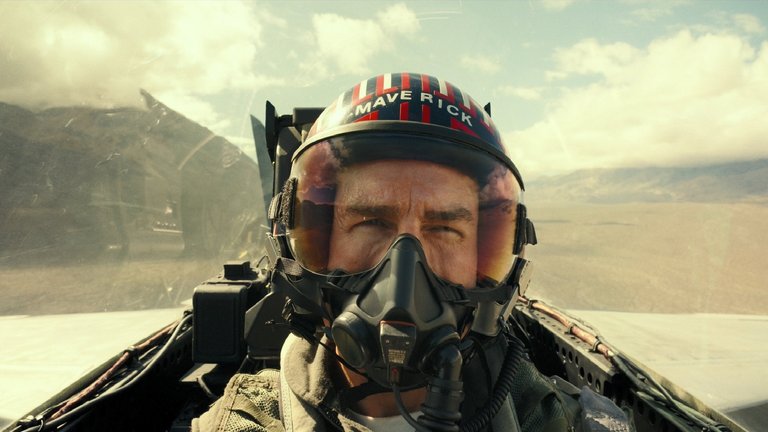
It could be argued that Tony Scott’s 1986 military aviation action drama Top Gun defined the modern Hollywood blockbuster, not only becoming one of the most successful and iconic films of its time but also establishing the clear parameters of what a major Hollywood product is supposed to be: a high-concept, visually spectacular, music-driven, and emotionally simplistic spectacle designed for maximum audience appeal. Many decades later, its long-awaited sequel, Top Gun: Maverick became an important event in cinema history, this time for re-confirming those same parameters with an almost religious fervour. In an era where the cinematic landscape is fragmented by streaming, superhero fatigue, and a growing appetite for complexity, Top Gun: Maverick arrived as a defiant throwback, a $1.5 billion-grossing testament to the enduring power of the old formula. Yet, beneath its polished surface and critical acclaim lies a film that is arguably more fascinating as a cultural artefact than as a piece of storytelling—a meticulously engineered nostalgia bomb that serves as both a celebration of and an elegy for a certain kind of American cinema, and perhaps for a certain kind of American confidence.
The plot, set roughly three and a half decades after the events of the first film, finds the protagonist Captain Pete “Maverick” Mitchell (Tom Cruise), a highly talented and successful US Navy aviator, near the end of his career. His legendary tendency towards insubordination and lack of political skills have prevented him from advancing in the ranks, unlike his old rival and friend Tom “Iceman” Kazansky (Val Kilmer), who reached the rank of Admiral and command of the US Pacific Fleet. Iceman, now fighting terminal cancer, uses all his remaining clout to prevent Maverick from being kicked out of the Navy or permanently grounded, especially after his latest stunt as a test pilot results in breaking the speed record but destroying a valuable experimental aircraft in the process. This setup immediately establishes the film’s central tension: Maverick is a relic, a man whose exceptional skill is inseparable from a rebellious spirit that the institution can no longer comfortably accommodate in an age of drone warfare and risk-averse bureaucracy.
Maverick is kept in service, but the best Iceman can do is to arrange for him to serve as an instructor at the elite fighter pilot school “Top Gun.” His superior, Admiral Beau “Cyclone” Simpson (Jon Hamm), is deeply sceptical, considering him too old and obsolete. Maverick’s task is to teach a hand-picked team of pilots for a near-impossible mission: to destroy an illegal uranium enrichment facility in an unnamed “rogue country.” The site is so well-defended by surface-to-air missiles and fifth-generation fighters that the mission requires flying through a deep, twisting canyon at dangerously low altitudes and executing a precision strike with a tiny window for escape. The personal complication for Maverick is that one of the candidates is Lieutenant Bradley “Rooster” Bradshaw (Miles Teller), the son of Maverick’s late friend and navigator, Lieutenant Nick “Goose” Bradshaw. Rooster’s resentment towards Maverick is twofold: he blames him for his father’s death, and he believes Maverick pulled strings to delay his naval academy application, thwarting his career. Unbeknownst to Rooster, Maverick was only honouring the wishes of Goose’s widow, who feared losing her son as she lost her husband. These simmering personal conflicts are forced to the back seat when the mission is moved ahead of schedule, compelling Maverick to once again take the pilot’s seat and lead the team in an extremely dangerous and complicated strike.
The very idea of a sequel to Top Gun, one of the most popular and influential films of all time, seemed logical on paper, yet its main premise—the glorification of US naval aviation—did not seem particularly relevant in the decades after the Cold War’s end. The subsequent carnage in Iraq and Afghanistan had made many audiences lose their taste for uncomplicated military jingoism. Tony Scott, director of the original, had begun working on a sequel, but the project entered a long development hell following his tragic suicide in 2012. Furthermore, after production wrapped, the COVID-19 pandemic forced repeated delays in its theatrical release. Top Gun: Maverick finally arrived in cinemas in May 2022, almost two years later than originally planned.
This long delay, however, proved to be a blessing in disguise. When the film finally opened, pandemic lockdowns were receding into memory. Audiences in the United States and around the world enthusiastically embraced it, not merely as a reminder of a nostalgic past but as a potent symbol that the world, so shattered by the traumas of the 21st century—economic crises, terrorism, endless wars, and a global pandemic—was returning to a longed-for “normalcy.” Tom Cruise, who looks incredibly youthful despite being nearly sixty at the time of filming, became the embodiment of that very normalcy. He represented a return to star-driven, practical spectacle, a comforting constant in a changing world. His much-publicised dedication to performing actual flight sequences in real fighter jets became a marketing narrative of authenticity and old-school Hollywood grit, standing in stark contrast to the digital artifice dominating the box office.
The script, credited to Ehren Kruger, Eric Warren Singer, and Christopher McQuarrie, does not attempt to reinvent the wheel. It diligently follows the structural blueprint of the original, keeping plot and character arcs simple and faithful. The primary difference is the passage of time, acknowledged through poignant casting decisions. The most moving of these is Val Kilmer’s return. Kilmer, in what may be his final screen role, makes a small but profoundly effective appearance. His character, like the actor himself, has lost the ability to speak due to throat cancer, communicating instead through a text-to-speech device and written notes. The scene where Maverick visits Iceman is one of the film’s few moments of genuine, unvarnished emotion, a meta-textual acknowledgment of mortality and friendship that briefly elevates the material.
In terms of the new cast, Miles Teller credibly plays the resentful, piano-playing Rooster, channelling a suitable mix of vulnerability and stubborn pride. However, he is inevitably overshadowed by the sheer gravitational force of Tom Cruise’s movie star presence, and even by Glen Powell, who steals scenes as the arrogant, swaggering Lt. Jake “Hangman” Seresin—a clear spiritual successor to Iceman. Powell understands the assignment perfectly, delivering the kind of cocky, quotable bravado that the film’s tone demands.
Director Joseph Kosinski, who previously worked with Cruise on Oblivion, does an exceptional job from a technical standpoint. He creates an exciting, visually stunning mix of action and “cool” imagery, complemented by a soundtrack that cleverly incorporates Harold Faltermeyer’s original theme and a refreshed version of “Danger Zone.” In many ways, he outdoes Tony Scott’s work in the original film, particularly in the aerial sequences. Where Scott’s film featured great and exciting action scenes using real jets but was let down by a cliché-ridden middle act, Kosinski maintains a relentless pace. The flying sequences are not just background; they are the narrative’s core, shot with an immersive intensity that makes the audience feel every G-force turn. An interesting Kosinski addition is the opening sequence, which pays direct homage to Philip Kaufman’s The Right Stuff, with shots of early morning flight line activity set to a solemn score, immediately linking Maverick to the legacy of American aviation pioneers.
The film includes an obligatory love subplot, with Maverick rekindling a relationship with Penny Benjamin (Jennifer Connelly), a divorced mother and bar owner who was briefly mentioned but never seen in the original. Connelly, like Cruise, wears her age with grace and confidence, and their chemistry is pleasant if undemanding. Some more cynical viewers, however, might interpret this subplot as a deliberate retort to the long-standing queer reading of the original Top Gun. That reading, famously articulated by Quentin Tarantino’s character in Sleep with Me, interpreted the original as a submerged gay romance between Maverick and Iceman. By giving Maverick a conventional, mature heterosexual romance, Maverick can be seen as gently closing the door on that interpretation, reasserting a traditional heroic masculinity.
Those who like to read between the lines will, on the other hand, easily discover a more sinister geopolitical context. Although the “rogue country” remains deliberately unnamed, specific details—most notably the use of repurposed F-14 Tomcats by the enemy—clearly indicate it as a stand-in for Iran (the only nation still operating the F-14). This allows the film to present a thrilling, morally unambiguous combat scenario without explicitly naming a contemporary adversary. Consequently, like its predecessor, Top Gun: Maverick can easily be viewed as sophisticated US military propaganda. The original Top Gun was an expression of a newly confident superpower on the way to undisputed global hegemony. Maverick updates this for a different era: it is an expression of a superpower seeking to reclaim a sense of military invincibility and moral clarity after the failures and ambiguities of the War on Terror. The mission is clean, surgical, and successful; the enemy is faceless and its motives purely nefarious; American technological prowess and pilot courage triumph without collateral damage or political complication.
Top Gun: Maverick had the good fortune of being released a few years before the horrific real-world conflict between Israel and Hamas in 2023 and subsequent wars against Iran, and the subsequent widespread devastation in Gaza. It was, therefore, unburdened in the audience’s mind by the unflattering comparison between Hollywood fiction about heroic derring-do and the grim reality of modern warfare, where innocent civilians, including children, are butchered and entire civilisations are threatened with genocidal extinction. The film exists in a pristine fantasy space, one that has become increasingly difficult to maintain in the face of 21st-century realities. Its staggering financial success suggests a deep audience craving for that fantasy.
In the end, Top Gun: Maverick is a masterclass in blockbuster filmmaking and a cultural phenomenon of significant weight. It is a better-made film than Tony Scott’s original, with superior action sequences, a tighter narrative, and a more emotionally resonant core thanks to the Kilmer subplot. Yet, its critical reception often overlooks its profound conservatism—both cinematic and ideological. It reaffirms the 1986 template with such precision that it feels less like an evolution and more like a preservation in amber. It offers nostalgia as its primary currency, selling a vision of American heroism that is technically impeccable but politically anachronistic. Top Gun set the path towards less glorious Hollywood future of style over substance. Top Gun: Maverick does not deviate from that path; it simply paves it with more advanced technology and even greater box-office returns. It is the ultimate legacy sequel: brilliantly executed, emotionally effective, and intellectually hollow—a perfect monument to the blockbuster ethos its forebear helped to define.
RATING: 6/10 (+++)
==
Blog in Croatian https://draxblog.com
Blog in English https://draxreview.wordpress.com/
InLeo blog https://inleo.io/@drax.leo
Substack https://draxster.substack.com/
InLeo: https://inleo.io/signup?referral=drax.leo
Leodex: https://leodex.io/?ref=drax
Hiveonboard: https://hiveonboard.com?ref=drax
Rising Star game: https://www.risingstargame.com?referrer=drax
1Inch: https://1inch.exchange/#/r/0x83823d8CCB74F828148258BB4457642124b1328e
BTC donations: 1EWxiMiP6iiG9rger3NuUSd6HByaxQWafG
ETH donations: 0xB305F144323b99e6f8b1d66f5D7DE78B498C32A7
BCH donations: qpvxw0jax79lhmvlgcldkzpqanf03r9cjv8y6gtmk9