Film Review: Zatoichi (2003)

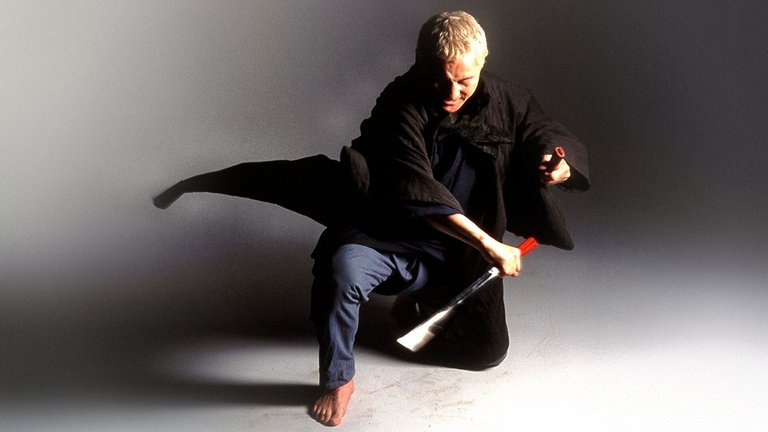
"Beat" Takeshi Kitano stands as arguably the most recognisable and iconic figure of present-day Japanese pop culture. This immense stature is the result of his numerous talents, ranging from comedy and acting to directing, yet it is also cemented by his reputation as a serious arthouse filmmaker he established at the end of the 20th century, particularly within the genres of gangster and crime films. Never stranger to experimentation, in 2003 Kitano attempted to broaden the scope of his work by embarking on a very original take on one of the most iconic characters in Japanese cinema with his jidai geki action film Zatoichi.
The title character, originally conceived through the novels of Ken Shimozawa, is Zatoichi, the blind wandering swordsman who became the protagonist of the 1962 film The Tale of Zatoichi. That film initiated an immensely prolific series that stretched from the 1960s all the way to 1989. The character’s popularity was such that the franchise spawned numerous television series, a number of later remakes, and even a Hollywood US remake known as Blind Fury.
Kitano’s version begins with Zatoichi, played by Kitano himself, on the road towards a small Japanese town sometime roughly around the mid 19th Century. The town itself is divided between two rival yakuza clans, one led by Ginzo (Itoku Ishibo) and the other by Ogiya (Saboru Ishigura). Zatoichi, who supports himself by providing massage and gambling, finds temporary accommodation in the home of a kindly widow named O-ume (Michiyo Ukusu), whose nephew Shinkichi (Guadalcanal Taka) spends all of his money in a nearby gambling den. More people have arrived in town, among them O-sei (Daigoro Tachibana) and his sister O-kinu Naruto (Yuko Daike). The siblings are geishas whose real aim is to find the bandits who killed their parents ten years ago. Also present is Hattori Gennosuke (Tanadobu Asano), a ronin who offers his services as a bodyguard to provide for his sick wife, O-shino (Yui Natsukawa). Zatoichi, who conceals a deadly blade within his staff, is poised to use his superb skills in the bloody confrontation that would ensue.
Kitano, who also wrote the script, crafted a strange combination of the conventional jidai geki action film—complete with swordfights—and plots reminiscent of the Western-inspired jidai geki classics of Akira Kurosawa, particularly Yojimbo, blended with black and at times almost surreal comedy. Kitano plays the original character with his hair dyed white or blonde. He adds a significant amount to the surreal atmosphere with his expressionless stoic face and his man of few words. The most interesting performances come from Tachibana and Daike in the roles of the Naruto siblings. The way they try to reconcile their professional cover as geishas with their desire for revenge is compelling. Tachibana is particularly interesting as a man who pretends to be a geisha, and he leaves such a good impression on the comically superb Shinkichi that the nephew too tries to apply make-up and pretend to be a woman.
Plenty of dark humour is matched with some unpleasant scenes in the film, such as the image of young O-sei supporting his sister on the road through implied prostitution. The scenes of violence, of which there are many and involve a huge bodycount, are made slightly less disturbing by the use of surreal amounts of blood, which is deliberately enhanced via CGI. This surreal character of the film is confirmed with rather unexpected ending in which the villagers, after Zatoichi has defeated the villains, celebrate by a prolonged music-and-dance number that involves tap dancing.
However, the film is not without its flaws. Some of the script issues are apparent, particularly in terms of characterisation, which can feel unpolished. Additionally, the music by Keiichi Suzuki leaves much to be desired, save for the final scene. At the same time, its "weirdness" and the established arthouse reputation of its author helped it win the Silver Lion at the Venice Film Festival.
Yet, despite its reputation, some of its flaws, and the script issues, Zatoichi is very good and, more importantly, very entertaining. It is a film that stands well on its own merits and could even serve as a good introduction to Kitano's ouvre for less niche audiences.
RATING: 7/10 (+++)
==
Blog in Croatian https://draxblog.com
Blog in English https://draxreview.wordpress.com/
InLeo blog https://inleo.io/@drax.leo
InLeo: https://inleo.io/signup?referral=drax.leo
Leodex: https://leodex.io/?ref=drax
Hiveonboard: https://hiveonboard.com?ref=drax
Rising Star game: https://www.risingstargame.com?referrer=drax
1Inch: https://1inch.exchange/#/r/0x83823d8CCB74F828148258BB4457642124b1328e
BTC donations: 1EWxiMiP6iiG9rger3NuUSd6HByaxQWafG
ETH donations: 0xB305F144323b99e6f8b1d66f5D7DE78B498C32A7
BCH donations: qpvxw0jax79lhmvlgcldkzpqanf03r9cjv8y6gtmk9