Television Review: Moljac (Povratak otpisanih, S1X06, 1978)

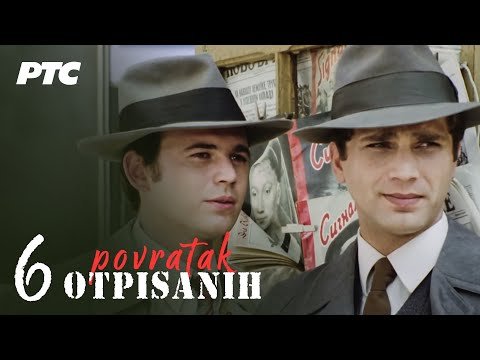
Moljac (S01E06)
Airdate: 5 February 1978
Written by: Dragan Marković
Directed by: Aleksandar Đorđević
Running Time: 53 minutes
Povratak otpisanih, often regarded by critics and audiences alike as a lighter, more accessible companion to its formidable predecessor, Otpisani, operates within a distinct tonal framework. While the original series was deeply constrained by the grim realities of the World War Two Communist resistance in Belgrade, Povratak benefits from the shifting timeline. Set in 1944, with the war’s end in sight and the liberation of the city approaching, the narrative burden of inevitable martyrdom is significantly alleviated. The survival of iconic protagonists Prle and Tihi is now a certainty rather than a tragic question, allowing the writers to prioritise comedy, suspense, and character dynamics over the relentless celebration of sacrifice. Yet, this shift towards a more relaxed approach does not render the series immune to tragedy. On the contrary, the series retains the power to deliver moments of pure devastation, none of which strikes with the force of the sixth episode, Moljac.
The episode’s title, which translates as “Moth”, serves as a poignant metaphor for fragility and inevitable destruction, a theme woven into the narrative fabric from the outset. The story introduces Stana (Svetlana Bojković), a high-ranking Communist Party official who arrives covertly in Belgrade to prepare the terrain for the upcoming liberation battle. She issues Prle a specific directive: to utilise his extensive network to establish an underground hospital for Partisans and their sympathisers. This mission brings Prle into contact with the titular “Moljac” (Nenad Nenadović). Far from a hardened revolutionary, Moljac is revealed to be a young boy, the leader of a gang of street urchins who have previously served Prle in various tasks that often skirted the line between resistance and black marketeering.
When the boy and his friends are first seen in action, they demonstrate a remarkable resourcefulness and efficiency. A scene depicting them stealing food supplies from a German military train establishes their utility, yet their motivations remain grounded in survival rather than ideology. Moljac is primarily driven by the desperate need to feed his mother (Sonja Jauković), and his four siblings. It is only after Prle reveals that Moljac’s father was a Communist activist who died for his beliefs that the boy shifts his allegiance. This transition from opportunism to ideological commitment is handled with nuance, grounding the war drama in human necessity.
With Moljac’s help, Prle successfully organises the delivery of beds, blankets, and medical supplies to an abandoned building. The operation is bolstered by the hiring of Cane Kurbla (Ivan Bekjarev), a car mechanic who agrees to provide a lorry for transport. Kurbla’s role goes beyond mere transport; he poses as an Organisation Todt officer to allay suspicions from the SS. The mission appears to conclude successfully, with Moljac awaiting further instructions, yet his youthful impatience leads to his undoing. Prle, perhaps out of a desire to give the boy a sense of purpose, assigns him to a guard duty that he believes to be routine and harmless.
Cruel fate intervenes in the form of two Special Agents, Isa (Stole Aranđelović), and his partner Ilija Miljković (Zoran Miljković=. These officers have just pickjed an attractive singer (Mirjana Peić), and her friend Bela (Melita Bihali), and having failed to secure rooms for some quality time in the city, they decide to inspect the recently abandoned buildings where the hospital is located. When Moljac attempts to fend them off using a simple sling, the confrontation turns catastrophic. After being hit, an enraged Isa chases the boy and fires, resulting in his death. The episode concludes with his partner, horrified by the brutality, stating the devastating line, “You killed a child, Isa”.
While Otpisani and Povratak otpisanih have seen popular and innocent characters meet tragic ends previously, the death of a child brings the World War Two tragedy depicted in the series to a new level of brutality. For a 1978 audience, this was one of the most traumatic moments in the series, particularly for young viewers who were of the same age as Moljac and had become invested in his adventures. The impact is amplified by the exceptional writing, which renders the character of Moljac vividly real, and by the conviction of Nenad Nenadović. His portrayal is so authentic that it blurs the line between the actor and the role. This intensity was not without precedent; in 1978, Nenadović would play a slightly similar character of a child turned soldier in Branko Bauer’s Partisan film Boško Buha, further cementing the cultural significance of this archetype in Yugoslav cinema.
Despite the heavy melodrama of the climax, the episode provides necessary breathing room with scenes that expand the narrative scope. There are moments that place the main plot in a broader context, such as Colonel Müller informing fellow Gestapo officers of the necessity to evacuate Belgrade, indicating the crumbling front. Conversely, there are subplots that appear unrelated to the main hospital plot, serving instead to build tension. One particularly effective scene involves Marija, who uses the carelessness of her boss, Krsta Mišić, to photograph top-secret documents from his safe. She nearly gets caught when accidentally locked inside the office, a sequence that serves as an excellent example of the suspense the series is capable of generating outside of combat situations.
The production also retains the continuity practices that have characterised the series, though at times this can be slightly confusing for the casual viewer. Casting decisions continue to blur the lines of character identity, with actors reappearing in new roles. Svetlana Bojković, for instance, arrives here under the name Stana, yet in the Otpisani episode Štamparija, she played an almost identical character named Olivera. Whether Stana and Olivera are two different characters using different codenames, or simply the same individual adapting to the new series setting, is left to the viewer’s interpretation. This ambiguity adds a layer of complexity to the show’s lore, suggesting a continuity that respects the original while forging a new path.
In the end, “Moljac” shows the series' ability to balance entertainment with the heavy historical weight of war, proving that sometimes the most powerful stories are those that focus on the most vulnerable.
RATING: 7/10 (+++)
Blog in Croatian https://draxblog.com
Blog in English https://draxreview.wordpress.com/
InLeo blog https://inleo.io/@drax.leo
LeoDex: https://leodex.io/?ref=drax
InLeo: https://inleo.io/signup?referral=drax.leo
Hiveonboard: https://hiveonboard.com?ref=drax
Rising Star game: https://www.risingstargame.com?referrer=drax
1Inch: https://1inch.exchange/#/r/0x83823d8CCB74F828148258BB4457642124b1328e
BTC donations: 1EWxiMiP6iiG9rger3NuUSd6HByaxQWafG
ETH donations: 0xB305F144323b99e6f8b1d66f5D7DE78B498C32A7
BCH donations: qpvxw0jax79lhmvlgcldkzpqanf03r9cjv8y6gtmk9