Television Review: Solitary (Lost, S1X09, 2004)

Solitary (S01E09)
Airdate: November 17th 2004
Written by: Daniel Fury
Directed by: Greg Yaitanes
Running Time: 42 minutes
Following a necessary but somewhat measured opening sequence of character background expositions in early Season One, Lost’s main plot engine finally, and seismically, engages with Solitary. This is the episode that delivers on the show’s initial promise of mystery, providing concrete answers that irrevocably change the survivors’ paradigm, while simultaneously opening a fresh, mind-boggling batch of questions about the island’s nature. Yet, for all its seemingly earth-shattering revelations, there remains a curious sense of the underwhelming when compared to the visceral impact of the pilot or the profound character excavation of Walkabout. Written by David Fury and directed by Greg Yaitanes, Solitary functions as essential, compelling mythology-building, but its execution occasionally falters, rendering it a pivotal yet imperfect chapter in the series' lore.
The episode opens with the direct consequence of the previous instalment’s cliffhanger: Sayid, the former Iraqi Republican Guard communications officer, has embarked on a mission to map the island. His expedition bears immediate, unsettling fruit when he stumbles upon a huge, industrial-grade cable on the beach—an unambiguous sign of prior human activity far beyond the scope of a simple castaway scenario. Following it inland, he is captured, knocked unconscious, and awakes shackled. His captor is Danielle Rousseau, played by Mira Furlan. She is the source of the looping French distress signal recovered earlier, but she is no longer a victim awaiting rescue. Through her paranoid, fragmented ramblings, Sayid pieces together that she was part of a scientific team shipwrecked on the island. She issues cryptic warnings about mysterious “Others” who become “sick” and carriers of “it,” and describes the haunting whispers in the forest. In a tense sequence, Sayid engineers his escape, only to be confronted by a rifle-wielding Rousseau who chillingly confesses that she herself killed her teammates when they became “infected.” Through a combination of empathy and stark logic, Sayid persuades her to let him go. His return to the jungle is punctuated by the episode’s most chilling moment: he stops, listens, and hears the very whispers Rousseau described, confirming that her madness is rooted in a terrifying reality.
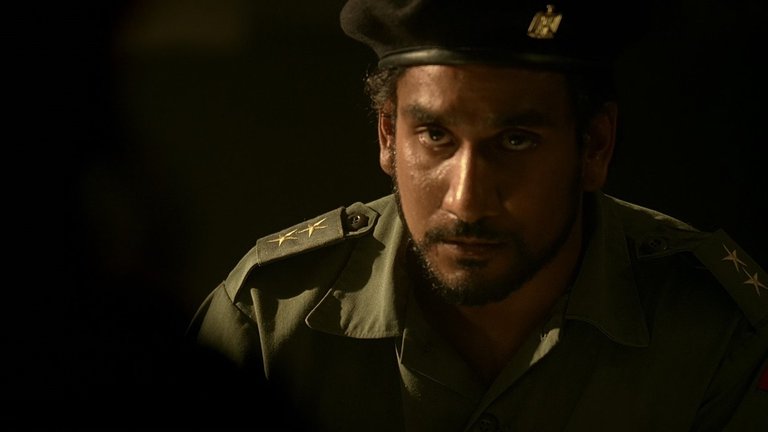
This island narrative is masterfully interwoven with flashbacks exposing Sayid’s past, deepening his character with profound moral complexity. We see a younger, ambitious Sayid, rising through the ranks of the Iraqi Republican Guard due to his singular talent for “extracting information” from prisoners and the patronage of his superior, Omar (Navid Negahban). His new assignment is to interrogate Nadia (Andrea Gabriel), a woman suspected of links to resistance cells. The task is psychologically torturous for Sayid, as Nadia is a childhood friend and unrequited love. His attempts at a gentle persuasion fail, and after a month, Omar orders her execution. In a moment of defiant morality, Sayid instead helps her escape. When Omar discovers the betrayal, Sayid shoots his mentor and then himself in the leg to fabricate a cover story—an act of sacrifice that brands him both a traitor and a survivor, perfectly mirroring his island persona.
Meanwhile, back at camp, a parallel storyline provides crucial tonal contrast. Recognising the survivors’ need for levity and distraction from their grim reality, Hurley decides to construct an improvised golf course. This endeavour is met with enthusiastic, communal participation. Even the ostracised conman, Sawyer, finds a way back into the fold by initiating a betting operation. This subplot is a hope-affirming assertion of normalcy and human connection, a deliberate counterpoint to the isolating horror Sayid is experiencing in the jungle. The stark juxtaposition heightens the impact of both narratives.
Sayid’s encounter with Rousseau represents one of the series’ first genuine paradigm shifts. It shatters the survivors’ assumption that they are the first and only people on this island. The positive implication is that long-term survival is possible—Rousseau has endured for sixteen years. The dire implication is the presence of an existential threat so grave it compelled her to murder her own team. Initially, Sayid (and the audience) can dismiss her as a lunatic, her mind addled by extreme isolation. The genius of the episode’s final scene is the subtle but profound reversal: the whispers prove that her core testimony is validated. The danger is real, and the “Others” are not a delusion.
The success of this revelation hinges significantly on Mira Furlan’s riveting performance. The Croatian actress, known internationally for her role as Ambassador Delenn in Babylon 5, is perfectly cast. She renders Rousseau a truly ambivalent figure—simultaneously dangerous, tragic, and fascinating. Her performance is great example of portraying fractured sanity underpinned by harsh truth, making Rousseau an instantly legendary character in the Lost mythology.
However, despite these strengths, Solitary fails to achieve the grand, emotional impact of the series’ early high points. Partly, this is due to the direction by Greg Yaitanes. While competent, it lacks the inspired visual storytelling that elevated episodes like Walkabout. The narrative beats, particularly the climactic rifle standoff between Sayid and Rousseau, feel predictable. There was never any real narrative tension that Sayid—a central character with unexplored backstory—would be killed so early in the season. This predictability slightly deflates the episode’s suspense.
The episode also introduces fascinating ironies in Sayid’s character arc. In the previous episode, Confidence Man, he was shown torturing Sawyer for information. His flashbacks here confirm that torture was his profession. In Solitary, the torturer becomes the tortured, captured and psychologically tormented by Rousseau. This cyclical karmic justice adds a compelling layer to his journey, though the episode could have probed this symmetry more deeply.
A significant missed opportunity lies in the failure to explore the profound cultural isolation of Rousseau. Stranded since 1988, she is a woman utterly divorced from history, unaware of the fall of the Berlin Wall, the 9/11 attacks, or the subsequent Gulf Wars—events that would directly contextualise the backgrounds of Sayid, an Iraqi. A scene acknowledging this vast temporal chasm could have been devastatingly powerful.
Philosophically, the episode continues the show’s clever tradition of literary and philosophical allusion. Naming the island’s mysterious, wild inhabitant “Rousseau” is a direct nod to Jean-Jacques Rousseau, the 18th-century philosopher who idealised the “state of nature” as superior to corrupted civilisation. The survivors, stripped of modern society, are literally living in a “state of nature,” a concept the episode subtly invites us to interrogate: is this a noble, pure existence, or a brutal, Hobbesian nightmare?
Despite its flaws—the occasionally pedestrian direction, predictable moments, and unexplored potential—Solitary remains a fan favourite. This enduring popularity is largely owed to Hurley’s golf course subplot. Its light-hearted, communal spirit provides a necessary and effective contrast to the episode’s pervasive darkness, a reminder of hope and humour’s survival value. This effect is magnified by the stunning, iconic Oahu location, which so captured viewers’ imaginations that it later became a pilgrimage site for fans. Ultimately, Solitary works as an indispensable gear-shift in the Lost machine.
RATING: 6/10 (++)
Blog in Croatian https://draxblog.com
Blog in English https://draxreview.wordpress.com/
InLeo blog https://inleo.io/@drax.leo
LeoDex: https://leodex.io/?ref=drax
InLeo: https://inleo.io/signup?referral=drax.leo
Hiveonboard: https://hiveonboard.com?ref=drax
Rising Star game: https://www.risingstargame.com?referrer=drax
1Inch: https://1inch.exchange/#/r/0x83823d8CCB74F828148258BB4457642124b1328e
BTC donations: 1EWxiMiP6iiG9rger3NuUSd6HByaxQWafG
ETH donations: 0xB305F144323b99e6f8b1d66f5D7DE78B498C32A7
BCH donations: qpvxw0jax79lhmvlgcldkzpqanf03r9cjv8y6gtmk9