Television Review: Super (Person of Interest, S1X11, 2012)

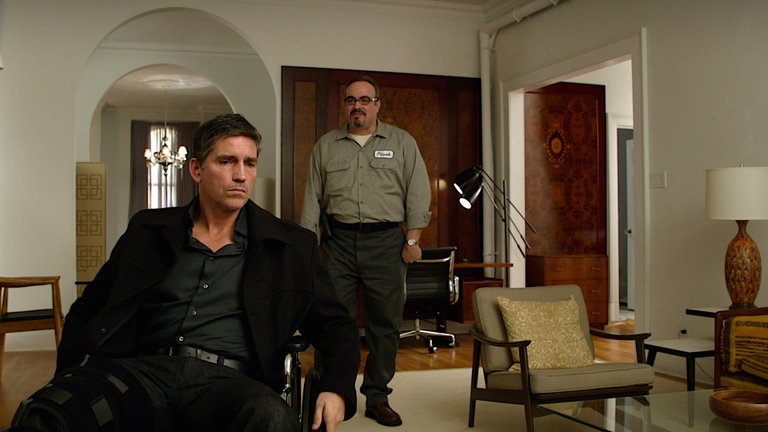
Super (S1x11)
Airdate: 12 January 2012
Written by: David Slack
Directed by: Stephen Williams
Running Time: 44 minutes
By the midpoint of its inaugural season, Person of Interest continues to demonstrate a trend of establishing its narrative formula with increasing confidence, effectively transitioning from a simple procedural into a complex tapestry where the overarching story arc takes precedence over episodic tasks. Super, the eleventh episode of the first season, proves to be one of the most illustrative examples of this maturation, demonstrating how individual case files can be utilised to serve the show's deeper mythology rather than just providing a standalone distraction. The general story arc becomes the primary focus, with the procedural elements becoming subservient to it, creating a cohesive experience that benefits both long-term viewers and newcomers.
The episode opens with a cold open that immediately underscores the show's reliance on continuity, illustrating that events in one episode reverberate for a long time. Following the harrowing events of the previous episode, Reese is shown seriously injured following an ambush by his former CIA handlers. This injury forces Finch to abandon his usual protocols and adopt unconventional methods to save his life. We witness a tense sequence where Finch recruits an Iraqi immigrant doctor, who is operating under the guise of performing odd jobs, to perform emergency surgery. The transaction here is stark and desperate; Finch hands over a sizeable pile of money to the doctor with the specific instruction to "stitch him up" without asking any questions. This moment highlights Finch's willingness to operate in the grey areas of the underground world to protect his asset, setting a tone of urgency and moral ambiguity that runs throughout the episode.
Weeks later, Reese has recovered sufficiently to move into a luxurious apartment, a choice that later proves to be a calculated decision by The Machine. The Machine has churned up the number of Ernie Trask (David Zayas), a building supervisor who delights his tenants with colourful stories about his past in Miami. Reese's condition necessitates a temporary inversion of their usual dynamic. Instead of conducting surveillance in the field, Reese is confined to the apartment, acting as the analyst who monitors and interprets intelligence fed to him through the numerous video cameras installed in the building. Conversely, Finch must undertake the legwork, a task for which he is woefully unprepared due to his lack of practical experience. This role reversal leads to a series of humorous and tense moments as Finch goes through the building's corridors and interacts with the tenants, often stumbling into unpleasant situations that Reese usually handles with his combat prowess. Their findings suggest that Trask is not merely a gregarious super but a stalker obsessed with Kelly Thornton (Kelli Barrett), one of the female tenants who is reportedly dating Rick Morris (Bill Heck). However, the narrative suggests that the truth is far more complex than a simple romantic triangle.
In the background of this domestic drama, the external threat posed by the CIA continues to loom large. Agent Snow remains convinced that he can track Reese down, a theory he tests by monitoring Detective Carter, assuming she is the key to locating the ex-CIA operative. This subplot adds a layer of external pressure to the main narrative, reminding the audience of the constant threat posed by government surveillance and the consequences of Reese's past actions.
The episode utilises a substantial flashback sequence set in 2005 to deepen the lore of the show. This segment depicts the first presentation of The Machine to the federal government, featuring high-ranking officials such as Alicia Korwin (Elizabeth Marvel) and Denton Weeks (Carter Smith). Nathan Ingram demonstrates the Machine's capabilities by revealing how its algorithms discovered that a high-ranking DIA agent, Gordon Kurzweil, aided Iranian agents in purchasing weapons-grade uranium. While Korwin and Weeks are impressed by the technology, they remain sceptical about how it functions. Ingram argues for limitations on its use, motivated by a desire to prevent abuse by the state. However, unbeknownst to Ingram, The Machine is simultaneously tracking his own number, suggesting that the very creator of the system is now in danger. This irony serves as a brilliant narrative device, linking the history of the machine directly to the perilous present.
The screenplay by David Slack places a heavy emphasis on the flashback and the general storyline, allowing the procedural elements to breathe within the larger narrative. However, the episodic segment is elevated significantly by the direction of Stephen Williams, whose execution is both clever and visually engaging. The choice of The Apthorp, a historic building in New York City, as the primary location provides a rich atmosphere that pays homage to classic thrillers. The setting amplifies references to the erotic thriller Sliver, released two decades earlier, but is even more overtly influenced by Alfred Hitchcock's seminal work, Rear Window. The visual language mirrors the voyeuristic nature of the plot, where characters watch and are watched, creating a claustrophobic and suspenseful environment that is essential to the episode's tone.
The episode also benefits a lot from the performance of David Zayas. He deliberately plays with references to his best-known character, Miami police detective Batista from Dexter, infusing Ernie Trask with a commanding presence and a hint of menace that makes the character truly compelling. However, Zayas elevates the role beyond a mere callback, bringing a subtle vulnerability to the character that makes his obsession with Kelly Thornton feel genuinely tragic rather than just creepy.
Ultimately, Super succeeds where many procedural dramas fail by integrating the episodic case with the series' expanding mythology. It balances the Hitchcockian thrills of the main plot with the political intrigue of the flashbacks, creating a cohesive and satisfying viewing experience. By the end of the episode, the audience is left not only with a solved mystery but with a deeper understanding of the characters' histories and the stakes of their future.
RATING: 6/10 (++)
==
Blog in Croatian https://draxblog.com
Blog in English https://draxreview.wordpress.com/
InLeo blog https://inleo.io/@drax.leo
Substack https://draxster.substack.com
LeoDex: https://leodex.io/?ref=drax
InLeo: https://inleo.io/signup?referral=drax.leo
Hiveonboard: https://hiveonboard.com?ref=drax
Rising Star game: https://www.risingstargame.com?referrer=drax
1Inch: https://1inch.exchange/#/r/0x83823d8CCB74F828148258BB4457642124b1328e
BTC donations: 1EWxiMiP6iiG9rger3NuUSd6HByaxQWafG
ETH donations: 0xB305F144323b99e6f8b1d66f5D7DE78B498C32A7
BCH donations: qpvxw0jax79lhmvlgcldkzpqanf03r9cjv8y6gtmk9