Television Review: The Benefactor (Mad Men, S2x03, 2008)

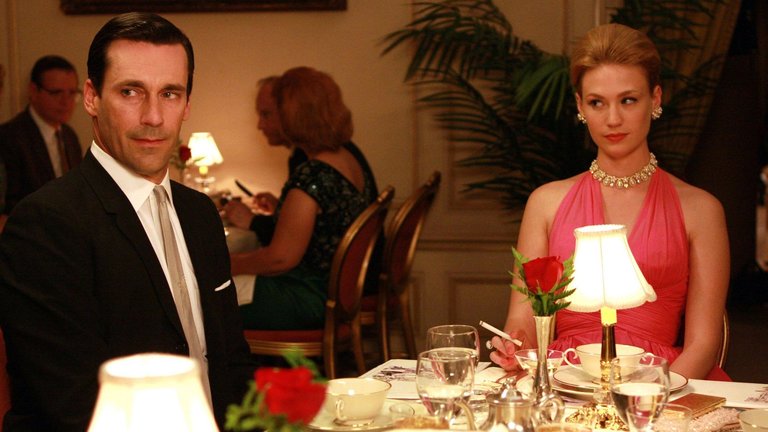
The Benefactor (S2x03)
Airdate: 10 August 2008
Written by: Matthew Weiner & Rick Cleveland
Directed by: Leslie Glinka Glatter
Running Time: 48 minutes
Matthew Weiner’s choice to depict the tumultuous decade of the 1960s from the perspective of advertising industry executives and employees proved to be an exceptionally astute creative decision. These individuals were not merely passive observers of momentous cultural shifts; they were, by virtue of their profession, on the forefront of shaping consumer desire and, via the creative class, firmly connected with the entertainment industry. This vantage point allows Mad Men to serve a dual purpose: as a penetrating insight into a transformative past and as a veritable treasure trove of pop culture references, where the mechanics of selling products intertwine with the era’s defining media. One such exemplary fusion is found in The Benefactor, the third episode of the show’s second season. This instalment masterfully leverages a real television controversy to hold a mirror to the personal and professional machinations of its characters, revealing the brittle facades of control they maintain in a world on the cusp of radical change.
The episode’s engine of conflict is ignited in a utilitarian studio, where the crudely popular comedian Jimmy Barrett (Patrick Fischler) is filming a commercial for Utz Potato Chips. The arrival of the company’s owner, Hunt Schilling (Steve Stapenhorst), and his wife Edith (Jan Hoag)—an ardent fan—sets the stage for disaster. Barrett, unable to resist the lowest-hanging fruit, unleashes a series of brutally insensitive jokes about Edith’s obesity. This represents a catastrophic failure for Sterling Cooper, which had the Utz account. The cardinal sin, as Roger Sterling later elucidates, was allowing the clients near the combustible Barrett, a man whose reputation for offence preceded him. The ensuing scramble for accountability finds Don Draper peculiarly absent, having chosen to spend the afternoon in a cinema watching a pretentious French art film—a futile attempt to connect with a “cool” new world that remains elusive to him. Don’s solution to the crisis is both swift and cowardly: he deflects blame onto his secretary, Lois, demoting her back to the pool of switchboard operators, thus providing a sacrificial lamb to appease the gods of corporate hierarchy.
This professional fiasco, however, also presents an opportunity for Don to reassert his value as a fixer. His plan is to compel a humiliating apology from Barrett to the Schillings. The path to this goal leads him to Bobbie Barrett (Melinda McGraw), Jimmy’s wife and manager, a character of formidable and unapologetic sexual agency. Their initial meeting is a tense negotiation; Bobbie is dismissive of the need for an apology, viewing the incident as trivial client hypersensitivity. The dynamic shifts, however, when they have sex—a transaction of power as much as desire. Don’s strategy culminates in a staged reconciliation at Lutèce, New York’s most elite restaurant, where the Barretts and Schillings are to dine with Don and his wife, Betty. Betty’s participation is secured through immense reluctance, yet once at the table, she performs her wifely duty with devastating efficiency, charming everyone present. Jimmy, emboldened by alcohol and his own nature, shamelessly flirts with her. When he still refuses to apologise, Don follows Bobbie to the restroom. In a chilling display of coercive power, he grabs her and threatens to destroy her husband’s career. The apology is swiftly delivered. Don’s mission is accomplished, but the cost is laid bare in the final scene:As he returns home, he finds Betty weeping, her composure shattered by the evening’s degrading spectacle.
Running parallel to this central drama is the episode’s second major storyline, which serves as a superb study of corporate envy and opportunistic ambition. Harry Crane, feeling undervalued and financially stagnant, accidentally opens a piece of mail intended for Ken Cosgrove and discovers the vast disparity in their salaries. This moment of private humiliation fuels a crisis of confidence. He explores a move to CBS, but a fruitless phone call yields an unexpected prize: intelligence about an upcoming episode of the prestigious legal drama The Defenders. Titled “The Benefactors,” the episode deals with the taboo subject of abortion, rendering it so controversial that the show’s regular sponsors have withdrawn. Harry, seeing a chance to prove his worth, attempts to secure a new sponsor through Sterling Cooper. His pitch to Belle Jolie fails, but in the process, he earns the public admiration of the company’s executive, Paul Keeley, for his resourcefulness and bravery. This display of initiative does not go unnoticed. Roger Sterling, impressed, rewards Harry by promoting him to head of a newly created Television Department, complete with a modest raise. This subplot is a perfectly calibrated piece of storytelling, illustrating how personal grievance can be channelled into professional advancement within the mercurial logic of the corporate world.
The Benefactor is firmly anchored in television history. The Defenders, created by Reginald Rose of 12 Angry Men fame, was a critically acclaimed series, and the episode “The Benefactors” was indeed pulled from its initial broadcast schedule in May 1962 due to sponsor revolt over its abortion storyline, only airing later after a replacement sponsor was found. The episode’s use of actual footage from the 1962 broadcast is not mere period dressing; it provides a potent meta-commentary. Just as the fictional Sterling Cooper navigates the fallout from Barrett’s offensive humour, the real-life television industry was grappling with the limits of acceptable discourse. The episode smartly parallels these two realms, suggesting that the anxieties about content and sponsorship in entertainment are inextricably linked to the broader cultural anxieties the ad men both exploit and embody.
Co-written by Matthew Weiner and Rick Cleveland and directed with assured clarity by Leslie Linka Glatter, the episode is a model of narrative focus, weaving together only three primary storylines with precision. The Harry Crane plot is a quintessential Mad Men exploration of office politics and the slow, often accidental, shifting of cultural attitudes. The minor thread concerning Betty’s struggle with adulterous temptation—she is simultaneously repulsed by Don’s world and drawn to the crude validation offered by Jimmy Barrett’s flirtation—serves to deepen the main narrative, highlighting the emotional collateral damage of Don’s transactional existence.
The episode’s success is significantly bolstered by its casting. Patrick Fischler embodies Jimmy Barrett with a pathetic, wounding energy, channelling the aggressive, insecure humour of era comedians like Jerry Lewis. Even more compelling is Melinda McGraw’s Bobbie Barrett, a revelation as a sexual manipulator who, despite being arguably older than Don, exerts a formidable and unsettling power over the men around her. Their dynamic serves as a fascinating study in layered frustration: Jimmy, presumably henpecked and emasculated by Bobbie’s management, lashes out through alcohol and cruelty; Don, feeling inferior to Roger Sterling’s effortless authority, reasserts control by bullying an innocent subordinate and manipulating his own wife into a degrading performance.
The Benefactor also occupies a curious place in Mad Men lore due to an unresolved mystery. Matthew Weiner has deliberately never identified the pretentious French art film Don watches in the cinema, leading to years of fervent fan speculation. The prevailing theory suggests the footage was either from an extremely obscure picture or created specifically for the series, a deliberate void that amplifies the episode’s themes of elusive authenticity and Don’s futile pursuit of a sophistication that remains just out of reach.
The Benefactor is particularly rich and cohesive entry in the series’ canon. It functions brilliantly as a case study in crisis management and personal compromise, utilising a real-world television controversy to illuminate the fragile ecosystems of advertising, marriage, and corporate ambition. The episode demonstrates how Mad Men consistently finds the profound within the professional, revealing the quiet desperation and opportunistic grit that fuelled the American machine on the eve of its most dramatic upheaval.
RATING: 8/10 (+++)
==
Blog in Croatian https://draxblog.com
Blog in English https://draxreview.wordpress.com/
InLeo blog https://inleo.io/@drax.leo
LeoDex: https://leodex.io/?ref=drax
InLeo: https://inleo.io/signup?referral=drax.leo
Hiveonboard: https://hiveonboard.com?ref=drax
Rising Star game: https://www.risingstargame.com?referrer=drax
1Inch: https://1inch.exchange/#/r/0x83823d8CCB74F828148258BB4457642124b1328e
BTC donations: 1EWxiMiP6iiG9rger3NuUSd6HByaxQWafG
ETH donations: 0xB305F144323b99e6f8b1d66f5D7DE78B498C32A7
BCH donations: qpvxw0jax79lhmvlgcldkzpqanf03r9cjv8y6gtmk9