Television Review: The Glass Ballerina (Lost, S3X02, 2006)

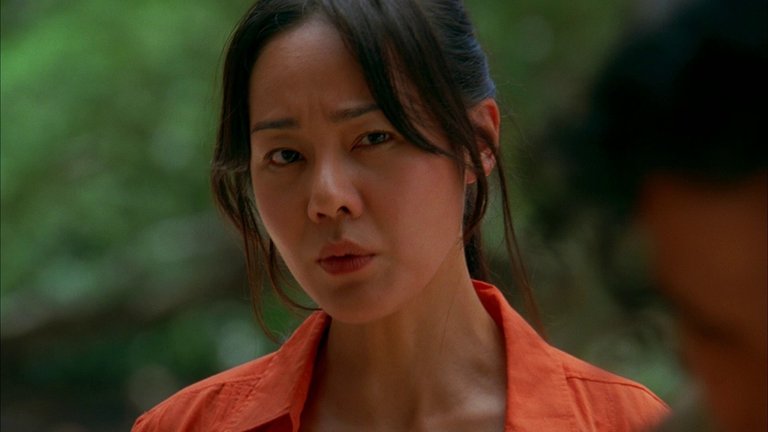
The Glass Ballerina (S03E02)
Airdate: 11 October 2006
Written by: Jeff Pinkner & Drew Goddard
Directed by: Paul Williams
Running Time: 43 minutes
For much of its initial run, Lost was defined by a very specific type of atmosphere. The first season was characterised by a pervasive sense of mystery and natural dread, the feeling that the island itself was a hostile entity observing the survivors from the treeline. This evolved in the second season into a claustrophobic tale of survival and paranoia within the confines of the Swan Station. However, as the narrative transitioned into its third season, it became evident that this prevailing mood was about to be replaced with something fundamentally different. The main source of tension was no longer the unknown wilderness or the pressing button of a bunker; rather, it was the lack of trust between the protagonists. This distrust was often very justified, stemming from secrets kept and alliances formed in the shadows. One of the earliest and most effective examples of this shift in tone can be seen in The Glass Ballerina, the second episode of Season 3, which dissects the fractured nature of the survivors' community.
Structurally, the episode follows an unusual narrative technique established by the season premiere. The first episode was focused almost entirely on the trio of Jack, Kate, and Sawyer being captured by the Others, deliberately ignoring everyone else on the island. While this created a sense of immediacy, it left the narrative feeling somewhat truncated. The second episode does expand this narrative scope a little bit, but it still leaves it limited mainly to the participants of the ill-fated and ill-conceived raid on the Others’ settlement which had concluded the previous season. By narrowing the lens to these specific characters—Jack, Kate, Sawyer, Sayid, Jin, and Sun—the writers create a sense of isolation from the rest of the cast, reinforcing the feeling of being lost not just geographically, but strategically.
The storyline involving Sayid, Jin, and Sun serves as a stark reminder of the survivors' desperation. While one group—Jack, Kate, Sawyer, and Hurley—fell into a trap and got captured, the other trio apparently escaped detection by using Desmond’s sailboat to sneak around the coast. The tension in this plotline is driven by a divergence in perception. Despite knowing that the Others’ settlement was abandoned, Sayid insists on sticking to the original plan and lighting a fire with huge black smoke as a signal. Jin and Sun reluctantly go along with it, although Sun suspects Sayid of lying and having a different agenda. Her intuition proves correct. Sayid finally admits that, based on what he has inspected, the other party got captured and that the signal is intended for the Others. Sayid's plan is a cold, tactical one: to lure the Others into an ambush of his own, take at least two of them as hostages, and try to trade them for the captives. It is a plan born of military pragmatism, but it underestimates the enemy. At night, the Others attack, but instead of approaching by land where Sayid is waiting, they try to take away the sailboat with Sun on board. In the ensuing chaos, Sun manages to shoot Colleen (Paula Malcolmson), one of the attackers. However, being outnumbered and outgunned, she is forced to watch as the sailboat is stolen. With their escape route taken away, Sayid concludes that they have been defeated and they must take the long road back to their original destination, a sombre retreat that highlights the Others' superior intelligence and resources.
The flashback narrative, meanwhile, deals intricately with the theme of lies and deception, and serves to significantly redefine the character of Sun. After a prologue where a young Sun lies to her father about not breaking a glass ballerina, we see the adult Sun engaged in an adulterous relationship with Jae Lee. Jae tries to talk her into escaping to America with him, offering a chance at freedom from her oppressive life. However, the lovers are caught in flagrante by Sun's father, Mr. Paik. He is furious and sees this as a family dishonour. His way of dealing with the matter is typically cold and corporate: he employs his son-in-law, Jin. Jin is ordered to kill Jae, but he is not told the real reason—the affair. Jin, like on previous occasions, is unable to take a life. He simply beats Jae and tells him to escape the country, hoping to spare him. Soon afterwards Jae falls from the balcony to his death. It remains ambiguous whether this was a desperate suicide or the work of Mr. Paik's backup assassin, but the irony is palpable: Jin spared Jae's life only for him to die anyway, while remaining ignorant of the personal betrayal that motivated the hit.
Conversely, the storyline dealing with Jack, Kate, and Sawyer being captives at the Others’ Hydra facility introduces a different kind of power dynamic. Sawyer and Kate are ordered to take part in breaking rocks in a nearby quarry, a pointless task seemingly designed to break their will. During this labour, Kate is approached by Alex, who inquires about the boy—Karl—who might have been held in her cage. In a moment of high drama, Sawyer, after seeing Kate work in a dress, apparently succumbs to lust. He approaches her and kisses her passionately. However, this stunt is just misdirection intended to lower the guards' defences, allowing him to take them down. His plan is thwarted when Juliet stops it by holding Kate at gunpoint. Later, when they discuss the incident between cages, Sawyer claims he gathered valuable information. He asserts that, apart from two men, he could take the Others on due to their apparent lack of combat experience. The devastating irony is that this conversation was captured by hidden microphones and cameras, being observed by the Others' leader, Ben, who now knows exactly how underestimated he is.
The leader, who would later introduce himself to Jack by his apparently real name "Benjamin Linus", is at the centre of the psychological warfare. After ordering the armed party to seize the sailboat, he goes to talk with Jack. He offers a tantalising proposition: if Jack co-operates with whatever the Others are doing, he will be rewarded by being brought back to the outside world. Jack is initially sceptical, claiming that the Others are, like themselves, castaways severed from the rest of the world. Ben retorts by shattering Jack's worldview by mentioning major events that had taken place between 22 September and 29 November 2004—the re-election of George W. Bush, the death of Christopher Reeve, and the Boston Red Sox winning the World Series. The latter makes Jack laugh, because the Boston Red Sox were notable for their historic inability to win such a trophy. Ben retorts by playing a video recording of television coverage of the famous event, proving beyond doubt that they have contact with the mainland. This scene, written by Drew Goddard and Jeff Pinkner—the latter being famous for his work on Alias and Fringe—serves as a pivotal moment in the series, expanding the scope of the narrative.
The episode, while trying to work within the short running time and limited set of characters, masterfully deals with the general theme of lies and deception. Sun, probably most shockingly to the audience, is revealed to be unfaithful to her husband, openly contradicting her claims when announcing her pregnancy on the Island. Similarly, Sayid openly lies to Jin and Sun when he starts his plan for ambushing the Others, withholding the truth to manipulate them into compliance. Even Ben, while visiting Jack, reminds him of his own deception by claiming a false identity as a balloonist while being held captive in the Swan Station. The episode is a tapestry of half-truths and betrayals, suggesting that on the island, honesty is a liability.
Furthermore, the episode masterfully plays with irony and misunderstanding. Jin, when sent to murder Jae, doesn't have a clue about the very personal reason that might make him and many other men cross that line. He spares Jae only for Jae to fall from the balcony, leaving the possibility that Mr. Paik takes the wrong impression about his son-in-law, believing Jin actually has what it takes to be his heir. Similarly, Colleen, when facing Sun with a gun, is certain that she won't fire because she isn't a killer, only to be immediately proven wrong when Sun shoots her in the stomach.
Colleen's shooting is arguably one of the more shocking events of the episode. It is shocking partly because Colleen is introduced as an important member of the Others' community, apparently romantically connected to Pickett, giving her death immediate emotional stakes. Her character is also played by Paula Malcolmson, an Irish actress who had already become prominent due to her role in Deadwood and who would later become a regular cast member of Ray Donovan. Her presence usually signifies importance, making her sudden demise all the more jarring. Yet, by this time, the audience has learned to expect the unexpected, and characters being unceremoniously killed was becoming a staple of the show. This disproportionately affected women, at least among major characters, with blondes—like Colleen—being even more likely to be dispatched by the show in this manner, a trend that would continue to spark debate among critics and fans alike.
However, the episode is not without its flaws, and one of them has to do with looking unoriginal. Because the major action beat deals with shooting at sea in the middle of the night, there are unavoidable parallels with the Season 2 episode Adrift. The imagery of muzzle flashes lighting up the dark ocean and the confusion of a maritime assault feels somewhat recycled. While the context is different, the visual language is too reminiscent of previous set-pieces, which slightly diminishes the impact of the scene.
Additionally, the Boston Red Sox reference, which would have been instantly recognisable to the audience two decades ago, is here a little bit obscure for younger viewers and makes the episode a little bit dated. In the mid-2000s, the "Curse of the Bambino" being broken was massive cultural news, a symbol of the impossible becoming possible. Using it in 2006 was a stroke of genius for establishing the timeline. However, viewing it from the perspective of 2026, the reference requires specific historical knowledge of American baseball to fully grasp the weight of the revelation. For a modern audience not versed in mid-2000s sports history, the moment loses its visceral punch and feels like a relic of its time.
At the end of the day, The Glass Ballerina is a better episode than the more spectacular season premiere, mainly because the flashback scene is much better, much more consequential, and conforms to the main theme. While the premiere relied on shock value and the separation of characters, this episode digs into the psychological roots of the conflict. It uses the flashback as a thematic mirror to the events on the island, exploring the devastating consequences of secrets and the fragility of trust. Despite minor issues with originality and dated cultural references, it is a strong example of Lost's ability to weave character drama into its high-concept mystery.
RATING: 7/10 (+++)
==
Blog in Croatian https://draxblog.com
Blog in English https://draxreview.wordpress.com/
InLeo blog https://inleo.io/@drax.leo
LeoDex: https://leodex.io/?ref=drax
InLeo: https://inleo.io/signup?referral=drax.leo
Hiveonboard: https://hiveonboard.com?ref=drax
Rising Star game: https://www.risingstargame.com?referrer=drax
1Inch: https://1inch.exchange/#/r/0x83823d8CCB74F828148258BB4457642124b1328e
BTC donations: 1EWxiMiP6iiG9rger3NuUSd6HByaxQWafG
ETH donations: 0xB305F144323b99e6f8b1d66f5D7DE78B498C32A7
BCH donations: qpvxw0jax79lhmvlgcldkzpqanf03r9cjv8y6gtmk9