Television Review: The Lion and the Rose (Game of Thrones, S4X02, 2014)

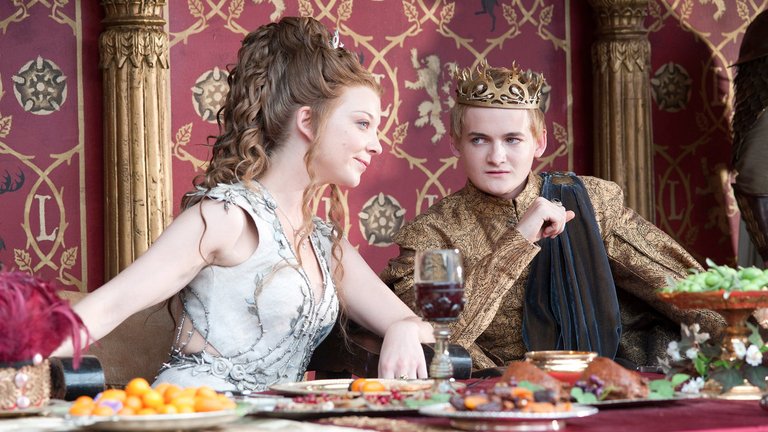
The Lion and the Rose (S4x02)
Airdate: 13 April 2014
Written by: George R. R. Martin
Directed by: Alex Graves
Running Time: 52 minutes
By the conclusion of its third season, Game of Thrones had cemented a grim reputation. For the majority of its audience—at least those unacquainted with George R.R. Martin’s source novels—the horrific climax of The Rains of Castamere delivered a brutal, paradigm-shifting realisation. The fictional world they had invested in was not one where valour and honour were rewarded, but a stark, unforgiving landscape where the machinations of the wicked often triumphed, and where noble intentions led directly to bloodshed, destruction, and tragedy. The Red Wedding was not merely a plot point; it was a statement of intent, leaving viewers in a state of shock and narrative despair. Aware, perhaps, that even this bleak universe requires some semblance of balance, the series offered a minor, almost teasing taste of karmic justice in the final scene of the Season 4 premiere, Two Swords, with Arya reclaiming her sword and dispatching a tormentor. Yet, few could have anticipated that the pendulum of fortune would swing back with such spectacular, cathartic force in the very next episode. “The Lion and the Rose,” written by Martin himself and directed by Alex Graves, delivers not just a pivotal moment, but one of the series’ most audacious and satisfying narrative corrections.
True to the established Game of Thrones formula, the episode weaves between its far-flung settings, though its architecture is notably lopsised. The narrative centre of gravity lies firmly, and purposefully, in King’s Landing. The other threads feel largely illustrative, serving as tonal counterpoints or necessary plot maintenance rather than driving the story forward with great momentum. Beyond the Wall, Bran Stark’s quest continues, with Jojen Reed’s warning about the dangers of warging—that Bran might “lose himself”—adding a layer of mystical foreboding to their northward trek.
The scenes in the Dreadfort and at Dragonstone are exercises in reinforcing established character traits and themes. At the Dreadfort, Ramsay Snow’s depravity is once again showcased through the grotesque “hunt” of a peasant girl Tansy (Jazzy de Lisser), a sport he shares with the equally cruel Myranda. The sequence is visceral and unsettling, yet its primary function seems to be reminding the audience of Ramsay’s nature before he is forced into a rare moment of justification. His explanation to his father, Roose Bolton, for having tortured and castrated Theon Greyjoy—thereby destroying a valuable bargaining chip against the Ironborn—is a cold lesson in realpolitik meeting sadistic overreach. It underscores the Bolton pragmatism, but feels like a footnote compared to the main event. Similarly, at Dragonstone, Melisandre’s relentless campaign against the Faith of the Seven proceeds with the burning of Axell Florent (James McHale), a moment that further establishes Stannis’s court as a place of fanatical, unforgiving zeal. The drama here is theological and grim, yet it lacks the transformative power of the episode’s centrepiece.
That centrepiece is, of course, the long-awaited wedding of King Joffrey Baratheon to Margaery Tyrell. Before the infamous feast, however, the episode takes time to lay poignant emotional groundwork in the capital. Tyrion Lannister’s heartbreaking decision to send Shae away, a manoeuvre designed to save her from Tywin’s and Cersei’s murderous wrath, is a great example in tragic irony. Peter Dinklage portrays Tyrion’s anguish with devastating subtlety, a man wounding himself to protect another, only to set in motion a chain of events that will doom them both. His parallel arrangement for Bronn to secretly train Jaime in one-handed combat is a smaller, brotherly act of loyalty that highlights the few genuine connections in the viper’s nest of King’s Landing.
All this is but a prelude to the wedding spectacle itself. The ceremony and subsequent feast are a riot of colour, music, and ostentatious pageantry, a deliberate contrast to the dark, claustrophobic atmosphere of the Twins in the previous season’s massacre. The celebration, however, is laced with Joffrey’s unique brand of cruelty. The crude dwarf performance re-enacting the War of the Five Kings is followed by public humiliation of Tyrion, and Joffrey seizes the opportunity to torment his uncle with vicious glee. Jack Gleeson’s performance remains a marvel of loathsome precision; every smirk and sneer reinforces Joffrey’s status as perhaps the most universally despised character in contemporary popular culture. Which makes what follows so profoundly cathartic. His sudden choking, the frantic gasps, the desperate clawing at his throat—it is a shocking, visceral end. He dies in his mother’s arms, but not before a final, accusatory finger is pointed at the horrified Tyrion. In the ensuing chaos, Cersei’s grief instantly curdles into vengeful fury, and her order to seize her brother sets the stage for the season’s central trial. Sansa Stark, aided by the seemingly foolish Ser Dontos Hollard, seizes the moment to slip away, her escape a minor victory amidst the tumult.
Joffrey’s death was an event most fans anticipated and overwhelmingly desired, yet its timing was a shock. Few expected the narrative to remove its primary human antagonist so early in the season, reserving such a “wham” moment for what is typically a setup episode. This development completely upends the dynastic and geopolitical order of Westeros. The ruling Lannister-Tyrell alliance is instantly poisoned with suspicion, plunging the royal family into a fratricidal chaos that will define the season. Moreover, it creates a compelling murder mystery—the “who” and “how” of the Purple Wedding—that would not be fully resolved for years, both within the show and in the books.
The event also represents a curious form of karmic retribution for the Red Wedding. The Rains of Castamere was a seismic television event that permanently removed characters perceived as the series’ bedrock” leaving an audience in a state of narrative trauma. In The Lion and the Rose, the show offers a perverse balance. Unlike the betrayal in a dark, austere setting, here, the retribution arrives in a sun-drenched garden, during a genuinely joyous celebration. The parallels are striking—a wedding, a sudden massacre—but the differences are everything. One was a brutal, calculated extermination of the ostensibly heroic faction; the other is the almost divine-comeuppance of the archetypal villain. Lady Olenna Tyrell’s earlier consolation to Sansa, expressing outrage over “killing a man at a wedding,” becomes a piece of brilliant, grim foreshadowing, highlighting the show’s cyclical nature.
The episode’s impact extends beyond the fiction. For actor Jack Gleeson, whose performance was so chillingly convincing that it blurred the line between character and actor for many viewers, Joffrey’s demise offered a form of release. Gleeson would step away from screen acting for six years, a hiatus perhaps influenced by the intense, unwanted scrutiny his role attracted. His departure passed the mantle of the series’ most despised villain to Iwan Rheon’s Ramsay, a transition this episode subtly facilitates by giving Ramsay a showcase scene.
Directed with assured confidence by Alex Graves, The Lion and the Rose is a masterful piece of television. It understands the need for light amidst the unrelenting shade, delivering a moment of visceral satisfaction without betraying the series’ core ethos of consequence. It is not a return to simplistic heroism, but a recalibration, a reminder that in this world, while doing the right thing may lead to tragedy, unbridled wickedness can also, occasionally, meet a spectacularly abrupt end. The episode stands as the necessary, glorious counterpoint to the darkness of The Rains of Castamere.
RATING: 8/10 (+++)
==
Blog in Croatian https://draxblog.com
Blog in English https://draxreview.wordpress.com/
InLeo blog https://inleo.io/@drax.leo
LeoDex: https://leodex.io/?ref=drax
InLeo: https://inleo.io/signup?referral=drax.leo
Hiveonboard: https://hiveonboard.com?ref=drax
Rising Star game: https://www.risingstargame.com?referrer=drax
1Inch: https://1inch.exchange/#/r/0x83823d8CCB74F828148258BB4457642124b1328e
BTC donations: 1EWxiMiP6iiG9rger3NuUSd6HByaxQWafG
ETH donations: 0xB305F144323b99e6f8b1d66f5D7DE78B498C32A7
BCH donations: qpvxw0jax79lhmvlgcldkzpqanf03r9cjv8y6gtmk9