Television Review: The Mountain King (Mad Men, S2x12, 2008)

The Mountain King (S2x12)
Airdate: 19 October 2008
Written by: Matthew Weiner & Robin Veith
Directed by: Alan Taylor
Running Time: 48 minutes
In so-called Golden Age of Television, the penultimate episode of a season had begun to assume a particular narrative weight. It was the moment for the ‘wham’—the shocking twist, the devastating confrontation, the point of no return that would propel the story into its finale. Matthew Weiner, schooled in this very tradition on The Sopranos, appears to deliberately stray from this principle in The Mountain King, the twelfth episode of Mad Men’s second season. While the episode features an event that, in any other series or season, would be deemed profoundly consequential—the secret sale of Sterling Cooper—it is presented with a curious, almost languid anti-climax. The seismic business shift is relegated to a muted decision by partners who dismiss the absent Don Draper as ‘insignificant’. This structural choice, to downplay the central plot engine, forces the episode to compensate with a sprawl of side narratives, resulting in a frustratingly diffuse instalment that lacks the focused, consequential punch its position in the season demands.
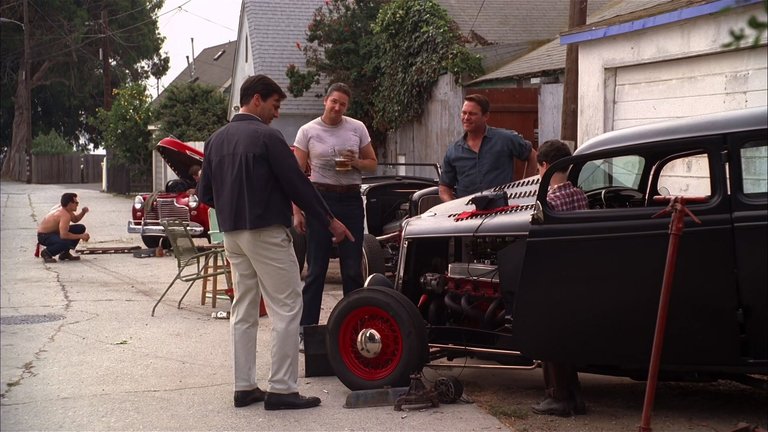
The title itself, ‘The Mountain King’, is a direct reference to Edvard Grieg’s 1875 orchestral piece ‘In the Hall of the Mountain King’, composed for Henrik Ibsen’s Peer Gynt. It is one of the most famous pieces of classical music, ubiquitously deployed in film and television to soundtrack creeping horror and impending doom. The genius of the allusion is not in its application to the episode’s atmosphere—there is no literal sense of horror—but in its ironic placement within the domestic, sun-drenched space of Anna Draper’s California home. Here, the piece is heard by Don as one of Anna’s young piano pupils practices it, describing it simply as ‘scary’. The music, associated with monstrous fantasy and pursuit, becomes a benign, slightly discordant backdrop to the episode’s true emotional core: the revelation of Don’s past and his unique, forgiving bond with Anna. Through flashbacks, we learn the full story: Anna, the real Don Draper’s wife, confronted the impostor Dick Whitman, who confessed his ignorance of the marriage and his role in her husband’s death. In a moment of extraordinary grace, the lame Anna—a woman who felt herself a substitute for her prettier sister—not only forgave him but forged a deep, platonic friendship. She later agreed to divorce him so he could marry Betty. In the present, their arrangement provides Don with his only true confidante, a sanctuary where his fabricated identity is not a burden. The California interlude, with its custom cars and ocean swims, offers Don a tantalising, if fleeting, glimpse of an authentic life, far from the stifling performances of New York.
While Don enjoys this sabbatical, his prolonged absence is met with a collective, telling indifference back in New York. His family, bosses, and subordinates largely choose to ignore it, a testament to his emotional isolation. Only Pete Campbell pays it any mind, and his attention is purely self-serving; he secretly hopes Draper will simply vanish and assume a new identity, thereby clearing Pete’s path to advancement. This venal hope is undercut by a crisis in his personal life, where his anger over Trudy’s secret contact with an adoption agency leads to a row so intense that his father-in-law Tom Vogel intervenes, threatening the review of Pete’s Clearasil account. The message is brutally clear: Pete’s career prospects are inextricably tied to his wife’s happiness, a chilling equation of domestic and professional capital.
Other subplots unfold with varying degrees of relevance. Peggy, frustrated by sharing an office with a Xerox machine, successfully petitions Roger Sterling for her and much larger office, a small victory that sows resentment among the male staff. Joan’s relationship with the surgeon Greg Harris is revealed as deeply troubled; his insecurities manifest in a jarringly unsubtle scene where, after refusing Joan’s sexual advance at home, he later forces himself upon her in Don’s office. This moment, intended to illustrate the oppressive patriarchy of the early 1960s, suffers from a lack of narrative subtlety, reducing Joan’s complex agency to a blunt metaphor about female subjugation.
Betty Draper, meanwhile, grapples with Don’s absence in halting, confused ways. After catching her daughter Sally smoking, she attempts discipline but later confesses to a friend that her husband’s disappearance might be permanent. Her other storyline, in which she chastises her friend Sarah Beth for the extramarital affair she herself previously encouraged, feels particularly aimless. It seems designed less to develop Betty’s character than to artificially stall her potential ascent as a counterpoint to Don, reinforcing a destructive irrationality that goes unexplored.
The critical event, however, occurs in a conference room without its protagonist. The Sterling Cooper partners—including Bertram’s sister, Alice (Mary Ann McGary)—meet and, with dismissive ease, agree to sell the agency. Don, with his mere 12% share, is deemed inconsequential to the decision. This is the episode’s purported ‘wham’, yet it is delivered not as a dramatic climax but as a dry, administrative footnote.
This is where The Mountain King fundamentally falters. The year 1962 allowed the show to explore subtle shifts in American life, but this episode feels like a collection of those shifts without a unifying centre. Matthew Weiner and writer Robin Veith appear to have deliberately downplayed the sale’s drama, compensating with a series of side storylines that go all over the place, and sometimes go nowhere. The Joan-Greg subplot lacks nuance, the Betty-Sarah Beth thread is abortive, and even Pete’s crisis is resolved through external financial threat rather than internal growth. The episode is, like all Mad Men instalments, impeccably acted and directed, but it suffers from a lack of narrative focus.
This lack of cohesion culminates in the final image: Don, alone, swimming in the vast Pacific Ocean. The shot is visually striking but tonally dissonant. It feels like a piece of ‘acid’ art cinema artificially infused into the narrative, an idealised vision of the West as a place of spiritual cleansing. This aesthetic choice finds a direct parallel in the criticised desert sequence from The Sopranos episode Kennedy and Heidi. This episode portrayed Tony Soprano’s peyote-induced vision as visually striking but leaning into pretension, evoking the excesses of 1970s counterculture rather than deepening Tony’s character. A similar charge can be levelled at Don’s oceanic baptism. It aspires to a profound, wordless catharsis but, in the context of the episode’s scattered priorities, registers more as a stylistic affectation—a postcard from a thematic holiday the script hasn’t fully earned.
In conclusion, The Mountain King looks like a curious misfire in Mad Men’s otherwise impeccable second season. By rejecting the conventional ‘penultimate episode’ playbook, it seeks a more nuanced, ambient tension but ultimately substitutes fragmentation for depth. The sale of Sterling Cooper should reverberate; here, it is muffled. The character moments should illuminate; instead, many feel undercooked or obvious. The episode grasps for thematic resonance through its musical allusion and final, beautiful image, but without a sturdy narrative framework, that resonance rings hollow.
RATING: 6/10 (++)
==
Blog in Croatian https://draxblog.com
Blog in English https://draxreview.wordpress.com/
InLeo blog https://inleo.io/@drax.leo
LeoDex: https://leodex.io/?ref=drax
InLeo: https://inleo.io/signup?referral=drax.leo
Hiveonboard: https://hiveonboard.com?ref=drax
Rising Star game: https://www.risingstargame.com?referrer=drax
1Inch: https://1inch.exchange/#/r/0x83823d8CCB74F828148258BB4457642124b1328e
BTC donations: 1EWxiMiP6iiG9rger3NuUSd6HByaxQWafG
ETH donations: 0xB305F144323b99e6f8b1d66f5D7DE78B498C32A7
BCH donations: qpvxw0jax79lhmvlgcldkzpqanf03r9cjv8y6gtmk9
!ALIVE !HEARTBEAT
Edvard Grieg’s ominous music playing over California sunrises?