Television Review: This Place Is Death (Lost, S5X05, 2009)

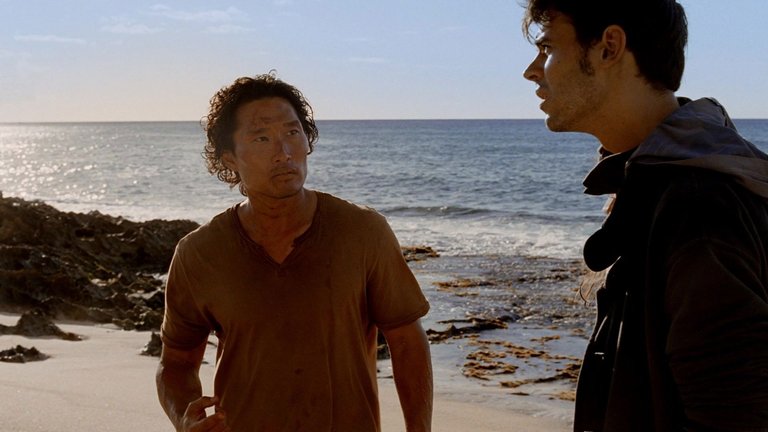
This Place Is Death (S5X05)
Airdate: 11 Februarty 2009
Written by: Edward Kitsis & Adam Horowitz
Directed by: Paul Edwards
Running Time: 42 minutes
This Place Is Death, the fifth episode of the fifth season of Lost, serves as a grim reminder that the series was, from its inception, a tragedy disguised as an adventure. While many fans may have become accustomed to the island’s mysteries by this stage, they often forget the sheer darkness that underpins the narrative. The series began with a horrific crash that wiped out tens of people, and by the start of Season 5, the number of survivors had apparently dwindled to single digits. This episode is a clear example of that approach, showing that death here is not just a plot device but an inevitability that strikes those who have survived conventionally or whom the audience has grown to like. The title itself is foreboding, setting a tone that the island does not care for your plans or your survival.
The episode is anchored by the death of Charlotte, a character who had already been established as the temporary Island inhabitant most likely to suffer because of the time shifts. Following the established pattern, she is the first to have her condition deteriorate to the same level the unfortunate Minkowski did on Kahana. The Locke-led expedition, which includes Sawyer, Juliet, and Miles, is forced to travel to the Orchid Station, where they believe some sort of answer or solution to their plight might be found. Charlotte, however, is so weak that she cannot move. Daniel Faraday stays to tend for her, helpless as he watches her slowly wither away. Her mind regresses to childhood, yet this regression provides vital information. She reveals that she actually grew up on the Island, only to leave and be convinced that her childhood was a dream. As an adult, she began to believe that it wasn’t the dream and became an anthropologist with the specific aim of returning to the Island. Before dying, Charlotte vividly remembers a man who told her, during her childhood, that she should not return. That man was apparently none other than Daniel Faraday, a revelation that adds a layer of tragic irony to their relationship.
The theme of death is deeply explored in relation to John Locke, whose fate appears predetermined. He reaches the Orchid Station, which, due to the time shifts, has not been built yet. Unfazed, he ventures into the well and gets separated from his friends when another shift occurs. Locke ends up in the same tunnel Ben had been in, being greeted by the apparently ghostly presence of Christian Shephard. This apparition explains that Locke, rather than Ben, had to move the Island, implying that the time-shifting chaos is directly connected to this duty. Locke is given much clearer instruction: he must bring the Oceanic Six back and die in the process. Locke seems unfazed and calmly accepts his fate, seeing himself as a sacrifice that has to be made, in the same way he accepted the death of his acolyte Boone. This acceptance cements his character arc as a man who finds purpose in suffering, even when it leads to his own demise.
The horror of the island is further witnessed by Jin, who follows the French research team as they advance towards a mysterious radio tower. In the jungle, they are attacked by the Smoke Monster, who kills one member and takes an arm from Montand (Marc Menard), leading him into the mysterious Temple. Jin tells other team members not to go into the Temple trying to rescue Montand, and his warning seems correct by the horrific events two months later. Jin sees a member of the expedition being shot by Danielle Rousseau, including Robert (Guillaume Dabinpons), her boyfriend, and her father, amidst the confusion of the aftermath. Jin is horrified by the events, particularly as it is revealed that Robert actually tried to deceive and kill Rousseau, being apparently “infected” by whatever was in the Temple, just as an older version of Rousseau told in 2004. Jin, horrified, heads to the jungle, when he is reunited by Locke’s expedition. When Locke descends into the well, Jin, horrified with the idea that Sun might return to this awful place, tells Locke to say to Sun that he died and offers his wedding ring as proof of his death. This gesture shows Jin’s ultimate desire to protect his wife, even at the cost of his own reputation and life.
In 2007, the reunion at Long Beach Marina doesn’t go as planned, but Sun, after having Ben at gunpoint, at least temporarily gives up on killing him. Ben convinces her that Jin is actually alive, ironically offering the wedding ring as proof – the very same wedding ring that Jin gave to Locke for the opposite purpose. Desmond also appears, and Sun, Ben, Jack, and him go to church where they are greeted by Eloise Hawking, revealed to be Daniel Faraday’s mother.
Written by Edward Kistis and Adam Horowitz, This Place Is Death confirms its dark character not only through horrific violence which was quite disturbing for early 21st Century television standards, but also through the near-complete lack of humour. The episode gets even darker in light of the audience’s foreknowledge of the events that would take place in the future. We know that Danielle Rousseau having a daughter only to be taken away from her, and later, both mother and daughter getting brutally killed, are part of the broader tragedy. The lack of levity serves to isolate the characters in their misery, reinforcing the idea that the Island demands a heavy price for its secrets.
The episode has certain continuity problems, namely with the fate of the French science expedition displayed as being different than what Rousseau had told. Older Rousseau never actually recognised Jin, although a case could be made that trauma and loneliness over sixteen years might have created some memory problems. Whether it is a continuity error or a narrative choice to emphasise the fragmentation of time, the result is a sense of unease that permeates the story.
This Place Is Death is also an episode that more explicitly explores two of the series’ most referenced philosophical debates – Predetermination vs. Free Will and Science vs. Faith. The episode, with the tragic fate of characters being set, takes the side of predetermination. Charlotte’s memories and Locke’s vision both suggest that the path is laid out, regardless of effort. Faraday, despite being a scientist, admits that in certain situations “we must leave science behind”. This admission is crucial, as it suggests that the scientific understanding of the Island is insufficient to explain its true nature. It is faith, or at least an acceptance of the unseen, that drives the characters forward.
This Place Is Death is a moment in the series that solidifies the its commitment to tragedy. It strips away the illusion that the protagonists have control over their destiny, forcing them to confront the inevitability of their roles. Through the deaths of Charlotte and the implications for Locke and Jin, the episode delivers a heavy emotional blow that resonates long after the credits roll.
RATING: 7/10 (+++)
==
Blog in Croatian https://draxblog.com
Blog in English https://draxreview.wordpress.com/
InLeo blog https://inleo.io/@drax.leo
LeoDex: https://leodex.io/?ref=drax
InLeo: https://inleo.io/signup?referral=drax.leo
Hiveonboard: https://hiveonboard.com?ref=drax
Rising Star game: https://www.risingstargame.com?referrer=drax
1Inch: https://1inch.exchange/#/r/0x83823d8CCB74F828148258BB4457642124b1328e
BTC donations: 1EWxiMiP6iiG9rger3NuUSd6HByaxQWafG
ETH donations: 0xB305F144323b99e6f8b1d66f5D7DE78B498C32A7
BCH donations: qpvxw0jax79lhmvlgcldkzpqanf03r9cjv8y6gtmk9