Television Review: Two Swords (Game of Thrones, S4X01, 2014)

Two Swords (S4x01)
Airdate: 6 April 2014
Written by: D. B. Weiss & David Benioff
Directed by: D. B. Weiss
Running Time: 58 minutes
By the time Game of Thrones reached its fourth season in 2014, its record with season-opening episodes was varied but generally successful. The premiere had evolved into a specific art form: a necessary recalibration of the sprawling chessboard after the cataclysmic events of a finale, reintroducing a dozen narrative threads while establishing the new season’s thematic preoccupations. Two Swords, the Season 4 opener written and directed by showrunners David Benioff and D. B. Weiss (though only Weiss received directorial credit due to Directors Guild of America rules), continues this trend with considerable confidence. It is an episode of restoration and dismantling in equal measure, expertly balancing quiet character moments with visceral payoff, and setting in motion the chains of vengeance and political decay that would define the season. While it occasionally buckles under the weight of its obligatory exposition and one jarring casting change, it ultimately stands as one of the series’ more accomplished and thematically rich premieres.
The episode announces its ambitions with a profoundly impactful cold open that directly references its title. In the Lannister forge, Tywin Lannister supervises the destruction of a relic: Ice, the immense Valyrian steel greatsword of the executed Ned Stark. The sequence, allegedly inspired by the opening titles of John Milius’s Conan the Barbarian, is a masterpiece of visual storytelling. Tywin watches, triumph etched into his expression, as the sword is broken and reforged into two smaller, finer blades. One is for himself, the other for his son Jaime. The final act of this symbolic conquest is the casual tossing of Ned’s wolf-pelt cloak into the fire. It is a stark, brutal metaphor for the new order in Westeros: the Stark legacy physically melted down and repurposed for Lannister benefit. This image of apparent Lannister invincibility, however, is the set-up for the entire season’s mission statement—to systematically dismantle that very order.
Beneath the surface of this triumph, the Lannister family is already cracking. Two sons are profoundly unhappy. Jaime, now equipped with a gilded steel hand designed by Maester Qyburn, clashes with his father. Tywin demands he leave the Kingsguard to become the heir at Casterly Rock; Jaime refuses, citing his already tarnished honour as the Kingslayer and a desire to remain near Cersei. His sister, however, coldly rebuffs his attempt to rekindle their incestuous relationship, leaving him isolated and emasculated.
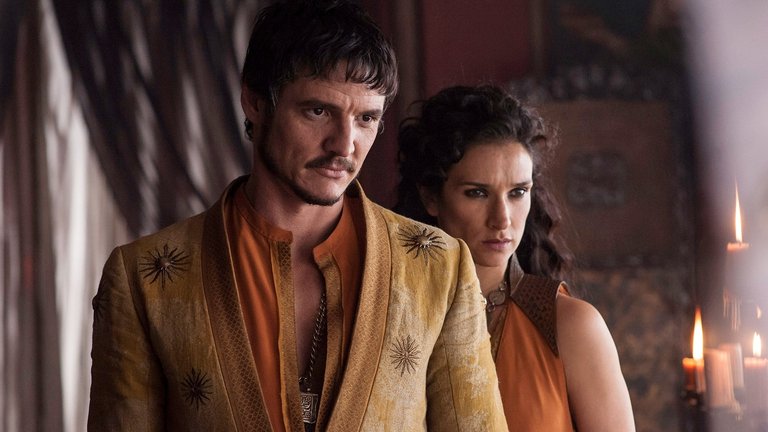
Meanwhile, Tyrion faces a different suite of miseries. His political marriage to Sansa Stark remains unconsummated, but his genuine love, Shae, is jealous and threatens to leave. His diplomatic duties are no easier: Tywin has tasked him with minding Prince Oberyn Martell (Pedro Pascal), the volatile representative of Dorne. In a charged conversation, Oberyn makes it chillingly clear that he holds the Lannisters responsible for the rape and murder of his sister Elia and her children during Robert’s Rebellion. His presence is not for the wedding, but for vengeance.
The episode efficiently checks in with other key players, though these segments function more as necessary table-setting. At Castle Black, Jon Snow delivers his report on the fate of the Great Ranging. His admission of killing Qhorin Halfhand and breaking his vows with Ygritte, action justified by gathering valuable intelligence, is met with predictable hostility from Ser Alliser Thorne but understanding from the wise Maester Aemon. This scene reinforces Jon’s precarious position, caught between honour and pragmatism. Beyond the Wall, Ygritte is chastised by Tormund for letting Jon live, and their party is joined by the Thenns, a tribe whose leader, Styr (Yuri Kolokolnikov), casually mentions their fondness for human flesh—a gruesome detail that heightens the existential threat of the wildling army.
In Essos, Daenerys confronts the growing problem of her dragons. They have become too large to control, a point Jorah Mormont underscores with grim foresight. As her Unsullied army marches towards Meereen, they are greeted by a horrific sight: a mile of crucified slave children, a grotesque warning from the Masters. This moment hardens Daenerys’s resolve, framing her coming campaign not just as conquest, but as a moral crusade. While visually striking, this plotline in Two Swords feels somewhat peripheral, a holding pattern before the siege to come.
The episode’s masterstroke, and the source of its most potent satisfaction, is its extended final sequence in the Riverlands. Travelling with the Hound, Arya Stark arrives at an inn where a group of Lannister soldiers, led by the odious Polliver (Andy Kellegher), is terrorising the innkeeper’s daughter. Arya recognises Polliver as the man who captured her in Season 2’s What Is Dead May Never Die, stole her sword Needle, and murdered her friend Lommy Greenhands. This history charges the scene in Two Swords with immense dramatic weight. The Hound, initially wary, is drawn into a conflict that escalates with brutal inevitability. In the ensuing brawl, Arya doesn’t just watch—she intervenes, saves the Hound’s life, and, in a moment of perfect poetic justice, kills Polliver. She does so by stabbing him through the throat, using exactly the same method Polliver used on Lommy. She then reclaims Needle. This is not just action; it is cathartic narrative payoff of the highest order. After the unrelenting trauma of the Red Wedding, the episode gives the audience—and Arya—a crucial victory. It recalibrates her from a helpless pawn into an active agent of vengeance, a protagonist who, despite her stature, can wield violence with precision and purpose.
The title Two Sword’ thus operates on multiple ingenious levels, as point nine notes. Literally, it refers to the two Lannister blades forged from Ice. Metaphorically, it encompasses the two swords of House Stark: one, Ned’s Ice, destroyed and repurposed by the enemy; the other, Arya’s Needle, reclaimed and ready to be used. The episode argues that while the old, honourable Stark legacy may be broken, the spirit of the house persists in unexpected, ferocious ways.
The episode is also notable for its casting, which introduces both triumph and controversy. The arrival of Pedro Pascal as Oberyn Martell is an unqualified success. Pascal, in one of his first prominent roles, imbues the Red Viper with dangerous charisma, hedonistic charm, and simmering rage. His introduction in one of Littlefinger’s brothels—where he enjoys himself with both men and women in the company of his paramour Ellaria Sand (Indira Varma)—serves a dual purpose. It establishes his bisexual, libertine character while also providing the obligatory HBO nudity, signalling that the new season’s content policies remained unchanged.
In contrast, the recasting of Daario Naharis is a glaring misstep. Ed Skrein’s departure for “political reasons” led to his replacement by Michiel Huisman, who looks and acts so differently that it creates genuine confusion. It takes viewers a moment to realise which character he is supposed to be, breaking immersion and creating the first major rift in the fandom regarding recasts—a problem the show would largely avoid thereafter.
Two Swords is a premiere that understands its dual function: to reset the board and to deliver a potent, self-contained emotional arc. It is perhaps less exposition-heavy than earlier season openers. Instead, Two Swords manages its exposition with greater fluidity, weaving it around a powerful symbolic opening and a brutally satisfying conclusion. Its weaknesses—the slightly perfunctory Essos segment and the distracting Daario recast—are minor in the face of its strengths: the deepening Lannister dysfunctions, the electrifying introduction of Oberyn Martell, and, above all, the transformative vengeance of Arya Stark. It is an episode that promises a season of reckoning, and it delivers that promise within its own runtime.
RATING: 7/10 (+++)
==
Blog in Croatian https://draxblog.com
Blog in English https://draxreview.wordpress.com/
InLeo blog https://inleo.io/@drax.leo
LeoDex: https://leodex.io/?ref=drax
InLeo: https://inleo.io/signup?referral=drax.leo
Hiveonboard: https://hiveonboard.com?ref=drax
Rising Star game: https://www.risingstargame.com?referrer=drax
1Inch: https://1inch.exchange/#/r/0x83823d8CCB74F828148258BB4457642124b1328e
BTC donations: 1EWxiMiP6iiG9rger3NuUSd6HByaxQWafG
ETH donations: 0xB305F144323b99e6f8b1d66f5D7DE78B498C32A7
BCH donations: qpvxw0jax79lhmvlgcldkzpqanf03r9cjv8y6gtmk9