Television Review: Unbowed, Unbent, Unbroken (Game of Thrones, S5X06, 2015)

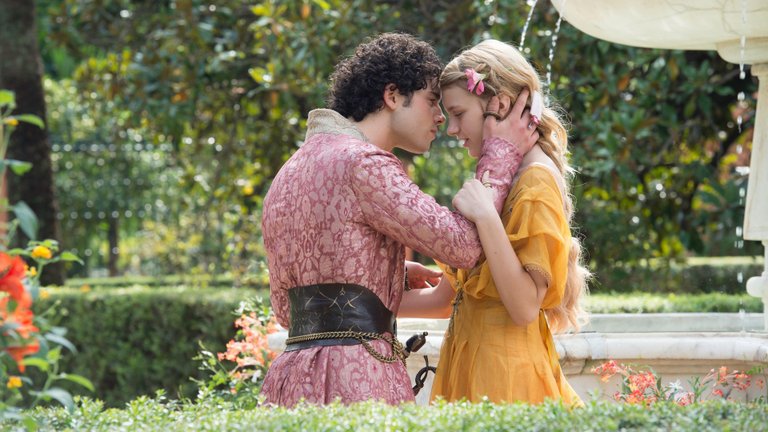
Unbowed, Unbent, Unbroken (S5x06)
Airdate: 17 May 2015
Written by: Bryan Cogman
Directed by: Jeremy Podeswa
Running Time: 53 minutes
From its very inception, Game of Thrones conditioned its audience to expect the worst. The brutal, unexpected death of Eddard Stark in the first season established a cardinal rule: no character, no matter how noble or ostensibly central, was safe. Over the subsequent years, viewers endured a litany of mutilations, tortures, and graphic murders, becoming inured to a certain level of narrative cruelty. Yet, a tacit covenant remained. For all its nihilistic violence, the series seemed to spare its core protagonists from the most intimate, degrading forms of violation, particularly sexual violence aimed at its key female heroes. Season five’s sixth episode, Unbowed, Unbent, Unbroken, shattered that covenant. The backlash was immediate and volcanic, flooding social media with outrage that many commentators would later identify as the moment the series irrevocably “jumped the shark.” Beyond the moral revulsion, however, the episode laid bare a more insidious rot: the creative limitations of showrunners David Benioff and D.B. Weiss, whose deviations from George R.R. Martin’s source material began to feel less like bold adaptation and more like a fundamental misunderstanding of the story’s soul, underscored by technical and narrative failures elsewhere in the instalment.
The episode’s title, the proud motto of House Martell, promises a tale of defiant resilience. The Dornish plot, however, delivers something closer to farcical incompetence. Jaime Lannister, accompanied by the ever-cynical Bronn, infiltrates the Water Gardens to rescue his daughter Myrcella from a perceived threat. The irony is thick; Myrcella, happily betrothed to Prince Trystane, has no desire to be saved. Their clumsy mission coincidentally intercepts a separate assassination attempt by Ellaria Sand and the Sand Snakes—Obara, Tyene, and Nymeria—leading to a climactic fight in the sun-dappled gardens. This sequence, meant to be a spectacular set-piece, instead became a secondary point of intense criticism. Choreographically, it is a dismal failure: a clumsy, weightless scuffle that feels more like a stage rehearsal than a life-or-death struggle. The blame lies partly in fraught production. Shooting at the real Alcázar of Seville came with severe Spanish governmental restrictions—daylight hours only, extremely limited space—which hamstrung the directors. Compounded by a seemingly under-rehearsed and geographically dispersed new cast, the result is a fight scene devoid of the visceral, emotional impact that defined earlier battles like the Mountain vs. the Viper. It is a telling symptom of a production beginning to prioritise exotic location over narrative substance and executional grit.
In King’s Landing, the political machinations are more assured, yet equally grim. Petyr Baelish, summoned by Cersei, reveals upcoming Sansa Stark’s marriage to Ramsay Bolton, using the crisis he created as leverage to barter for future rule of the North. More intriguing is his witness to Cersei’s unchecked creation of a monster: the Sparrows. What begins as a formal inquest into Ser Loras Tyrell’s homosexuality—a mere political formality—explodes into a masterful coup. The High Sparrow, using the testimony of the male prostitute Olyvar, not only condemns Loras but arrests Queen Margaery for perjury. The scene is a potent display of Cersei’s short-sighted arrogance. In her zeal to humble the Tyrells, she unleashes a fanatical force that recognises no ally, leaving a helpless King Tommen and a humiliated Olenna Tyrell in its wake. This subplot works because it understands the series’ core strength: power as a chess game where every move has unintended consequences. It is a stark, effective contrast to the blunter instruments of trauma deployed elsewhere.
Meanwhile, the narrative threads on the road to Meereen and in Braavos serve as functional, if unremarkable, vignettes. Tyrion and Jorah’s capture by slavers (their leader Malko being played by formidable Adewale Akinnuoye-Agbaje) allows Peter Dinklage to exercise his character’s signature wit, as he talks their way out of immediate execution by touting Jorah’s potential in the fighting pits. In Braavos, Arya’s training continues with her introduction to the Hall of Faces, a visually striking moment that reinforces the mystical lore of the Faceless Men but feels like narrative marking time. Both subplots are competent, but they are mere preludes to the episode’s devastating, and devastatingly controversial, centrepiece: the wedding of Sansa Stark to Ramsay Bolton.
The marriage, officiated by Roose Bolton in the godswood of Winterfell, is a bleak ceremony. Ramsay’s consummation is a meticulously crafted act of sadistic theatre. He forces Theon Greyjoy—broken into “Reek”—to watch, weaponising Sansa’s last vestige of familial connection to amplify her humiliation. This moment proved to be the most controversial in the series’ history to that point, and it remains a fiercely divisive fault line among the fandom. Some critics defended Benioff and Weiss for adhering to the world’s brutal logic, arguing that to shy away from such violence would be a betrayal of the story’s ethos. For a vast multitude of viewers, however, the transgression was not in the act’s brutality, but in its fundamental narrative unjustifiability.
The critical failure is one of context and character. In Martin’s novels, Sansa never returns to Winterfell; it is a different character, Jeyne Poole masquerading as Arya Stark, who suffers Ramsay’s abuses. By transplanting this horror onto Sansa, Benioff and Weiss made a conscious, drastic deviation from the source material. The gamble did not pay off. Sansa’s arc, over four seasons, had been a gradual, hard-won evolution from a naïve, entitled girl into a nascent player of the game, learning manipulation and resilience in the court of the Vale. Thrusting her back into the role of helpless victim felt like a profound regression, a negation of her growth purely for shock value. It alienated a significant portion of the audience, particularly those who saw in characters like Daenerys, Brienne, and Arya a version of Hollywood feminism—flawed but aspirational—that this move seemed to brutally reject.
Ironically, the scene itself is not graphically explicit by the series’ own lurid standards. The violence is largely implied, a choice that may reflect Sophie Turner’s rising star status or a last-minute concession to taste. This lack of visual extremity, however, only heightens the sense of narrative exploitation. The effect is exacerbated by a clumsy preceding scene where Ramsay’s jealous lover, Myranda, bathes Sansa and recounts the gruesome fates of his previous partners. The dialogue is expositional dead weight, telling the audience—and Sansa—nothing they do not already know about Ramsay’s psychopathy. Furthermore, the scene’s staging creates a bizarre dissonance: Sansa’s nudity is carefully obscured, while Myranda (played by Charlotte Hope, who had appeared nude before) is fully clothed. For an audience attuned to the show’s usual visual language, this selective modesty breaks immersion, feeling less like a creative choice and more like a cynical, inconsistent calculation.
The backlash was of such magnitude that Benioff and Weiss notably absented themselves from San Diego Comic-Con in 2015, avoiding the traditional panel and its inevitable interrogation. This retreat spoke volumes. It fuelled speculation that the controversy made the showrunners risk-averse in subsequent seasons, perhaps leading to the narrative conservatism and rushed, fan-service-oriented conclusions that would later plague the series’ final chapters. The Sansa rape scene, therefore, casts a long shadow not just as a moment of character assassination, but as a potential catalyst for creative paralysis.
Unbowed, Unbent, Unbroken is a stark watershed. It is an episode where multiple strands of failure converge: a poorly executed action sequence born of logistical compromise, and a central narrative catastrophe born of a profound creative misjudgement. The Dorne plot showcases a show becoming clumsy in its spectacle, while the violation of Sansa Stark showcases a show becoming morally and thematically adrift. It demonstrated that the showrunners, once praised for their deft adaptation, could mistake gratuitous character trauma for depth, and shocking deviation for narrative necessity. The episode did not break the series’ quality in a single stroke, but it undeniably bent it, exposing structural weaknesses from which it would never fully recover.
RATING: 4/10 (+)
==
Blog in Croatian https://draxblog.com
Blog in English https://draxreview.wordpress.com/
InLeo blog https://inleo.io/@drax.leo
LeoDex: https://leodex.io/?ref=drax
InLeo: https://inleo.io/signup?referral=drax.leo
Hiveonboard: https://hiveonboard.com?ref=drax
Rising Star game: https://www.risingstargame.com?referrer=drax
1Inch: https://1inch.exchange/#/r/0x83823d8CCB74F828148258BB4457642124b1328e
BTC donations: 1EWxiMiP6iiG9rger3NuUSd6HByaxQWafG
ETH donations: 0xB305F144323b99e6f8b1d66f5D7DE78B498C32A7
BCH donations: qpvxw0jax79lhmvlgcldkzpqanf03r9cjv8y6gtmk9