Television Review: Vili (Povratak otpisanih, S1X07, 1978)

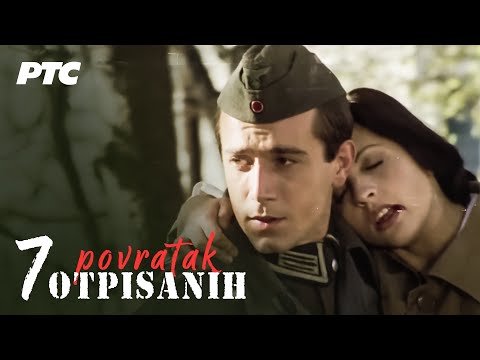
Vili (S01E07)
Airdate: 12 February 1978
Written by: Dragan Marković
Directed by: Aleksandar Đorđević
Running Time: 53 minutes
The television series Povratak otpisanih has frequently faced criticism from historians and critics alike for its tendency to stray from the historical truth when depicting the Second World War in Nazi-occupied Belgrade. This deviation is particularly stark when compared with its predecessor, Otpisani, which was grounded in many episodes based on real events and personalities. While the latter series attempted to deal with this turbulent period of history through the lens of action, suspense, and the characteristic comedy of the Partisan genre, it did not shy away from depicting some darker and more tragic aspects of the war. One such poignant example can be found in the episode titled Vili, which depicts a fictional event but one that is easy to imagine actually happening. Perhaps not in that particular time and place, but almost certainly somewhere and to someone during that chaotic period of history, the episode serves as a reminder of the human cost of conflict.
The plot begins with a cold open that immediately establishes the tension of the occupation. A young boy named Badža, played by Ljev Radčenko, is seen carrying a basket to Vita, a local greengrocer played by Zoran Panić. The shop is visited by a German NCO named Willy, portrayed by Irfan Mensur. He points out to Vita that the basket, ostensibly containing cabbage, actually holds pistols. In a twist that signals his defection, Willy volunteers to add his own pistol to the basket and expresses his desire to defect to the Partisans. This opening sequence sets the tone for the narrative, balancing the mundane with the life-threatening stakes of the occupation.
Prle and Tihi are informed of this development. After consulting with the headquarters, they agree to help him, though they first require Willy’s aid in their own mission. Willy happens to be in the signal corps, and as such, he possesses access to Belgrade’s main telephone switchboard. The Germans have mined this switchboard before the upcoming battle for the city. Willy is tasked with bringing Joca, a former postman who is also trained in signal work, to disable the explosives. The mission ultimately succeeds. However, the success of the mission is overshadowed by the personal tragedy that follows.
There is a very personal reason why Willy decided to join the Partisans, and it is also the source of his doom. During his service in Belgrade, Willy has met and fallen in love with Ana, a local Serbian girl played by Dara Džokić. He decides to defect not only in order to remain close to her but also to prevent her from suffering reprisals over fraternising with the enemy. This situation was a source of great embarrassment to her father, Toza, played by Ratko Sarić, a proud WW1 veteran.
After learning that the pair would join the Partisans, Willy visits Toza’s home and tells him the news. Toza is initially delighted, but he becomes extremely careless. In a cafe, he is accosted by his drunk friend Rista, played by Milan Srdoć, who criticises him over allowing his daughter to go out with the enemy. Toza retorts that Willy is actually braver than anyone he knows and that he would join the Partisans. This conversation is overheard by Isa, a Special Police agent who reports to his boss Krsta Mišić. He, after consulting with his boss Bešević, informs Major Krieger, his rival from Gestapo, and is delighted that one of the “Ubermensch” has defected to the enemy. Krieger sends his men to ambush the lovers. Marija learns about the ambush and warns Prle, but he arrives too late to get in touch with Willy. Ana sees the Gestapo and, instead of fleeing as her father has told her, runs to warn Willy and gets shot. Willy gets shot, and the last image of the episode is of the two lovers dying in each other’s arms.
Vili is one of the more memorable episodes of Povratak otpisanih, although two iconic protagonists – Prle and Tihi – barely appear, and the plot revolves around side characters and their tragic story. That story, which later gave way for all kinds of apocryphal stories and urban legends about being based on true events about a Wehrmacht soldier falling in love with a local girl, has happened plenty of times during WW2. The defections of German soldiers, especially in the latter stages of the war when its outcome was certain, were not unheard of. The episode uses this as a basis of the plot, as some kind of tragic “Romeo and Juliet” story, and, as such, its tragedy comes from bad luck and carelessness.
The episode is also notable for the arrival of Peter Carsten, a German actor who was one of the more iconic figures of Yugoslav Partisan films, specialising in roles of suave and professional Wehrmacht soldiers. Here, he plays General von Friedrichs, a notable Wehrmacht commander sent from Berlin to organise the defence of Belgrade before the Red Army and Partisans assault the city. Von Friedrichs’ character serves the purposes of exposition, when explaining his plans to Colonel Schroeder, and Willy arrives in his office to set up phone links. He is also depicted in the company of a young mistress, Anđela, played by Mirjana Nikolić, star of the 1973 cult TV horror film Leptirica. Her presence adds a layer of decadence to the occupying forces’ perspective.
The episode would have been very good, if not for one rather unfortunate creative choice. The melodramatic and violent epilogue is accompanied by Lale Andersen’s “Es geht alles vorüber es geht alles vorbei”, a song that seems out of place in this particular moment. This track has been much better used in the earlier episode Agent, and its reuse here looks unnecessary and “artsy” for this series. The juxtaposition of the somber tone with the upbeat, albeit melancholic, song distracts from the raw emotional impact of the characters’ deaths. It feels like a directorial flourish that prioritises style over substance in the final moments.
Ultimately, Vili is a testament to the complexity of the occupation. It moves beyond the typical binary of good versus evil, exploring the grey areas where soldiers find themselves in impossible situations. While the historical accuracy may be debated, the emotional resonance of the story remains intact. The performances of the supporting cast, particularly Irfan Mensur, bring a humanity to the characters that often eludes war dramas. The episode serves as a reminder that the cost of war is paid not just by soldiers, but by civilians and those caught in the crossfire of ideological conflicts. It is a sombre addition to the series, balancing the action and comedy with a moment of genuine pathos that lingers with the viewer long after the credits roll.
RATING: 6/10 (++)
Blog in Croatian https://draxblog.com
Blog in English https://draxreview.wordpress.com/
InLeo blog https://inleo.io/@drax.leo
LeoDex: https://leodex.io/?ref=drax
InLeo: https://inleo.io/signup?referral=drax.leo
Hiveonboard: https://hiveonboard.com?ref=drax
Rising Star game: https://www.risingstargame.com?referrer=drax
1Inch: https://1inch.exchange/#/r/0x83823d8CCB74F828148258BB4457642124b1328e
BTC donations: 1EWxiMiP6iiG9rger3NuUSd6HByaxQWafG
ETH donations: 0xB305F144323b99e6f8b1d66f5D7DE78B498C32A7
BCH donations: qpvxw0jax79lhmvlgcldkzpqanf03r9cjv8y6gtmk9