Television Review: Wee Small Hours (Mad Men, S3x09, 2009)

Wee Small Hours (S3x09)
Airdate: 11 October 2009
Written by: Dahwi Waller & Matthew Weiner
Directed by: Scott Hornbacher
Running Time: 48 minutes
As the third season of Mad Men approaches its conclusion, the episodes begin to exhibit a marked variance in tone and mood, at least where the series’ protagonist, Don Draper, is concerned. The illusion of the all-powerful, invulnerable Don—already fractured by the forceful signing of his contract in Seven Twenty-Three—had been temporarily supplanted by the fantasy of a blissful, romanticised life during the Roman holiday of Souvenir. That fantasy, notably facilitated by the benevolent patronage of Conrad Hilton, presented Hilton as a saviour, mentor, and the long-sought paternal role model Don craved. Wee Small Hours, the ninth episode, exists to shatter that particular illusion with a quiet, cumulative force, initiating a phase of profound professional and personal erosion that would define the remainder of the season. Directed by Scott Hornbacher, a producer making his directorial debut after working with Matthew Weiner on The Sopranos, the episode adopts a languid, nocturnal pace that perfectly mirrors its protagonist’s insomnia and restless moral drift.
One of the episode’s most structurally ambitious features is its framing within an unusually expansive historical period. It bookends its narrative with two pivotal events from the American civil rights movement: Martin Luther King’s March on Washington on 28 August 1963, and the funeral for the victims of the Birmingham church bombings on 18 September 1963. This three-week span provides a subtle, persistent hum of societal tension against which the characters’ personal crises play out, often in stark, unflattering contrast. Hornbacher’s direction handles this context with admirable restraint, allowing history to permeate the edges of the frame rather than dominate it, an approach that would be less successfully applied to the series’ more heavy-handed, slightly anachronistic references to the burgeoning Vietnam conflict.
The central professional relationship of the season, that between Don and Conrad Hilton, here reveals its corrosive underbelly. After bestowing perks and a veneer of heightened importance upon Don, Hilton emerges as the archetypal demanding, capricious client. He sees nothing untoward in pestering Don with phone calls every four hours, day and night, operating on a global tycoon’s schedule that acknowledges no human need for rest. The result is a Don Draper pushed to exhaustion, plagued by insomnia, and reverting to a familiar coping mechanism: aimless nocturnal driving. It is during one such insomniac pilgrimage that he encounters Suzanne Farrell, his children’s teacher, running along the roadside. The ensuing conversation in his car, charged with his obvious attraction, brilliantly displays subdued erotic tension and emotional vacancy. Don is not seeking connection but distraction, a pattern the episode meticulously dissects.
In a stroke of bitter irony, while Don contemplates this new adulterous avenue, his wife Betty is engaged in a parallel, if more cautiously orchestrated, betrayal. She initiates a correspondence with the politically ambitious Henry Francis, who responds by impulsively arriving at the Draper home—only to be seen by the family’s housekeeper, Carla. His hastily concocted cover story, involving a potential Republican fundraiser at the house, is seized upon by Betty with a mixture of relief and thrilling complicity. She successfully manipulates Don into agreeing to host the event. However, the fundraiser itself delivers a crushing humiliation: instead of Henry, his middle-aged female aide, Elsa Kitteridge (Ann Ryerson), appears. Feeling cheated and infantilised, Betty confronts Henry at his office. Their charged encounter, where they finally vocalise their mutual attraction, ends not in consummation but in abrupt, almost prudish, retreat. Betty, suddenly seeing offices and motel rooms as “tawdry”, pulls back, leaving the relationship in a state of frustrated limbo.
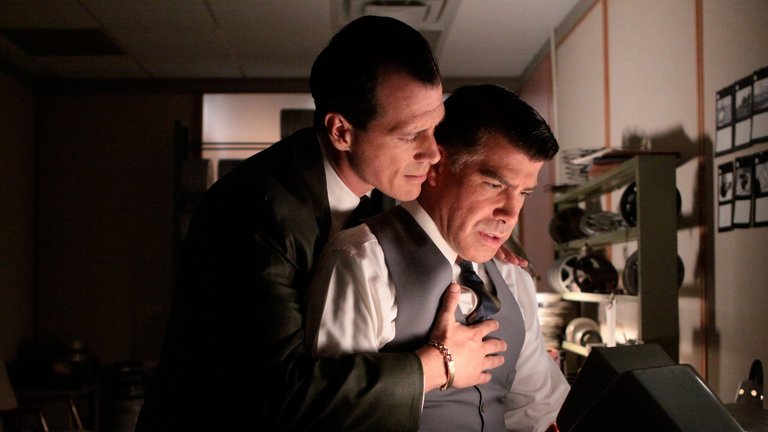
A far more severe and consequential rejection forms the episode’s devastating core, unfolding within the offices of Sterling Cooper. The production of a television commercial for the vital Lucky Strikes account is supervised by Lee Garner Jr. (Darren Pettie), the boorish, arrogant son of the client’s owner. Salvatore Romano, the agency’s talented art director, is directing the spot. Garner Jr., having correctly intuited Sal’s hidden homosexuality, attempts to exploit it when they are alone in an editing room. Sal’s horrified, principled rejection of these advances is a moment of quiet dignity. The retaliation is swift and brutal: a drunken Lee Garner Jr. calls Harry Crane, demanding Sal’s firing and warning him not to tell Pete Campbell. Harry, in a catastrophic failure of moral courage, does nothing, hoping the matter will “blow over”. When Garner Jr. later storms out of a meeting upon seeing Sal still employed, the crisis can no longer be ignored. Don, informed of the situation by a devastated Sal, is faced with an ugly business reality. The Lucky Strikes account is simply too important; the client’s whims, however petty and cruel, must be obeyed. In a chillingly pragmatic decision, Don tells Sal he must go. The final image of Sal is heartbreaking: deceiving his wife Kitty about still having a job while speaking from a pay phone in a section of Central Park known for gay cruising. His professional annihilation coincides with his forced return to the shadows of a clandestine life.
This professional and personal erosion culminates in Don’s final humiliation via the very relationship that once elevated him. While discussing an advertising campaign, Conrad Hilton expounds on his mission to bring American democracy and the Hilton experience to every corner of the globe, “including the moon”. Don, sleep-deprived and increasingly disconnected, makes a fatal interpretive error. He delivers a beautiful, ambitious pitch about bringing Hilton to the world, but fails to literally include the moon as a proposed hotel site. Hilton, seeing his explicit wish ignored, storms out in disgust. Roger Sterling, ever the cynical pragmatist, later visits Don to deliver a stark warning: with two major clients now furious, his position is precarious. The father figure has become the wrathful judge, and Don’s creative genius is dismissed as insubordination.
The episode’s denouement finds Don attempting to reclaim some agency through familiar, toxic means. Using the pretext of another late-night call from Hilton, he instead calls Suzanne Farrell. Their ensuing late-night tryst is underscored by her sharp observation that targeting his children’s teacher represents a risky departure from his usual modus operandi—it is “too close to home”. She sleeps with him regardless, but the act feels less like a conquest than a symptom of his spiralling desperation. It is a hollow victory in a night of profound losses.
Where the series sometimes stumbles with clunky historical references, *Wee Small Hour handles the civil rights movement with far greater nuance. The events are not merely backdrop but serve as pointed characterisation tools, particularly in delineating the women in Don’s orbit. Suzanne speaks of teaching her pupils Martin Luther King’s “I Have a Dream” speech, a statement that evokes in Don a mixture of tacit approval and fascination with a woman who represents educated, principled independence. She is the antithesis of Betty, who, upon hearing the news of the Birmingham bombings, remarks to Carla with dismissive privilege, “Maybe it isn’t the time for civil rights.” The contrast couldn’t be clearer, framing Suzanne as a beacon of the future and Betty as an avatar of a wilfully ignorant past.
The firing of Salvatore Romano marked a significant behind-the-scenes milestone, making actor Bryan Batt the first regular cast member to be written out of the show. His contract was not renewed for Season 4. Series creator Matthew Weiner originally defended the shocking, unjust nature of Sal’s dismissal as a necessary illustration of the risks and injustices faced by gay men in the 1960s. While dramatically potent, this decision remains one of the series’ most controversial. Weiner later expressed public regret, calling the abandonment of Sal’s storyline “a missed opportunity,” and despite vague plans for a future cameo, nothing materialised. This meta-narrative of creative regret inevitably colours a modern viewing of the episode.
Wee Small Hours is a technically solid, often brilliantly acted episode. Hornbacher’s direction is assured, the historical framing is clever, and the parallel narratives of Betrayal are deftly interwoven. However, its overarching critical flaw is one of dramatic balance. The brutal, emotionally resonant termination of Salvatore Romano’s storyline is so powerful, so morally arresting, that it completely overwhelms the other narrative threads. Don’s troubles with Hilton, his pursuit of Suzanne, and Betty’s flirtation with Henry Francis all risk seeming like artificial ‘filler’ in comparison—well-executed subplots that simply cannot compete with the raw impact of a beloved character being sacrificed on the altar of period-accurate bigotry and corporate cowardice.
RATING: 6/10 (++)
==
Blog in Croatian https://draxblog.com
Blog in English https://draxreview.wordpress.com/
InLeo blog https://inleo.io/@drax.leo
LeoDex: https://leodex.io/?ref=drax
InLeo: https://inleo.io/signup?referral=drax.leo
Hiveonboard: https://hiveonboard.com?ref=drax
1Inch: https://1inch.exchange/#/r/0x83823d8CCB74F828148258BB4457642124b1328e
BTC donations: 1EWxiMiP6iiG9rger3NuUSd6HByaxQWafG
ETH donations: 0xB305F144323b99e6f8b1d66f5D7DE78B498C32A7
BCH donations: qpvxw0jax79lhmvlgcldkzpqanf03r9cjv8y6gtmk9