Television Review: What They Died For (Lost, S6X16, 2010)

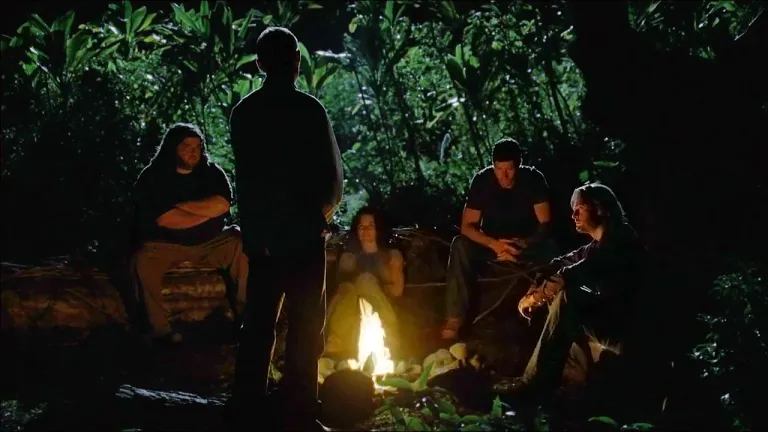
What They Died For (S6X16)
Airdate: 11 May 2010
Written by: Edward Kitsis, Adam Horowitz & Elizabeth Sarnoff
Directed by: Paul Edwards
Running Time: 43 minutes
As Lost careered towards its controversial conclusion in May 2010, the structural conventions of American broadcast television dictated that the series’ most significant revelations and emotional pay-offs be reserved for the final episode. Consequently, the penultimate instalment, What They Died For (Season 6, Episode 16), often feels less like a satisfying, self-contained piece of drama and more like a business-like session of moving the final chess pieces into position for the endgame. The episode, while technically proficient and narratively necessary, exemplifies the show’s late-stage tendency to prioritise plot mechanics over the profound character depth and mystery that defined its acclaimed early seasons. Despite a valiant attempt to provide clarity and momentum, the episode ultimately succumbs to a mechanical, emotionally attenuated execution that undermines several of its most momentous beats.
The inherent complexity of tying together six years of dense mythology is starkly illustrated by the episode’s writing credits. Unlike the standard two-writer team, What They Died For required the combined efforts of Edward Kitsis, Adam Horowitz, and Elisabeth Sarnoff—the only episode in the series’ history to boast three credited writers. This tripartite effort underscores the Herculean task of synthesising the show’s myriad threads, yet the result is an episode that often feels like a committee-driven product. The narrative is split into two distinct strands that, despite some tantalising parallels, frustratingly refuse to converge. In the flash-sideways timeline (an alternate 2004), the all-knowing guide is Desmond Hume, who manipulates the alternate versions of the protagonists—Jack, Locke, Ben, Sayid, and Kate—into “letting go” and moving towards an unexplained convergence. In the primary 2007 timeline on the Island, that role is filled by the ghost of Jacob, who finally appears to Hurley, Jack, Kate, and Sawyer to explain the protector’s mantle and force a choice upon them. Both storylines hinge on a benevolent-seeming puppet-master shepherding the core characters towards a destiny they do not fully understand, a structural mirroring that feels intellectually neat but emotionally remote.
The flash-sideways plot is particularly emblematic of the season’s narrative indulgence. Jack discovers a mysterious neck wound, Desmond lies about Christian Shephard’s coffin, and a now-ambulatory John Locke has a change of heart about spinal surgery. Ben Linus, after being beaten by Desmond and experiencing flashes of his Island-life pummelling, is invited to dinner by Danielle Rousseau and moved to tears by her story about Alex—a scene of genuine pathos that is, however, isolated within a timeline whose ultimate purpose remains stubbornly opaque. Desmond’s machinations continue as he gets arrested, shares a police transport with Sayid and Kate, and orchestrates their escape via a bribe from Hurley to alternate Ana Lucia, directing them all towards a concert. The mechanics are slick, but they contribute to a growing sense that this entire reality is merely a narrative device ticking towards a predetermined, metaphysical conclusion rather than a story with inherent dramatic stakes.
On the Island, the plot advances with a similarly procedural rhythm. The trio of Richard Alpert, Ben, and Miles arrives at the Dharma barracks, only to be met by Charles Widmore and his associate Zoe preparing for a final stand against the Man in Black. The confrontation is swift and brutally efficient: Miles flees, Richard is effortlessly brushed aside by the Smoke Monster, and Ben commits a final, chilling betrayal by revealing Widmore and Zoe’s hiding place. Zoe is killed, and Ben exacts his long-awaited revenge on Widmore for the death of his daughter, Alex. This sequence should resonate with the weight of seasons of conflict, yet Widmore’s demise is notably “lazy” and unceremonious. He was built up as a major villain, only to be dispatched in a whisper and a gunshot, a decision that feels less like tragic irony and more like narrative housekeeping. The Man in Black, now possessing the information that Desmond is alive in the well, declares his intention to destroy the Island, setting the stage for the finale.
The episode’s central mythological scene—Jacob’s long-awaited exposition to the four remaining candidates—similarly fails to land with its intended gravity. Using Hurley as a medium, Jacob explains his role, admits his responsibility for creating the Smoke Monster, and offers the candidates a choice he himself never had. Jack Shephard, in a moment that should feel like the culmination of his entire arc from man of science to man of faith, willingly accepts the mantle of protector. Yet, positioned so late in the final season, after so much convoluted lore and character attrition, this anointment loses much of its transformative power. It plays as a necessary plot beat rather than the profound character climax it might have been earlier in the series.
The episode is well-directed by Paul Edwards and impeccably acted by the veteran cast, but these technical proficiencies cannot compensate for the absence of the raw emotional gut-punch delivered by the previous episode, The Candidate, or the fascinating, if flawed, mythological depth of Across the Sea”
Contemporary critical reception was largely positive and Rreviewers praised its pace and clarity.” However, this acclaim largely evaluates the episode on its function as a setup—a criterion it undoubtedly meets. A more critical lens, informed by the series’ overall trajectory, reveals its shortcomings. Many deaths felt anticlimactic, a sentiment that extends to the episode’s overall plot mechanics. What They Died For efficiently assembles the components for the finale, but in doing so, it exposes the mechanical, by-the-numbers wiring beneath the surface. Characters are moved like pieces, major villains are eliminated with startling abruptness, and the central act of succession feels like a contractual obligation. For a show that once thrived on deepening mystery and complex character bonds, the penultimate episode’s business-like execution is a telling indicator of a narrative that, by the end, had perhaps become too burdened by its own intricate design to deliver a truly satisfying emotional payoff before the final curtain.
RATING: 6/10 (++)
==
Blog in Croatian https://draxblog.com
Blog in English https://draxreview.wordpress.com/
InLeo blog https://inleo.io/@drax.leo
LeoDex: https://leodex.io/?ref=drax
InLeo: https://inleo.io/signup?referral=drax.leo
Hiveonboard: https://hiveonboard.com?ref=drax
Rising Star game: https://www.risingstargame.com?referrer=drax
1Inch: https://1inch.exchange/#/r/0x83823d8CCB74F828148258BB4457642124b1328e
BTC donations: 1EWxiMiP6iiG9rger3NuUSd6HByaxQWafG
ETH donations: 0xB305F144323b99e6f8b1d66f5D7DE78B498C32A7
BCH donations: qpvxw0jax79lhmvlgcldkzpqanf03r9cjv8y6gtmk9