Television Review: Wolf and Cub (Person of Interest, S1X14, 2012)

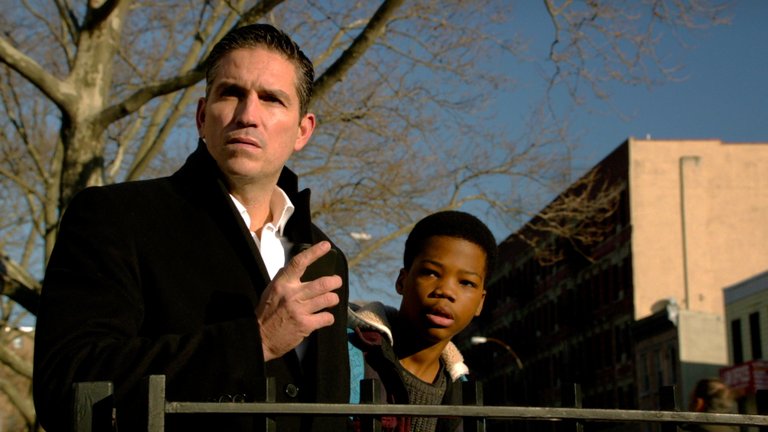
Wolf and Cub (S1x14)
Airdate: 9 February 2012
Written by: Nic Van Zeebroeck & Mark Sopczynski
Directed by: Chris Fisher
Running Time: 44 minutes
The fourteenth episode of the inaugural season of Person of Interest, Wolf and Cub, represents a bold stylistic experiment for the series, serving as a substantial homage to Lone Wolf and Cub, the seminal Japanese manga that chronicled the journey of a disgraced samurai and his infant son. The narrative framework relies heavily on the archetype of a former elite warrior utilising his lethal skills to protect a vulnerable child in imminent danger, mirroring the path of Kazuo Koike and Gosei Kijima's Itto Ogami. The episode is thick with references to East Asian culture—ranging from the protagonist's deep knowledge of Sun Zi to a poster of Akira Kurosawa's Seven Samurai—and fully embraces the ronin theme for Reese as a tribute to the samurai culture. At first glance, this homage can feel derivative, clichéd, and sometimes even cringeworthy, as the parallels between Reese and Darren are laid on rather thick. However, the general impression is saved by occasional moments of brilliance that effectively merge this high-concept aesthetic with the show's grounded crime drama realism.
The "cub" referred to in the title is Darren McGrady (Astro), a 14-year-old African American boy whose number has been churned by The Machine. His brother and legal guardian was murdered following a violent altercation with street thugs, yet Darren falls through the cracks of the child welfare system, effectively living on the streets and being ignored by social services. When John Reese finally locates him, he discovers a gentle, artistic soul who possesses a talent for trumpet playing and drawing. Darren has also amassed a deep knowledge of Sun Zi and samurai lore from comic books purchased at a local store run by the kind-hearted Andre Wilcox (Malik Yoba). The relationship between Reese and the boy, who clearly relished the chance to be like a character in one of the many comics that he reads and draws, had some good chemistry.
Yet, Darren is not merely an innocent victim; he is also consumed by a desire for revenge for his brother and has spent weeks gathering money for a gun to kill the shooters. Reese intervenes, taking the boy under his wing and steering him toward a legal resolution. This proves difficult because it turns out the thugs were part of a much larger organisation that used to extort local businesses, and the boss was none other than Andre Wilcox, who enjoyed protection from corrupt police officials. When confronted, Andre attempts to recruit Darren into his criminal enterprise, offering the lives of his underlings involved in his brother's shooting as payment. When Darren refuses, his fate seems sealed, but he is rescued by Reese's timely intervention. Alex and his men are arrested, and Darren is enrolled in a music school, allowing him to pursue his artistic talents rather than descending into a life of crime.
The side storyline provides illuminating glimpses into The Machine's early days and the enigmatic background of Nathan Ingram. Will Ingram continues to inquire about his father's last days and businesses but receives little information. When he contacts Alicia Corwin, a former government official now deliberately living off the grid, she is terrified and apprehensive. Nathan Ingram, however, decides not to waste any time and returns to humanitarian work in Africa. In the meantime, Fusco continues to tail Finch and discovers that his real name might be "Harold Wren" and that he used to be Ingram's friend from university.
The script by Nic Van Zeebroeck and Gene Sopczynski doesn't look very original, and the parallels between "wolf and cub"—Reese and Darren—seem little heavy-handed and too obvious. What elevates the episode is the very good performance by Brian "Astro" Bradley Jr., the young musician who got his break at X Factor the previous year. He shows a complex character of an innocent and sensitive young boy with artistic talent, but who can also be swayed, at least temporarily, to the dark side. The scene when he makes a moral choice is one of the more powerful moments of the series by that point.
Reese also shows shades of moral ambiguity, although they were much more noticeable in the past, with Reese admitting to doing things he wasn't proud of. Some of this past is reflected in the scene where he uses a blowtorch on a captured gangster, but not to torture him directly, but by intimidating him with his irrational burning of money. Reese shows up once again and impresses young Brandon with his "Wu-Tang" moves, further cementing the martial arts theme.
The subplot involving Fusco saving Darren's life by taking the bullet intended by him in his own backside is partially played for laughs, with Fusco—who character went through the most drastic moral transformation in the series—taking all humorous references with surprising levels of stoicism. Finally, the subplot involving Nathan Ingram is weak, and the character of Will Ingram is wasted, leaving the series never to return to this narrative thread.
RATING: 5/10 (++)
==
Blog in Croatian https://draxblog.com
Blog in English https://draxreview.wordpress.com/
InLeo blog https://inleo.io/@drax.leo
Substack https://draxster.substack.com
LeoDex: https://leodex.io/?ref=drax
InLeo: https://inleo.io/signup?referral=drax.leo
Hiveonboard: https://hiveonboard.com?ref=drax
Rising Star game: https://www.risingstargame.com?referrer=drax
1Inch: https://1inch.exchange/#/r/0x83823d8CCB74F828148258BB4457642124b1328e
BTC donations: 1EWxiMiP6iiG9rger3NuUSd6HByaxQWafG
ETH donations: 0xB305F144323b99e6f8b1d66f5D7DE78B498C32A7
BCH donations: qpvxw0jax79lhmvlgcldkzpqanf03r9cjv8y6gtmk9