Chainsaw Man: Reze Arc | Nattosheru Review [ENG/SPA]

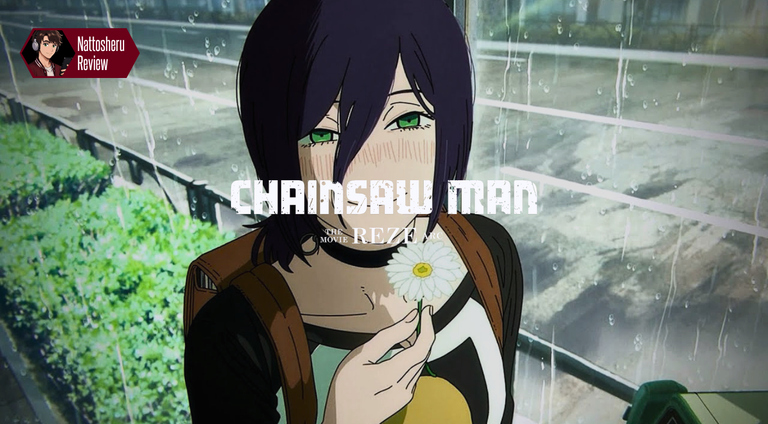
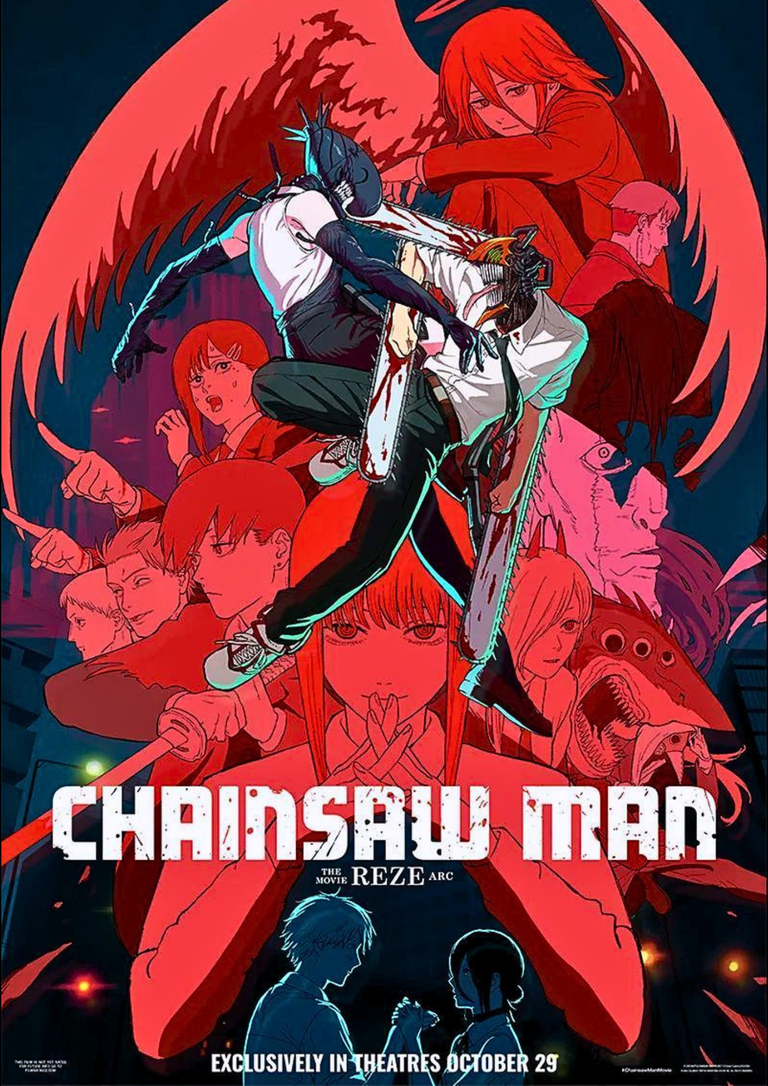
Hello, anime fans. Today I’m bringing you not a series, but a movie that’s part of one of today’s most popular action-fantasy franchises. The return of a gem that promised to revolutionize the genre forever. On the other hand, this is one of only two modern films of this style that I’ve seen in the past year. Based on the famous manga series titled Chainsaw Man, written and illustrated by Tatsuki Fujimoto, this feature film—which serves as a sequel to the animated adaptation—was produced by MAPPA studio and directed by Tatsuya Yoshihara.
Hola, fanáticos del anime. Hoy les traigo, no una serie, sino una película que forma parte de una de las obras de acción y fantasía más populares de la actualidad. El regreso de una joya que prometía revolucionar el género para siempre. Por otra parte, esta es una de las dos únicas películas modernas de este estilo que he visto el año pasado. Basada en la famosa serie de manga titulada Chainsaw Man, la cual está escrita e ilustrada por Tatsuki Fujimoto, este largometraje -que sirve como secuela de la adaptación animada- fue producido por el estudio MAPPA junto con la dirección de Tatsuya Yoshihara.

 Source: FilmAffinity.
Plot
The film opens with a shot of a narrow city alley as a young Denji walks through it. Suddenly, at a crossroads, he hears the voice of his dear friend Pochita calling him from behind a door at the end of the path. As he runs over, Denji is about to open the door, but Pochita tells him not to open it “under any circumstances.” Suddenly, Denji wakes up from what seemed to have been a strange dream and wonders if he’s still asleep when he sees Power get up with four large horns on her head, instead of the usual two small ones. Denji, along with his partner Aki, takes Power to the “Devil Hunters” Public Safety Headquarters so Makima can examine her.
Trama
La película inicia mostrándonos un callejón angosto de la ciudad mientras un pequeño Denji camina por ahí. De repente, en un cruce, escucha la voz de su querido amigo Pochita que lo llama detrás de una puerta que hay al final del camino. Al acercarse corriendo, Denji está por abrir la puerta, pero Pochita le dice que no la abra “por nada en el mundo”. De repente, Denji despierta de lo que pareció haber sido un extraño sueño y se sigue preguntando si sigue dormido al ver a Power levantarse con cuatro grandes cuernos en la cabeza, en vez de los dos pequeños de siempre. Denji, junto con su compañero Aki llevan a Power a la Central de Seguridad Pública de los “Devil Hunters” para que la vea Makima.
Trailer & Review
Here is the movie trailer:
I’ll be honest with you—while I didn’t feel the same excitement as the vast majority of fans, I do admit that I was really happy to hear the news about this movie. When I saw the trailer last year, I was blown away by its animation and audiovisual style, especially since it was so different from what we saw in the anime back then. I was excited not only by the news that they were making a movie, but also by the fact that MAPPA would be continuing with the anime adaptation after three years of no updates. I remember the first time I watched Chainsaw Man back then, since that was when I had just started watching anime as it aired.
While I was excited to watch Chainsaw Man, I was really surprised that they hadn’t continued the anime until years later. But what surprised me most of all was the absurd number of comments and opinions claiming it was a “bad adaptation.” I mean, I don’t know what anime they watched, honestly, but what I remember is a very good adaptation that really hooked me and helped me get familiar with the story and some of the characters. It’s true that there were a few animation details, like the use of CGI (3D) in some parts of the anime.
Les seré sincero, si bien no tuve la emoción que tuvo la gran mayoría de fanáticos, sí admito que me alegró mucho la noticia de esta película. Cuando llegué a ver el trailer el año pasado me impresionó demasiado su animación y estilo audiovisual, sobre todo porque llegó a ser muy diferente a lo que se llegó a ver en su momento con el anime. No solo me emocionó la noticia de que sacarían una película, sino el hecho de que MAPPA continuaría con dicha adaptación animada luego de tres años sin ninguna novedad. Recuerdo la vez que ví Chainsaw Man en su momento ya que en ese entonces había empezado con esto de ver animes en emisión.
Si bien me emocionó ver Chainsaw Man, me extrañó mucho que no le hubieran dado continuación al anime sino ya pasados los años. Pero lo que más me extrañó de todo fue la cantidad absurda de comentarios y opiniones de que fue una “mala adaptación”. O sea, no sé qué anime vieron, la verdad, pero lo que yo recuerdo es una muy buena adaptación que me enganchó bastante y me hizo familiarizarme un poco con su historia y algunos de sus personajes. Si es cierto que hubo uno que otro detalle en su animación como lo fue el uso del CGI (3D) en algunos momentos del anime.
 Source: Tenor.
But personally, I really liked the cinematic style MAPPA brought to the anime, not to mention the way they directed the story from start to finish with transitions and plot twists that really hooked me. But anyway, I don’t want to talk any more about the anime itself since it’s been a long time since I watched it and I don’t remember the entire story very well. Besides, here I’ll be talking about the movie itself, which serves as a pretty perfect continuation of that anime adaptation. You can see this perfectly from the moment it starts.
Aside from its cinematic format, the movie also features a more cinematic direction and approach, with fascinating and very detailed shots. But the best part is the plot, which shifts from an ordinary day in our protagonist’s life to suddenly becoming a scene straight out of a romance-comedy anime when Makima asks Denji out on a date. What happens next might seem a bit strange to many, but for me, it held a certain intrinsic value and meaning tied precisely to what the world of cinema always conveys to us.
Pero en lo personal me gustó mucho ese estilo cinematográfico que le dió MAPPA al anime, eso sin mencionar la forma en la que dirigieron la historia de principio a fin con transiciones y giros de trama que me engancharon bastante. Pero bueno, no quiero hablar más del anime como tal ya que ha pasado mucho tiempo desde aquella vez que la vi y no recuerdo bien su historia en su totalidad. Además, aquí les hablaré de la película como tal, la cual sirve como una continuación bastante perfecta a dicha adaptación animada. Esto se puede apreciar perfectamente desde el momento en el que empieza.
Aparte del formato cine que posee, la película contiene también una dirección y un enfoque más cinematográfico, con planos fascinantes y muy bien detallados. Pero lo mejor es la trama, la cual pasa de un día común y corriente de nuestro protagonista a volverse de repente en una escena sacada de un anime de romance y comedia cuando Makima invita a Denji a una cita. Lo que sucede después puede que sea un tanto extraño para muchos, pero para mí tuvo cierto valor y significado intrínseco relacionado justamente con lo que el mundo del cine nos transmite siempre.
 Source: Tenor.
To give you a little context without giving away too many spoilers, I’ll just say that Makima and Denji’s date basically involves watching several movies back-to-back at the theater. After five seemingly popular choices that neither of them really liked, the evening ends with one last movie that no one else is watching—just the two of them—and that ended up touching their hearts. I think the message is clear here: not all of today’s popular movies have to be liked by everyone. Sometimes, the best movie is the one that “changes your life” forever.
This is something I really liked about this film, which features scenes like the one I just described throughout its runtime of over an hour and a half. While it has its fair share of action and comedy, the anime also manages to balance romance and drama in a way that feels quite natural. Not to mention all the fantastical elements the work itself contains, which makes it a bit more special than what is typically found. The curious thing about all this is that, yes, it is a Shōnen-targeted action and fantasy anime.
Para darles un poco de contexto sin tener que dar muchos spoilers, solo les diré que dicha cita que tienen Makima y Denji se resume en ver varias películas seguidas juntos en el cine. Entre cinco elecciones aparentemente populares que no les termina de gustar a ninguno de los dos, la velada termina con una última película que nadie más ve -solo ellos dos- y que les terminó llegando al corazón. Creo que el mensaje es claro aquí: no todas las películas populares de la actualidad tienen que llegar a gustarle a todo el mundo. A veces, la mejor película es la que llega a “cambiar tu vida” para siempre.
Esto es algo que me gustó mucho de esta película, que posee escenas como la que les acabo de describir a lo largo de su más de hora y media de duración. Si bien tiene su buen repertorio de acción y comedia, el anime logra equilibrar también el romance y el drama de una forma que sea bastante natural. Esto sin contar todos los elementos fantásticos que tiene la obra como tal, lo cual lo hace un tanto más especial de lo que ya llega a ser comúnmente. Lo curioso de todo esto es que, si, es un anime de acción y fantasía de demografía Shōnen.
 Source: Tenor.
This means that the target audience for this film is teenagers, plain and simple. That’s why the plot shifts from what appears to be a typical RomCom—complete with Fanservice—to a film packed with action, chases, and tons and tons of explosions. It’s also why the main cast consists mostly of young adults or teenagers, such as Denji and Reze herself. By the way, as for this girl, I’ll just say that she’s one of the best characters introduced and developed in this film.
Of course, we’re talking about the film’s co-lead and main antagonist. So it’s only natural that she has such excellent character development, especially with that amazing ending they give us, which provides a perfect conclusion for a character like Reze. The film also helps highlight this character through both the script and certain visual elements. One of the things that really fascinated me about the script is the story of the country mouse and the city mouse. Not only do they explain this story to us, but they also apply it to the film and its characters in a way that’s hard to forget.
Esto quiere decir que el público objetivo de esta obra son los chicos adolescentes como tal. Es por eso que la trama de la película pasa de ser un aparente RomCom con Fanservice y todo a convertirse luego en una obra repleta de acción, persecución y muchas, pero que muchas explosiones. También es por eso que tenemos a un grupo de personajes principales mayormente jóvenes o adolescentes como lo es el caso de Denji o la misma Reze. Por cierto, en cuanto a esta chica, solo les diré que es de los mejores personajes que han presentado y desarrollado en esta película.
Claro, estamos hablando de la co-protagonista y a la vez antagonista principal de la película. Así que es normal que tenga su excelente desarrollo, sobre todo con ese grandioso final que nos dan, el cual le da un cierre perfecto a dicho personaje como lo es Reze. La película también nos ayuda a resaltar dicho personaje tanto con el guión como con ciertos elementos visuales. Una de las cosas que me fascinaron bastante del guión es el relato del ratón de campo y el ratón de ciudad. No solo nos explican dicho relato, sino que le dan una aplicación a la película junto con sus personajes de manera que es difícil de olvidar.
 Source: Tenor.
For example, in the case of Denji, our protagonist, he prefers to be a city mouse, who eats well but lives with the high risk of dying at any moment. In contrast, there are several characters in this film who prefer to be country mice, living peacefully and safely, but without the luxuries of the city. The moral is clear here as well: the meaning of life will always be governed by the pleasures and choices each person makes. What’s fascinating about Denji is that he stands out from most generic protagonists in this demographic because of how childlike and innocent he is.
Despite having nearly invincible power, he has the disadvantage of being easily manipulated by women like Makima or Reze. And not only that, but this very ease of manipulation makes him a dangerous tool. To explain this, I think I’d need to go into a bit more detail about how the power hierarchy works, the origin of the demons, and their nature in this fictional world. But before that, I’d rather tell you why I think Denji is different from the other protagonists. Or well, not entirely, since he does end up resembling the typical generic protagonist quite a bit.
Por ejemplo, en el caso de Denji, nuestro protagonista, él prefiere ser un ratón de ciudad, el cual come bien, pero vive con el alto riesgo de morir en cualquier momento. En cambio, hay varios personajes que vemos en esta película que prefieren ser el ratón de campo, el cual vive tranquilo y con seguridad, pero sin los lujos de la ciudad. La moraleja es clara aquí también, el sentido de la vida siempre se regirá por los placeres y las decisiones que cada uno tenga. Lo fascinante de Denji es que se diferencia de la mayoría de protagonistas genéricos de esta demografía debido a lo infantil e inocente que es.
A pesar de tener un poder casi invencible, tiene la desventaja de ser fácilmente manipulable por mujeres como Makima o Reze. Y no solo eso, sino que dicha facilidad de manipulación que tiene lo hace convertirse en una peligrosa herramienta. Para esto creo que haría falta explicar un poco cómo funciona el tema de la escala de poderes, el origen de los demonios y su naturaleza en este mundo ficticio. Pero antes de eso quisiera mejor decirles el por qué pienso que Denji es diferente a los demás protagonistas. O bueno, no del todo ya que si llega a parecerse mucho al típico protagonista genérico.
 Source: Tenor.
But what makes him special is the simple fact that he’s just a hormonal teenager without much of a brain. His way of seeing and living in this world is as straightforward as it gets, boiling down to having enough to eat and sleeping soundly. This outlook on life allows him to make decisions with confidence and live his own life as if tomorrow meant nothing to him. Perhaps that’s why he stands out so much—because he thinks neither of the future nor the past, but simply lives in the present without many worries. In a world where fear becomes a real and devastating danger, that’s fascinating to witness.
Because yes, in short, the demons that exist in this world are born from humanity’s greatest fears, as is the case with the Holocaust, for example. Reze may also be a perfect example of this, especially given what we learn about her and her origins at the end of the film. I find the way these fantastical elements intertwine with the personality and identity of every individual we meet in this anime to be fascinating. But what I like most is the way the work itself highlights each character and ultimately destroys them in the end.
Pero lo que lo hace especial es el simple hecho de que sea solo un adolescente hormonal y sin mucho cerebro. Su forma de ver y vivir en este mundo es de lo más simple que se pueda escuchar, resumiendose en tener para comer y dormir tranquilo. Dicha visión de su vida lo hace tomar decisiones con seguridad y vivir su propia vida como si el mañana no fuera nada para él. Tal vez por eso destaca bastante, porque no piensa ni en el futuro ni en el pasado, sino que solo vive el presente sin tantas preocupaciones. Eso, en un mundo donde el miedo se convierte en un peligro real y desolador, es muy fascinante de ver.
Porque sí, en resumen los demonios que existen en este mundo nacen de los miedos más grandes que tiene la humanidad, como lo es el caso del Holocausto, por ejemplo. Reze puede que sea también un ejemplo perfecto para esto, sobre todo con lo que llegamos a saber de ella y su origen al final de la película. Considero que la forma en la que dichos elementos fantásticos se entremezclan con la personalidad e identidad de cada individuo que conocemos en este anime es fascinante. Pero lo que más me gusta es la forma en la que la misma obra resalta a cada personaje y lo termina destruyendo al final.
 Source: Tenor.
Yeah, call me a masochist or whatever, but I think what makes this anime special is just how bleak the ending is for every single supporting and/or significant character. But hey, that’s just me—I enjoy works that tear you apart inside. I also love it when a work has audiovisual quality that blows your mind. In this case, MAPPA really outdid itself in a way that’s hard to put into words with this film. Aside from the quality and visual details, the color palette, animation style, and fluidity are absurdly improved compared to the anime.
It’s obvious that, being a film as such, it has that cinematic approach throughout much of it. But what MAPPA does here is so impressive that it feels like you’re watching a live-action film—but animated. The camera angles and static or moving shots, the transitions, and the composition of each scene are fascinating. But what’s most fascinating, of course, are the visual effects, especially in the film’s action scenes. It’s not for nothing that it’s the best animation studio in history, but the way it constructs and animates the fights is absolutely insane.
Si, díganme masoquista o lo que sea, pero considero que lo que hace especial este anime es lo desalentador que es el final de cada personaje secundario y/o relevante que tiene. Pero bueno, ese soy yo que disfruto de las obras que te destruyen por dentro. Así como también me encanta que una obra tenga una calidad audiovisual que te vuelva loco. En este caso MAPPA se lució de una forma que no tiene una descripción exacta con esta película. Aparte de la calidad y los detalles visuales que tiene, la paleta de colores, el estilo de animación y la fluidez mejora de una forma absurda en comparación con el anime.
Es evidente que, al ser una película como tal, tenga dicho enfoque cinematográfico en gran parte de la misma. Pero lo que hace MAPPA aquí es tan impresionante que pareciera que estuvieras viendo una película como tal, pero animada. Los enfoques y planos fijos o en movimiento, las transiciones y la composición de cada escenario es fascinante. Pero lo que más fascina, por supuesto, son los efectos visuales, sobre todo en las escenas de acción que tiene la película. No por nada es el mejor estudio de animación de toda la historia, pero la forma en la que construye y anima las peleas es una completa locura.
 Source: Tenor.
The sound effects are excellent too, but they’re nothing compared to the film’s soundtrack. Seriously, there’s one scene in particular that’s truly impressive—not just visually, but because of the soundtrack playing during it. That piano solo in the famous pool scene deserves to have gone so viral on social media. Honestly, I think the film’s soundtrack elevates every scene it plays in to its full glory, as the emotions you feel while watching them are a clear testament to that. Anyway, here’s an animated film that’s definitely worth watching, even if you haven’t seen the anime.
Personally, I give it a 9.5/10 rating in terms of the dark fantasy, action, romance, comedy, and drama genres.
Los efectos de sonido son excelentes también, pero nada comparado con la banda sonora que tiene la película. De verdad, hay una escena como tal que llega a impresionar bastante, no solo a nivel visual, sino por la banda sonora que se escucha en la misma. Ese solo de piano que tiene esa famosa escena de la piscina merece que se haya vuelto tan viral en redes sociales. Sinceramente, considero que dicha banda sonora que tiene la película logra elevar a su máximo esplendor cada escenario en el que suena ya que las emociones que uno tiene al verlas son una muestra clara de ello. En fin, les dejo aquí una película animada que sí vale la pena ver, aún si no has visto el anime, inclusive.
Personalmente, le doy una calificación de 9.5/10 en lo que respecta al género de fantasía oscura, acción, romance, comedia y drama.
Tell me, have you seen this anime yet? What did you think of it? Feel free to leave your thoughts in the comments.
Dime, ¿ya has visto este anime? ¿Qué te ha parecido? Puedes dejarme tu respuesta en los comentarios.
| CREDITS | SOURCES |
|---|---|
| Cover, Banners and Separators: | Canva. |
| GIF Edited by: | InShot. |
| Traslated by: | DeepL Translate. |
| Character Art by: | Ushiro Snow |
| Character Created by: | Bing Image Generator. |
| Markdown Tool: | Hive Studio. |

Consider following our Curation Trail on HiveVote by doing click on the image below, we thank all the support.

To all of you artists and creators out here at HIVE! If you ever are lost, please join Bokura No Digital World at our Discord Sever.
All the best.
By: Nattosheru.
Posted Using INLEO
Hello @nattosenpai! The Anime Realm team here 😊.
We want to thank you for choosing this community to publish your manga and anime related content.
Don't forget to check the rules and the suggested community guidelines post. Also, always keep in mind the importance of visiting and supporting other users' posts, those will allow us to keep growing as users and as a community.
We hope to see you soon. Greetings!
Thank's!