Nuremberg (2025): the trial of the century [ENG|ESP]


World War II, one of the most horrific episodes in human history, is also an inexhaustible source of stories for literature and film. More than 80 years have passed since the war ended, and yet, year after year, productions continue to appear that recount little-known events from those years or revisit some of the most famous episodes with a fresh perspective. And since it's a subject that continues to sell and capture people's interest, we can expect this trend to continue.
La segunda guerra mundial, uno de los episodios más horribles de la historia de nuestra humanidad, es también una fuente inagotable de historias para la literatura y el cine. Hace más de 80 años que la guerra terminó y sin embargo, año tras año, siguen apareciendo producciones que cuentan sucesos desconocidos de esos años o que vuelven a mostrar algunos de los episodios más conocidos con una nueva mirada. Y como es un tema que sigue vendiendo y despertando el interés de las personas, podemos esperar que la situación se siga perpetuando.

A few weeks ago, one of the most recent productions on the subject premiered. Nuremberg, written and directed by James Vanderbilt, tells the story behind what many called the Trial of the Century, the tribunal established to judge and convict the Nazi officers captured after the fall of the Third Reich. This makes the film more of a legal thriller than a war movie. The premise is very interesting, and the analysis of the situation can be complemented by watching Experimenter, starring Peter Sarsgaard and Winona Ryder. One of the crucial questions facing society at the time, and therefore the panel of judges tasked with judging crimes never before tried or prosecuted in that context or manner, was determining whether the Nazis were "normal" people. The initial thought at the time was that for a group of people to carry out such atrocious acts against their fellow human beings, they must have thought and felt differently. In other words, they had to be different. Recognizing the Nazis as human beings meant accepting that anyone in the world was capable of doing such things.
Hace algunas semanas se estrenó una de las más recientes producciones relacionadas con el tema. Nuremberg, escrita y dirigida por James Vanderbilt, cuenta la historia detrás de lo que muchos llamaron el Juicio del Siglo, que fue el tribunal constituido para juzgar y condenar los crímenes de los oficiales nazis que fueron capturados después de la caída del Tercer Reich; de allí que la película sea un thriller judicial más que una película bélica. El punto de partida es muy interesante y el análisis de la situación se puede complementar con la revisión de Experimenter, protagonizada por Peter Sarsgaard y Winona Ryder. Una de las cuestiones capitales a las que se enfrentó la sociedad de la época, y por ende, el cuerpo de jueces que debía juzgar crímenes que nunca habían sido juzgados ni condenados en ese contexto ni de esa forma,fue determinar si los nazis eran personas normales. Lo primero que se pensó en esos tiempos era que para que un grupo de personas llevase a cabo hechos tan atroces en contra de sus semejantes, debían pensar y sentir de otra forma. Es decir, debían ser diferentes. Reconocer a los nazis como seres humanos significaba aceptar que cualquier persona del mundo era capa de hacer esas cosas.
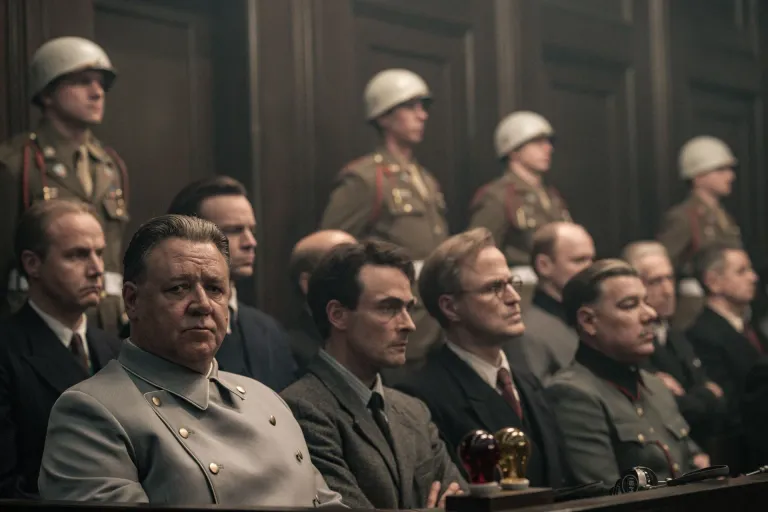
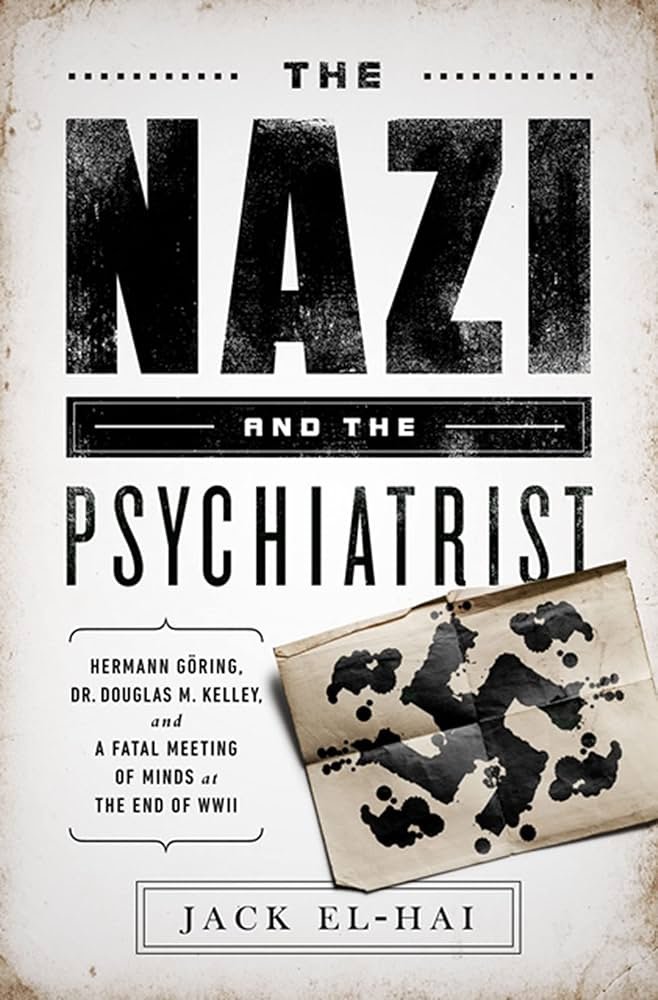
The task of studying the minds of Third Reich officers and determining their humanity is a subject of historical, psychological, moral, philosophical, and even anthropological interest. This study was carried out by Dr. Douglas Kelley, who interviewed 22 Nazi officers, including Rudolf Hess, Alfred Rosenberg, and Hermann Göring himself. Jack El-Hai recounts their story in his book, The Nazi and the Psychiatrist: Hermann Göring, Dr. Douglas M. Kelley, and a Fatal Meeting of Minds at the End of WWII. Vanderbilt's screenplay is based on the content of this book.
La tarea de estudiar la mente de los oficiales del Tercer Reich y determinar su humanidad es un tema de interés histórico, psicológico, moral, filosófico e incluso antropológico y ese estudio fue llevado a cabo por el doctor Douglas Kelley, quien entrevistó a 22 oficiales nazis como Rudolf Hess, Alfred Rosenberg y el mismísimo Hermann Göering, y cuya historia nos cuenta Jack El-Hai en su libro The Nazi and the Psychiatrist: Hermann Goring, Dr. Douglas M. Kelley, and a Fatal Meeting of Minds at the End of WWII. El guion de Vanderbilt se basa en el contenido de este libro.
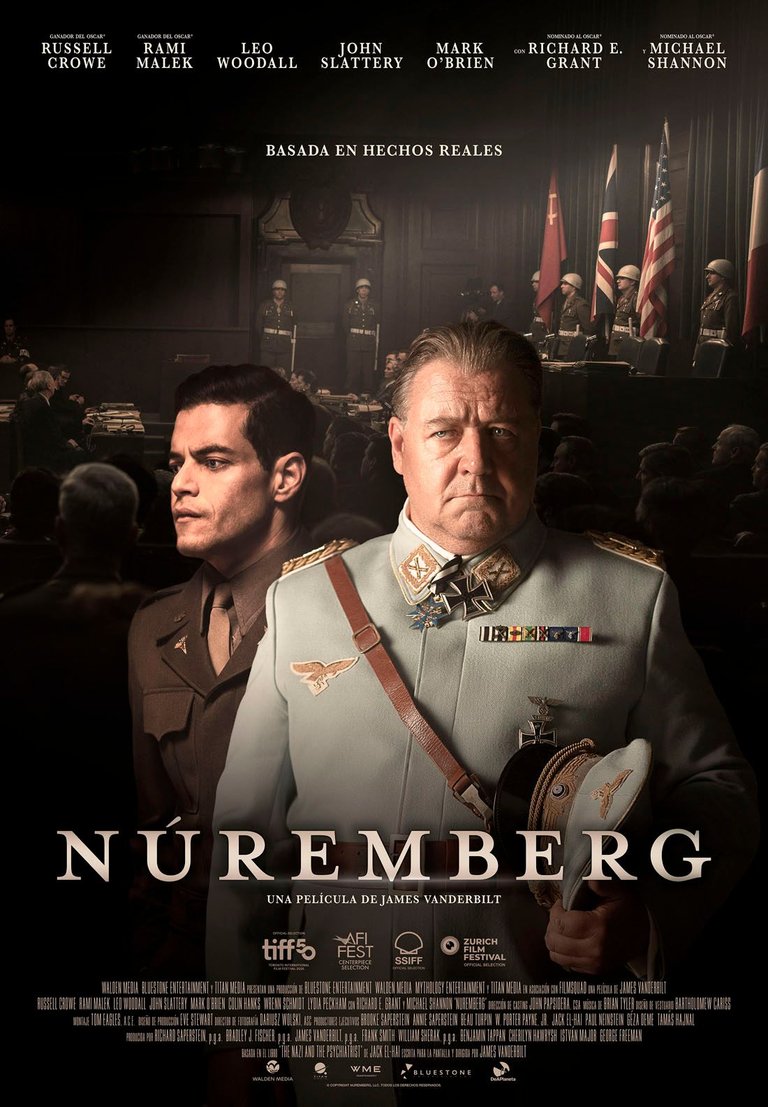
So, we have an interesting starting point: the pacing of a legal thriller and a cast that includes great actors from different countries. Oscar winner Rami Malek plays psychiatrist Douglas Kelley, who, of all the officers, develops a relationship of tension and mutual respect with Hermann Göring (played by Russell Crowe), second in command of the Third Reich after Adolf Hitler. The film's main focus is on these two characters, who function as antagonists, but also, at times, as complements, with that respect of honorable enemies—if such a thing can exist. They are joined by Leo Woodall as Sergeant Howie Triest, Kelley's assistant in a way; John Slattery as Officer Burton C. Andrus (who delivers one of the lines that shocked me most in the film); German actor Andreas Pietschmann, the memorable time traveler from Dark, as Nazi officer Rudolf Hess; and Mark O'Brien and Colin Hanks also appear. However, of all these names, the one who I think did the best job, even better than the leads, was Michael Shannon as Judge Robert H. Jackson, tasked with coordinating the court and conducting what was supposed to be a fair trial, but which was outside the bounds of legality because nothing like it had ever been done before. Shannon, in my opinion, is one of the best actors of his generation and never disappoints when he plays these supporting but crucial roles within the plot.
Entonces, tenemos un punto de partida interesante, el ritmo de un thriller legal y un reparto que incluye grandes actores de diferentes países. El ganador del Oscar Rami Malek interpreta al psiquiatra Douglas Kelley que, de entre todos los oficiales, entabla una relación de tensión y mutuo respeto con Hermann Göring (interpretado por Russell Crowe), el segundo al mando en el Tercer Reich después de Adolf Hitler. El mayor peso de la película se concentra en estos dos personajes que funcionan como antagonistas, pero también a veces como complemento, con ese respeto de los enemigos honrados si acaso tal cosa puede existir. A ellos se suma Leo Woodall como el sargento Howie Triest, de alguna forma ayudante de Kelley; John Slattery como el oficial Burton C. Andrus (que pronuncia una de las frases que más me chocó de la película); el actor alemán Andreas Pietschmann, el recordado viajero del tiempo de Dark, como el oficial nazi Rudolf Hess; y además también actúan Mark O'Brien y Colin Hanks. Sin embargo, de entre todos estos nombres el que me parece que lo hizo mejor, incluso mejor que los protagonistas, fue Michael Shannon como el Juez Robert H. Jackson, encargado de coordinar el tribunal y de dirigir a cabo lo que debía ser un juicio justo, pero que se encontraba al margen de la legalidad porque nunca se había hecho algo así. Shannon, en mi opinión, es uno de los mejores actores de su generación y nunca decepciona cuando hace estos papeles secundarios, pero claves dentro de la trama.

Something I hadn't considered before was that, when this trial took place, there was a great deal of tension in the world regarding two central issues. The first was resolving the question of how to judge these crimes: who should the judges be, and where should they come from? And under what law should the criminals be held accountable? The second was the possibility that the tribunal would function as a stage where the Nazis could not only justify their actions but also gain some public sympathy. Today it seems illogical to think that this could happen, but the fear was real.
Algo que yo no había pensado antes era que, cuando se llevó a cabo este juicio, había mucha tensión en el mundo con respecto a dos aspectos centrales. El primero era resolver la cuestión de cómo juzgar estos crímenes, ¿quiénes y de dónde debían proceder los jueces? y ¿a ante qué ley debían responder los criminales? El segundo, era la posibilidad de que el tribunal funcionase como un escenario en el que los nazis podían no sólo justificar sus acciones sino también ganar algo de simpatía en el público. Hoy día parece ilógico pensar que eso podía suceder, pero el temor fue real.


My experience with Nuremberg is that, as a subject matter, it seemed interesting, but as a film, it disappointed me. I had the opportunity to read the book when it was published in 2013, and although I found it brief, I felt it contained ideas worth exploring. However, Vanderbilt's screenplay is closer to his work as the writer of The Amazing Spider-Man than to his best screenplay to date, the one he wrote for Zodiac. Some of the dialogue is very much from action movies or superhero films and breaks the historical and reverential atmosphere that this story should have had. Andrus's line, "Gentlemen, welcome to Nuremberg," feels as out of place as many other scenes. The Trial of the Century isn't an easy story to tell, especially considering previous film versions like the 1961 Judgment at Nuremberg or the 2000 miniseries Nuremberg with Alec Baldwin and Christopher Plummer. While the effort behind this new version and its star-studded cast is commendable, I don't think it's a film that will be remembered in a couple of years. As a Sunday afternoon movie, it's entertaining, but it falls short as a study of the human psyche and a re-examination of one of the most defining moments in recent human history. Have any of you seen this film? What did you think?

Lo que me sucedió con Nuremberg es como tema me parecía interesante, pero como película me decepcionó. Tuve la oportunidad de leer el libro en el momento de su aparición en 2013 y aunque me pareció breve sentí que tenía ideas que valía la pena explorar, pero el guion de Vanderbilt está más cerca de sus trabajos como escritor de The Amazing Spider-Man que de su mejor guion hasta la fecha, el que escribió para Zodiac. Algunos diálogos son muy de películas de acción o de cintas de super hérores y rompen la atmósfera histórica y reverencial que ha debido tener esta historia. Ese "Gentlemen, welcome to Nuremberg" que pronuncia Andrus queda tan fuera de lugar como muchas otras escenas. El juicio del siglo no es una historia fácil de contar, mucho menos si se toman en cuenta las versiones cinematográficas anteriores como la Judgment at Nuremberg de 1961 o la miniserie del año 2000 Nuremberg con Alec Baldwin y Christopher Plummer, y aunque se aprecia el esfuerzo de esta nueva versión y de un reparto de lujo, no creo que sea una película que vaya a ser recordad dentro de un par de años. Como película para un domingo en la tarde está entretenida, pero se queda corta como el estudio de la psiquis humana y la revisión de uno de los momentos más determinantes de la historia reciente de la humanidad, ¿alguno de ustedes vio esta película? ¿que les pareció?
Reviewed by | Reseñado por @cristiancaicedo
Other posts that may interest you | Otros posts que pueden interesarte:
 |
|---|
Congratulations @cristiancaicedo! You have completed the following achievement on the Hive blockchain And have been rewarded with New badge(s)
Your next target is to reach 18000 upvotes.
You can view your badges on your board and compare yourself to others in the Ranking
If you no longer want to receive notifications, reply to this comment with the word
STOPCheck out our last posts:
Tengo ganas de ver esta película pero nada más por el elenco. Han sido muchos los documentales que he visto que tocan el tema de Nuremberg que quizás verlo en película no sea lo mismo por lo que dices, por lo exagerado de las cosas. Es complicado, digo yo, hacer un film de algo tan impactante y trascendental y que quede bien hecho. Pero eso, tendré que verla a ver.
Sí, es complicado saber qué tanto contar, de qué forma o cómo retratar situaciones y personajes tan completos. No se puede hacer con 100% de fidelidad a lo original, pero en este caso creo que pudo haber sido un poco mejor. Saludos y gracias por leerme.