Film Review: A Star Is Born (1954)

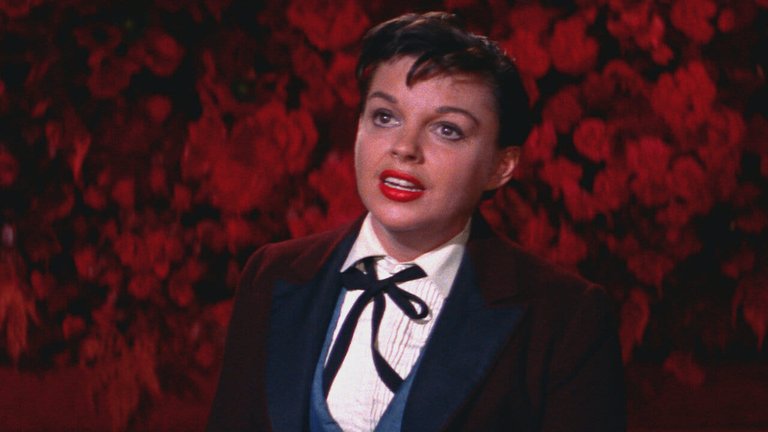
The Hollywood practice of remaking its classics is nothing new, and an example can be found in the 1937 drama A Star Is Born, which has been remade three times, resulting each time in a very different film. The 1954 version, directed by George Cukor, is often considered the most glamorous and spectacular telling of the story, with a strong following among fans of classic Hollywood musicals.
The plot begins in Hollywood during a spectacular gala benefit concert attended by Norman Maine (played by James Mason), a once-popular film star whose career has begun to fade. He often takes solace in drink and, while inebriated, he crashes the stage during a musical number. Esther Blodgett (played by Judy Garland), a singer and one of the performers, skilfully handles the situation and saves Maine from embarrassment by making it all look like part of the act.
When he sobers up, Maine decides to boost her career, partly out of gratitude and partly because he is genuinely impressed by her singing talent. He puts her in touch with his producer Oliver Niles (played by Charles Bickford), and Esther gets the break she needed, slowly building her stardom under the new name “Vicki Lester”.
The two soon fall in love and marry, but their careers take opposite directions – while Esther scores hit after hit, Norman’s films continue to flop, causing resentment and self-pity that lead to more drinking and embarrassing incidents, which ultimately present Esther with a difficult dilemma.
The film was produced by Sidney Luft, Judy Garland's husband, and envisioned as a comeback for her following a four-year hiatus caused by mental problems and substance abuse addiction. The script by Moss Hart generally follows the 1937 version, but with some notable changes. The character of Esther Blodgett/Vicki Lester is changed from an aspiring actress to a more experienced bar singer, a change made to showcase Garland's singing talent. The musical numbers, composed by Howard Arlen with lyrics by Ira Gershwin, are very likeable, including the ballad "The Man Who Got Away" and the "Born in the Trunk" segment, which functions like a film within a film.
However, there is a disconnect between the musical numbers, which belong to Hollywood’s escapist fantasy, and the actual plot, which paints Hollywood in a realistic and rather dark light. Sidney Luft aimed to make the 1954 film grander than the 1937 version, with a large budget at George Cukor's disposal, making it the most expensive film in Hollywood's history at that date. The use of the Cinemascope format, which looked as impressive to 1954 audiences as Technicolor had been in 1937, is still impressive today, but modern audiences are already accustomed to it, and the film may not seem as grand. The desire to make the film epic, along with the introduction of long musical numbers, resulted in a film that was over three hours long in its original version.
The 1954 film had a very good cast, with many members trying, and for the most part succeeding, in portraying their characters differently from those in the 1937 version. Judy Garland played a more insecure, weaker, and almost neurotic heroine, compared to the saintly character played by Janet Gaynor in the earlier film. James Mason, however, gave a truly memorable performance as Norman Maine, playing the character in a more realistic and convincing fashion than Fredric March did in the 1937 version.
Unfortunately, all these efforts were partially undermined by Warner Bros., whose executives, concerned over the box office, cut twenty minutes of running time, including some important scenes, after the premiere. In 1983, when a restoration was attempted, it turned out that some of the materials had been lost, and the original version was only partially reconstructed with the use of production stills. The result is a film that, despite the skill and talent involved, looks patchy and unfinished.
Despite being popular among audiences and cherished by Judy Garland fans to this day, A Star Is Born did not receive a single Oscar, despite several nominations. Most modern audiences would probably agree with this result, as the 1954 version, while showcasing Garland's talent, is not a grand film and could be best recommended only to fans of classic Hollywood musicals.
RATING: 6/10 (++)
Blog in Croatian https://draxblog.com
Blog in English https://draxreview.wordpress.com/
InLeo blog https://inleo.io/@drax.leo
Hiveonboard: https://hiveonboard.com?ref=drax
Rising Star game: https://www.risingstargame.com?referrer=drax
1Inch: https://1inch.exchange/#/r/0x83823d8CCB74F828148258BB4457642124b1328e
BTC donations: 1EWxiMiP6iiG9rger3NuUSd6HByaxQWafG
ETH donations: 0xB305F144323b99e6f8b1d66f5D7DE78B498C32A7

Posted using CineTV
Yeehaw! What a rootin' tootin' review of "A Star Is Born"! Keep on singing your way through life, darlin'.
Very interesting your vision of the movie, greetings.